

The First Glimpses
For centuries, Saturn was just a wandering star in the night sky. That changed with the invention of the telescope. In 1655, Dutch astronomer Christiaan Huygens spotted a large companion, which we now call Titan. Over the next few decades, Giovanni Domenico
Cassini discovered four more: Iapetus, Rhea, Tethys, and Dione. These early discoveries were made through direct observation with increasingly powerful optical telescopes. By the end of the 19th century, a total of eight moons had been identified this way, each a significant astronomical achievement. This era was defined by patient observation, sketching what was visible, and slowly piecing together the puzzle of Saturn's system.
The Space Age Revolution
The game changed entirely with the arrival of robotic explorers. NASA's Pioneer 11 flew past Saturn in 1979, followed by the Voyager 1 and 2 probes in 1980 and 1981. These missions gave us our first close-up views, discovering several new, small moons like Atlas, Prometheus, and Pandora, often nestled within or near the iconic rings. But the true revolution was the Cassini-Huygens mission, a joint effort between NASA and European space agencies, which orbited Saturn from 2004 to 2017. Being in a long-term orbit, rather than just flying by, allowed Cassini to make detailed, prolonged observations, discovering several more small moons and even witnessing the potential birth of a new one within the rings.
Finding Moons from Earth Today
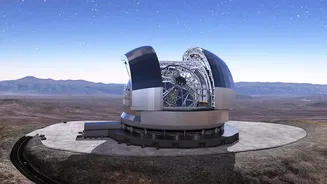
While space probes are invaluable, many recent discoveries have come from powerful ground-based telescopes, like the Subaru Telescope in Hawaii and the Canada-France-Hawaii Telescope. Astronomers use a technique called 'shift-and-add'. They take multiple images of a patch of sky where a moon is predicted to be and digitally stack them, aligning the images based on the moon's expected motion. This causes the background stars to blur into streaks, while the faint, moving moon appears as a sharp point of light. It’s this combination of powerful optics and clever software that has allowed scientists to find dozens of tiny, distant moons that were previously invisible.
From Candidate to Confirmed Moon
Spotting a faint dot moving near Saturn is just the beginning. To be officially recognized, a potential moon must be tracked long enough for its complete orbit around Saturn to be determined. This process is managed by the Minor Planet Center (MPC), operating under the authority of the International Astronomical Union (IAU), the global body responsible for naming celestial objects. The MPC receives observations from astronomers worldwide, verifies that the object isn’t a previously known body, and calculates its orbital path. Only when there's enough data to prove it has a stable orbit around Saturn, rather than just passing by, does it receive a provisional designation, like 'S/2019 S 1'.
Getting an Official Name
Once a moon's orbit is confirmed, the IAU assigns it a permanent Roman numeral, like 'Saturn LXVI'. After this, the discoverers have the opportunity to propose a name. The naming conventions are guided by mythology. Traditionally, Saturn's regular moons are named after Titans from Greek mythology. However, with the explosion in discoveries of small, irregular outer moons, the IAU has expanded the naming pool to include giants from Gallic, Inuit, and Norse mythologies, which helps to categorize these moons into their respective orbital families.
Why the Count Keeps Changing
Saturn's moon count has jumped dramatically in recent years. In May 2023, 62 moons were announced, bringing the total to 145 and making Saturn the first planet known to have over 100 moons. Then, in March 2025, another 128 were confirmed, pushing the count to 274. Subsequent announcements in 2026 have brought the number to 293. This number is constantly in flux because technology keeps improving, allowing us to find smaller and more distant objects. Many of these newly found moons are just a few kilometers in diameter, captured by Saturn's gravity long ago. As observational techniques get more sensitive, it’s almost certain that astronomers will find even more, further cementing Saturn's status as the king of moons.