




Adjust Your Watering Schedule
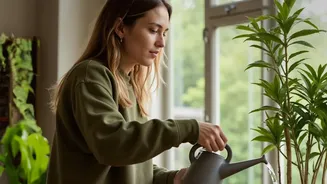
The single biggest mistake plant parents make during wet weather is overwatering. High humidity means soil dries out much more slowly. Instead of watering on a fixed schedule, get into the habit of checking the soil first. The classic 'finger test' is your
best friend: insert your finger about an inch or two into the soil. If it feels moist, wait a few more days before watering. For many common houseplants in a humid Indian monsoon climate, this might mean watering only once every 10 to 15 days. Remember, it's always easier to save an under-watered plant than an overwatered one, which is prone to root rot.
Prioritise Drainage
Good drainage is non-negotiable, especially when the air is damp. Ensure every pot has drainage holes to let excess water escape. If you use decorative outer pots without holes, make it a point to empty any water that collects in them after watering. Even better, elevate your pots on small stands or bricks. This simple trick improves airflow underneath the pot and prevents it from sitting in a puddle, which is a primary cause of root rot. A well-draining potting mix is also crucial. If your soil feels heavy and dense, consider adding materials like coarse sand or perlite to improve aeration.
Maximise Available Light
Cloudy monsoon days mean significantly less sunlight for your plants, which they need for photosynthesis. You might notice them getting 'leggy' or stretching towards the light source. To compensate, move your plants closer to windows that receive the brightest, indirect light. Wiping dust off their leaves with a soft, damp cloth can also help them absorb what little light is available. Rotating your plants every few days ensures all sides get some exposure, promoting more even growth. For particularly light-hungry or valuable plants, a small, affordable grow light can be a worthy investment.
Improve Air Circulation
Stagnant, humid air is a breeding ground for fungal diseases like powdery mildew. Improving air circulation is a simple yet effective way to keep these issues at bay. When it's not actively raining, open your windows to let fresh air in. Avoid crowding plants too closely together; giving them space allows air to move freely around the foliage. If your room feels particularly stuffy, using a small, gentle fan for a few hours a day can make a world of difference by keeping the leaf surfaces dry and discouraging fungal spores from settling.
Watch for Pests
Wet weather brings out the pests. Fungus gnats, those tiny, annoying flies that buzz around your pots, are particularly common as they love moist soil. Mealybugs and other fungal infections also thrive in these conditions. The best defence is a good offence. Letting the top inch of soil dry out between waterings will deter fungus gnats, whose larvae feed on roots in damp soil. Keep an eye on the undersides of leaves and stems for any signs of pests. A fortnightly spray with a simple neem oil solution can act as a great preventative measure against most common houseplant pests.
Hold Back on Fertiliser
Plants generally grow slower during the low-light days of the monsoon. Because their growth is reduced, they require fewer nutrients. Many plant owners make the mistake of fertilising on the same schedule they used during the sunny summer months. This can lead to a build-up of salts in the soil, which can burn the roots. It's best to reduce the frequency of fertilising or use a much more diluted solution during the rainy season. Wait for signs of active new growth before you resume your regular feeding routine.