




Understanding the Great Conjunction
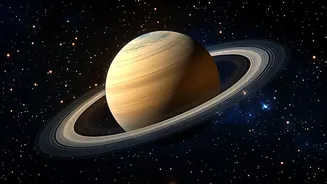
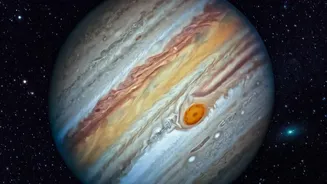
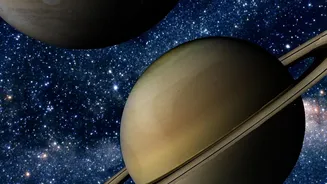
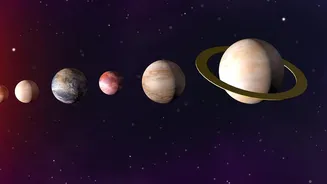
A planetary alignment, or conjunction, is an event where two or more planets appear close to one another in the sky from our viewpoint on Earth. The alignment of Jupiter and Saturn is known as a “Great Conjunction” because it involves the two largest
planets in our solar system and happens only about once every 20 years. This relative rarity makes it a special occasion for skywatchers. While the planets appear close, in reality, they remain hundreds of millions of kilometres apart. The most recent and exceptionally close Great Conjunction occurred in December 2020, where the planets appeared so near they almost looked like a single, bright star. The next such event is predicted to happen in 2040, giving you plenty of time to prepare.
SkyView Lite: Best for Augmented Reality
SkyView Lite is a fantastic starting point for beginners. Its main feature is using your phone's camera to create an augmented reality (AR) view of the sky. You simply point your device upwards, and the app overlays information on the screen, identifying stars, constellations, satellites, and planets in real-time. This makes finding Jupiter and Saturn incredibly intuitive. The app also features “Sky Paths,” allowing you to see the trajectory of any celestial object across the sky for any given date and time. It's available for free on both iOS and Android, and a key advantage is that it doesn't require a Wi-Fi or GPS signal to function, making it perfect for camping or trips to remote, dark-sky locations.
Star Walk 2: Best for Beginners
Star Walk 2 is widely recommended as one of the best apps for those new to stargazing. It offers a beautiful and user-friendly interface that turns your screen into a dynamic map of the night sky. Like other apps, it uses your phone's sensors to identify objects as you move your device. The free version includes impressive AR overlays and is great for learning constellations, stars, and planets. For a small fee, you can upgrade to get more detailed information and an ad-free experience. Its simple design and rich visuals make it an engaging tool for casually exploring the cosmos and quickly locating bright objects like Jupiter and Saturn.
Stellarium Mobile: Best for Realism
For those who want a more realistic and detailed depiction of the night sky, Stellarium is a top choice. Originally a popular open-source desktop program, its mobile version brings a massive database of stars and deep-sky objects to your phone. The free version is powerful and offers an intuitive interface for identifying planets and constellations. Stellarium is praised for its visually stunning and realistic views of celestial phenomena, showing more stars than many other apps. An AR feature also helps you locate objects by pointing your phone at the sky. If you are looking for an app that serves as both a quick reference and a deep astronomical tool, Stellarium is an excellent option.
Tips for Successful Planet Spotting
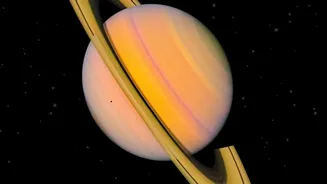
Once you have your app, the process is straightforward. First, use the app’s search function to locate Jupiter or Saturn. Many apps will then display an arrow or guide on the screen to direct you. Simply follow the arrow, moving your phone across the sky until the planet is centered on your screen. For the best viewing experience, find a location away from bright city lights. Give your eyes about 15-20 minutes to adjust to the darkness. While these apps work day or night, the planets themselves are best viewed after sunset. Jupiter typically appears as a very bright, steady star, while Saturn is slightly fainter. With a good pair of binoculars or a small telescope, you might even glimpse Jupiter’s largest moons or the faint outline of Saturn’s rings.