





The Allure of Smoked Tea
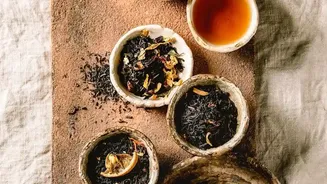
First, what exactly is a smoked tea? The most famous example is Lapsang Souchong, a black tea with a storied past. Originating in the Wuyi Mountains of China's Fujian province, its creation was a happy accident. Legend says that during the Qing dynasty,
tea farmers, rushed by passing soldiers, sped up the drying process by heating the leaves over pinewood fires. This imparted a distinct smoky, campfire-like aroma and flavour that was surprisingly well-received. This process of withering and drying tea leaves over burning wood—often pine—is what gives these teas their signature robust, savoury, and deeply aromatic character. The result is a bold, complex brew reminiscent of fine cigars or a comforting wood fire.
A Journey to the Mountain Source
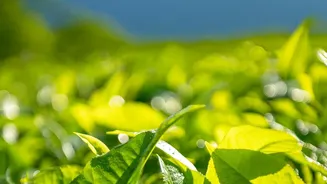
The terroir, or environment, is crucial to the character of these teas. Lapsang Souchong, the world's first black tea, hails specifically from the Tongmu Guan area within the Wuyi Mountains, a UNESCO World Heritage site. This remote region, with its high elevation and ideal ecology, provides the perfect conditions for cultivating tea with a unique flavour profile. The term 'Zhengshan', or 'authentic mountain', refers to the highest quality tea from this core area, distinguishing it from teas grown elsewhere. This connection to a specific, pristine mountain environment adds to the tea's narrative of purity and natural quality, appealing to those who value origin and craftsmanship.
Decoding 'Clean Botanical Hydration'
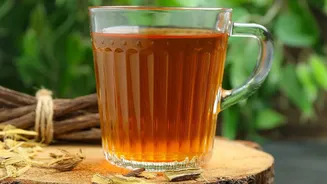
The phrase 'clean botanical hydration' may sound like marketing jargon, but it taps into a genuine trend. 'Botanical' simply means it's derived from plants. The 'hydration' part addresses a common myth: tea, despite its caffeine content, is hydrating. Studies show that the fluid in tea far outweighs the mild diuretic effect of caffeine, meaning a cup of tea contributes positively to your daily fluid intake. The 'clean' aspect refers to the simplicity of the beverage. A cup of smoked tea is just high-quality leaves and water—naturally dairy-free, sugar-free, and without artificial additives. It's a way to hydrate that feels pure and functional, aligning with a desire for 'clean label' products.
A Ritual for the Mindful Urbanite
For the 'mindful urbanite'—a person navigating the hustle of city life while seeking moments of calm and making conscious choices—this tea offers more than just a drink. Mindful consumption is a growing trend where consumers look for products with ethical origins, sustainable practices, and a story that resonates with their values. The act of brewing a complex, aromatic tea like Lapsang Souchong becomes a deliberate ritual. It's a sensory pause in a fast-paced day, a small ceremony that encourages you to slow down. The unique, strong flavour demands your attention, pulling you out of the digital haze and into the present moment. It's an affordable luxury and a simple tool for carving out a moment of peace.
The Dairy-Free Distinction
While most pure teas are inherently dairy-free, explicitly labelling them this way speaks directly to a large and growing audience committed to plant-based lifestyles. For these consumers, 'dairy-free' is a keyword for a certain kind of clean, ethical, and often health-focused choice. Enjoying smoked tea without milk or sugar allows its complex, smoky notes to shine. While some, like Winston Churchill who famously added a splash of Scotch to his, have personalized it, the purest expression of the tea is simply the leaves and hot water. This simplicity aligns perfectly with the minimalist, whole-foods-focused mindset that many modern urban dwellers aspire to.