




In the age of AI, we assume computers are superior at sifting through vast datasets. But in the cosmic hunt for black holes, technology has its limits, creating a unique opportunity for citizen scientists to step in and succeed where algorithms fail.
The Cosmic Hiding Game
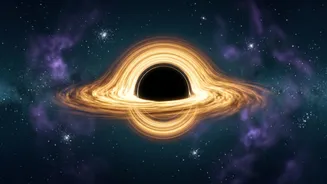
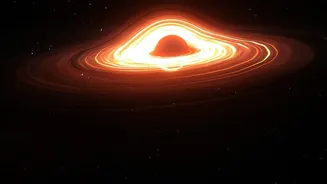
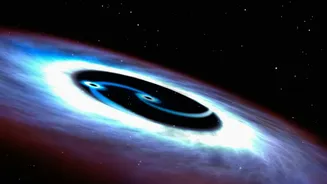
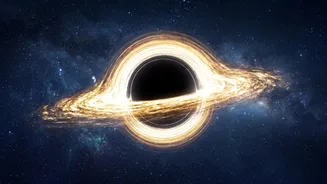
Black holes are the universe's ultimate escape artists. Formed from the collapsed cores of massive stars, their gravitational pull is so immense that nothing, not even light, can break free. This makes them invisible to traditional telescopes. Astronomers can't just point and shoot; they must become detectives, searching for the clues black holes leave behind. One of the most promising techniques is looking for an effect called gravitational lensing. When a black hole passes in front of a distant star, its immense gravity bends and magnifies the star's light, causing a temporary, characteristic spike in brightness. It’s like a cosmic magnifying glass, and finding these fleeting moments of brightness is key to locating an otherwise hidden object. The Milky Way is estimated to contain millions of these stellar-mass black holes, yet only a tiny fraction have been found.
When the Machines Get Confused
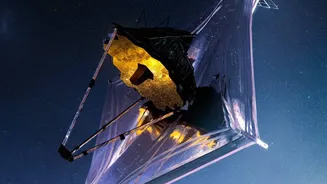
The task of finding these tell-tale brightness spikes involves combing through data from millions of stars. NASA’s Transiting Exoplanet Survey Satellite (TESS), for example, provides a torrent of information on how stellar brightness changes over time. This seems like a perfect job for artificial intelligence. Algorithms can indeed perform a first pass, filtering millions of 'light curves'—graphs of brightness over time—to flag potential candidates. However, the universe is a messy place. AI struggles to distinguish a true black hole lensing event from other astronomical phenomena like stellar flares or the natural pulsations of a variable star. These events can mimic the signal, leading to a high rate of false positives. This is where the process hits a bottleneck; the final, crucial step of verification requires a more nuanced approach.
Enter the Human Pattern-Recognisers
This is where the Black Hole Hunters project comes in. Launched on the citizen science platform Zooniverse by researchers from institutions like the University of Southampton, the project enlists thousands of volunteers to do what AI currently cannot: reliably spot the unique pattern of a gravitational lensing event. Volunteers, who require no special training, are shown graphs of the light curves pre-filtered by AI and are asked to identify the specific shapes that signal a potential black hole. The human brain excels at this kind of pattern recognition, effortlessly filtering out visual noise and identifying subtle features that can fool a machine. By having multiple volunteers classify each graph, the project averages out individual mistakes and builds a highly reliable list of candidates for professional astronomers to investigate further with powerful telescopes.
A Powerful Partnership
The Black Hole Hunters project isn't about human versus machine; it’s about a powerful collaboration. AI performs the initial heavy lifting, reducing an impossible amount of data to a manageable size. Human volunteers then provide the critical analysis and contextual understanding that AI lacks. This model of 'AI-assisted, human-in-the loop' work is becoming a cornerstone of modern data intensive science. The classifications provided by the citizen scientists are not only used to find black holes but also to train the next generation of machine learning models. Dr. Adam McMaster, one of the project's leaders, has stated that this human generated data is essential for creating smarter, more accurate algorithms for future searches. Without the initial manual classifications, these more advanced AI tools wouldn't be possible.
The Future of Discovery
Since its launch, the Black Hole Hunters project has attracted nearly 23,000 volunteers who have made almost 12 million classifications. This massive public effort is dramatically accelerating the search for some of the galaxy's most mysterious objects. The project highlights a fascinating truth in the business of discovery : while technology provides unprecedented scale , human ingenuity remains an irreplaceable asset . It democratises science , allowing anyone with a laptop and a little time to contribute to genuine astrophysical research from their own home . Each classification helps astronomers decide where to point their telescopes next , potentially leading to the discovery of a whole new population of black holes and refining our understanding of how stars evolve and galaxies form.