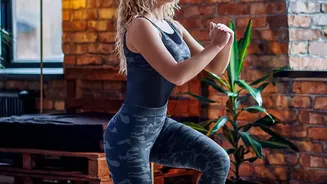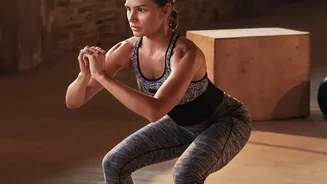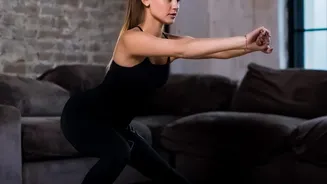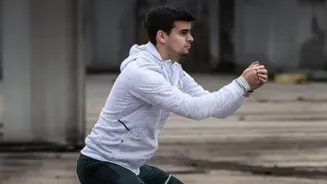




Squats and lunges are powerhouse exercises for building strong thighs, but knee pain can quickly derail your progress. The secret isn't avoiding them, but mastering them. Correct form is the key to unlocking their benefits without overloading your joints.
Why Form Trumps Everything
When it comes to squats and lunges, how you perform the movement is far more important than how much weight you lift or how many reps you do. Incorrect form is a leading cause of exercise-related knee pain. When performed improperly, these exercises can shift pressure away from the large, powerful muscles of your glutes and thighs and place it directly onto the knee joint, which isn't designed to handle that kind of load. Weak hip or glute muscles often contribute to this, causing the knees to collapse inward and absorb stress. The goal is to train your muscles, not strain your joints. By focusing on proper mechanics, you ensure the work is done by the posterior chain (glutes and hamstrings) and quadriceps, which in turn builds the very strength needed to support and protect your knees in the long run.
Mastering the Perfect Squat
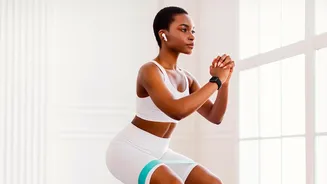
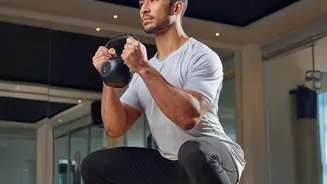
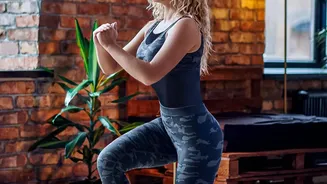
A proper bodyweight squat is the foundation. Stand with your feet about shoulder-width apart, with your toes pointing slightly outward. The movement should start by hinging at your hips and pushing your buttocks backward as if you're about to sit in a chair. Keep your chest lifted and your back straight, avoiding the urge to lean too far forward. As you lower down, focus on keeping your knees aligned over your feet; don't let them cave inward. Your weight should be distributed evenly across your feet, with pressure on your heels to avoid tipping forward. Push through your heels to return to the starting position, engaging your glutes on the way up.
Common Squat Mistakes to Avoid
One of the most frequent errors is letting the knees collapse inward, a sign of weak hip stabilizers. This misalignment puts significant stress on the knee ligaments. Another common mistake is leaning too far forward, which transfers the load from your legs to your lower back and knees. Many people also make the mistake of performing shallow squats, which can create muscle imbalances. While it may seem counterintuitive, a deeper squat, done correctly, can actually strengthen and protect the knees more effectively by fully engaging the leg and glute muscles.
Perfecting the Lunge
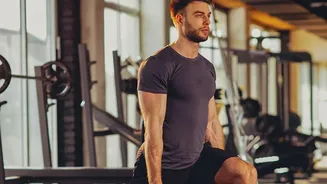
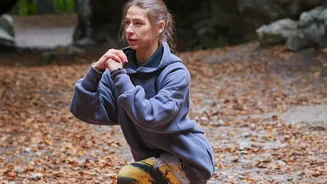
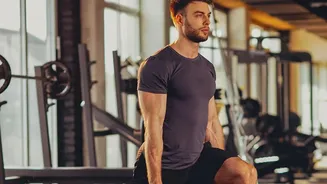
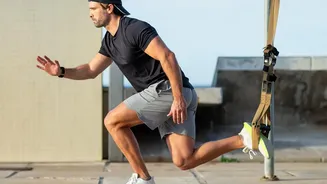
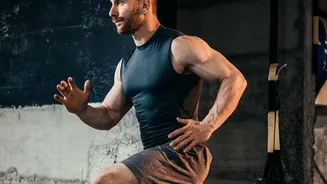
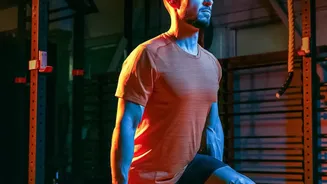
Lunges are more challenging because they test your balance and work each leg independently. To start, take a big step forward. Your feet should remain about hip-width apart to create a stable base. Lower your hips until both knees are bent at approximately a 90-degree angle. Crucially, your front knee should stay aligned over your ankle, not push past your toes. Keep your torso upright and your core engaged to maintain stability. Push off your front foot to return to the starting position in a controlled manner, avoiding jerky movements.
Lunge Pitfalls and How to Fix Them
The most common lunge mistake is letting the front knee travel too far forward, past the toes. This places excessive strain on the knee joint. Another issue is instability, where the front knee wobbles or caves inward. This often happens if your feet are positioned too closely together, as if on a tightrope, which narrows your base of support. If you feel unstable, try taking a slightly wider stance. Leaning your torso too far forward is another error that puts pressure on the front knee instead of the working muscles.
Smart Modifications for Sensitive Knees
If standard squats or lunges cause discomfort, don't give up—modify. For squats, try performing them against a wall (wall sits) to build strength isometrically without movement in the joint. You can also reduce the depth, only going as low as feels comfortable, which is known as a partial squat. For lunges, reverse lunges—where you step backward instead of forward—are often gentler on the knees because they reduce forward momentum. Another great option is the split squat, where your feet remain stationary, removing the balance challenge and allowing you to focus on controlled up-and down movement.