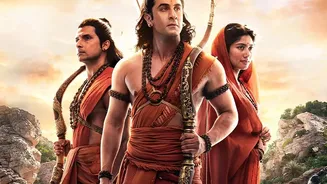








The colossal success of 'Ramayana' is not just a story of domestic box office dominance. A significant, and perhaps more strategic, victory is being won in cinemas from North America to the UAE, rewriting the rules for Indian blockbusters.
More Than Just an Afterthought
For decades,
the financial success of an Indian film was almost exclusively decided by its performance within India. The overseas market, while a welcome bonus, was often treated as a secondary revenue stream, primarily serving the nostalgic needs of the Indian diaspora. However, the game has changed. For a mega-production like 'Ramayana', with a budget reportedly stretching into thousands of crores, banking solely on domestic returns is a high-risk gamble. The film's producers understood this from day one, architecting a global release strategy that treated international markets not as a supplement, but as a foundational pillar of the film's financial viability. This shift is reflected in the decision to partner with a global giant like Sony Pictures for international distribution, a move designed to push the film beyond traditional diaspora audiences and into the mainstream.
The Power of the Diaspora Dollar
The global Indian diaspora, estimated to be over 11 million strong, remains the bedrock of the overseas market. This audience, spread across key territories like North America, the UK, the UAE, and Australia, has become a powerful economic force in cinema. 'Ramayana's' record-breaking overseas run, which saw it become the highest-grossing Indian film of all time in international markets by late November 2026 with a collection of $63 million and counting, is a testament to this power. North America has led the charge, contributing an estimated $28.4 million. For many second and third-generation Indians abroad, these films are more than just entertainment; they are a vital cultural link to their heritage, a way to connect with the 'homeland' they experience through the screen. This emotional investment translates directly into ticket sales, creating a reliable and enthusiastic audience base that can make or break a film's global ambitions.
An Epic with Universal Appeal
While the diaspora provides a solid foundation, the ultimate goal for a film of 'Ramayana's' scale is to transcend cultural boundaries. The story of the Ramayana itself, one of the world's oldest epics, possesses timeless themes of love, duty, sacrifice, and the battle between good and evil that can resonate with audiences everywhere. The producers have leaned into this, assembling an international-calibre creative team, including music by Oscar-winners Hans Zimmer and A.R. Rahman, to give the film a truly global feel. The decision to release the film in multiple languages, including an English version, and to secure a release in non-traditional markets like Japan and South Korea, is part of a deliberate strategy to attract non-South Asian viewers. By presenting an ancient Indian story with cutting-edge visual effects and a universally accessible narrative, the film aims to do for Indian mythology what Hollywood has done for its own comic-book legends.
The New Blueprint for Blockbusters
The stunning success of 'Ramayana' internationally is not an isolated event but the culmination of a growing trend. Indian cinema's worldwide gross collections for 2026 have already crossed ₹15,000 crore, a new industry record propelled by global blockbusters. Films like 'Dangal' and 'Secret Superstar' previously demonstrated the massive potential of markets like China, proving that Indian stories could find huge audiences outside the diaspora. 'Ramayana' has built on this legacy, becoming the highest-grossing Indian film in territories like Thailand, Nepal, and Indonesia. This success provides a new blueprint for the future of big-budget Indian filmmaking. It proves that a well-packaged, culturally specific story can become a global event. The overseas box office is no longer a footnote in the financial reports; it is rapidly becoming the main headline, shaping how films are funded, produced, and marketed from their very inception.