





The Ultimate Monsoon Comfort
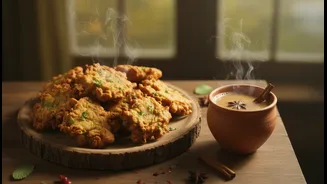
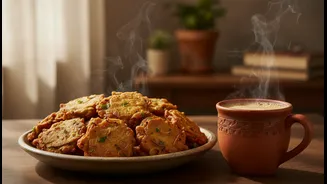
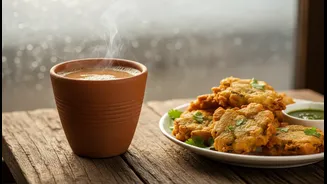
The connection between rain and this iconic duo is more than just a habit; it's a cherished ritual. For many, the aroma of pakoras frying and ginger-spiced tea brewing evokes a powerful sense of nostalgia. It brings back memories of family gatherings,
school holidays, and seeking shelter from a downpour. This combination offers sensory warmth that counteracts the damp chill of a rainy day. The hot, crispy, and spicy pakoras paired with a sweet, milky chai creates a comforting contrast in textures and temperatures that feels just right. Psychologically, these comfort foods can trigger the release of mood-regulating neurotransmitters like serotonin and dopamine, lifting spirits on a gloomy day.
A Ritual Steeped in History
While the pairing feels ancient, its widespread popularity is a more modern phenomenon. Tea was introduced to India on a mass scale by the British in the 19th century, with masala chai becoming a local innovation in the 20th century. Fritters, however, have a longer history. Deep-frying was a known cooking method for centuries, but the specific cultural pairing of chai and pakoras during the monsoon gained cult status post-independence, fueled by urban street food culture and its romanticism in Bollywood. Today, from Maharashtra's Kanda Bhajji to the various bhajiyas of Gujarat, every region has its own beloved version of the rainy-day fritter, turning a simple snack into a shared cultural experience.
The Pakora Predicament
This is the part that needs checking. The primary health concern with pakoras lies in the deep-frying. Fried foods are high in calories and fat, which can contribute to weight gain and obesity if consumed frequently. A single serving of onion pakoras can contain around 248 calories, with a significant portion coming from fat absorbed during frying. The type of oil used and how it’s used are critical. Many commercial vendors and even households reuse cooking oil multiple times to save costs. When oil is repeatedly heated to high temperatures, it breaks down and can form harmful compounds, including trans fats and free radicals. These substances are linked to an increased risk of heart disease, inflammation, and even certain cancers.
The Chai Conundrum
Masala chai itself can be a wonderfully healthy beverage. The black tea base is rich in antioxidants like polyphenols, which support heart health. Spices such as ginger, cardamom, cloves, and cinnamon have anti-inflammatory, digestive, and immune-boosting properties. Ginger, for instance, is known to aid digestion and reduce nausea. However, the way chai is often prepared can offset these benefits. The liberal addition of sugar contributes empty calories, while using full-fat milk increases the saturated fat content. A seemingly innocent cup of sweet, milky chai can quickly become a high-calorie drink that negates many of the positive effects of its spices, especially when consumed multiple times a day.
Smarter, Healthier Indulgence
Enjoying this classic combination doesn't have to be an unhealthy indulgence. With a few adjustments, you can have the best of both worlds. For pakoras, consider healthier cooking methods at home. Using an air fryer can drastically reduce the amount of oil needed, cutting calories and fat. Pan-frying with minimal oil is another good alternative to deep-frying. Adding rice flour to the gram flour batter can make the pakoras crispier while absorbing less oil. For your chai, focus on the spices and reduce the sugar. Let the natural flavour of cardamom, ginger, and cloves shine through without overwhelming it with sweetness. Opting for low-fat milk or a non-dairy alternative can also make a significant difference. These small changes allow you to honour the tradition without compromising your health goals.