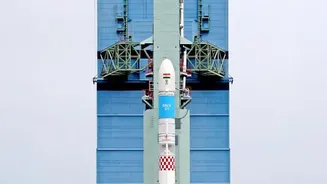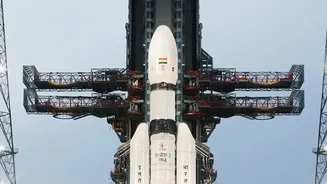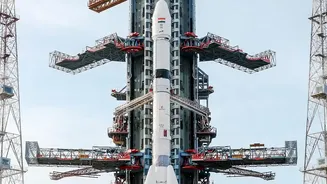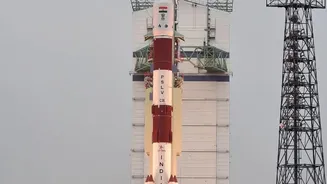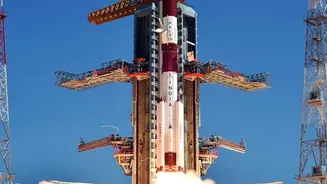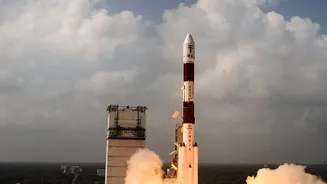






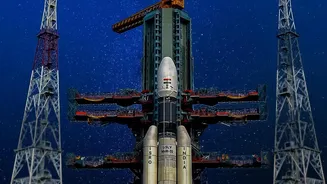
Under the cover of darkness, ISRO has once again lit up the sky over Sriharikota. This launch isn't just routine; it's a mission of revival for India's own navigation system, NavIC, following significant setbacks with earlier satellites.
A Midnight Mission to Restore a System
In a late-night
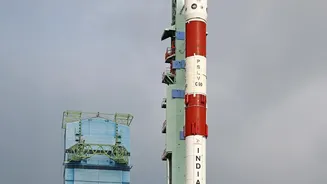
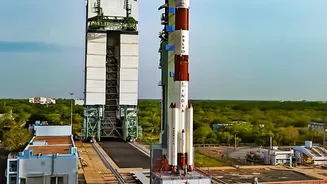
operation on October 30, 2026, the Indian Space Research Organisation (ISRO) successfully launched the NVS-03 satellite aboard its reliable GSLV-F18 rocket. This wasn't just another launch; it was a critical mission aimed at rejuvenating the Navigation with Indian Constellation (NavIC) system, India's indigenous answer to GPS. The NVS-03 is the third in a new series of five advanced satellites designed to replace older, failing ones and expand NavIC's capabilities. The decision for a night launch is a complex calculation based on orbital mechanics, ensuring the satellite is placed in the perfect Geosynchronous Transfer Orbit to begin its 12-year mission. Its primary goal is to help restore full functionality to a system vital for both civilian and military applications across the nation.
The Difficult Legacy of NVS-02 and Atomic Clocks
This launch carries the weight of past challenges. The headline's mention of 'NVS-02 difficulties' refers to a significant setback in January 2025, when the NVS-02 satellite failed to reach its intended orbit due to an engine valve malfunction. This failure compounded a more persistent and damaging problem that has plagued the NavIC constellation for years: failing atomic clocks. The original generation of NavIC satellites (known as IRNSS) relied on imported rubidium atomic clocks. Many of these clocks failed prematurely, rendering several satellites useless for navigation long before their expected lifespan ended. Atomic clocks are the heart of any navigation satellite; they provide the ultra-precise timing signals needed to calculate a location accurately. A tiny error in time can lead to a positioning error of hundreds of metres. The failure of these clocks on multiple satellites, including the final clock on IRNSS-1F in March 2026, reduced the number of functional satellites to just three, below the minimum of four required for independent positioning. This effectively made NavIC unable to provide standalone navigation services, increasing the urgency of the NVS series.
Why NavIC is a Strategic National Asset
So why is ISRO investing so much effort into NavIC? Because having a sovereign satellite navigation system is a matter of strategic autonomy. NavIC was conceptualized to ensure India does not have to depend on foreign systems like the US-owned GPS, especially during times of conflict when access could be denied or degraded. The system is designed to provide reliable positioning, navigation, and timing services across India and a region extending 1,500 kilometres from its borders. Its applications are vast, spanning military and civilian needs. For the armed forces, it enables precision guidance for missiles, troop and asset tracking, and secure navigation. For civilians, it is crucial for disaster management, vehicle tracking, maritime navigation, and is increasingly being integrated into smartphones to provide location services for everyday apps. A fully functional NavIC strengthens national security and unlocks economic growth.
Engineering a More Resilient Future
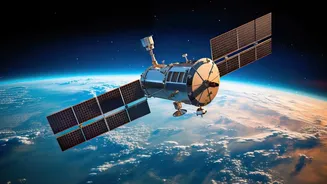
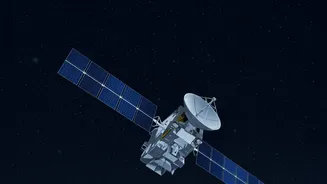
ISRO has taken these setbacks as a lesson in engineering resilience. A key upgrade in the new NVS satellites, starting with NVS-01 launched in 2023, is the inclusion of an indigenously developed rubidium atomic clock. Developed by ISRO's Space Applications Centre in Ahmedabad, this homegrown clock is designed to be more reliable than the imported ones that previously failed. The NVS-03 continues this trend, carrying the indigenous clock to ensure longevity and accuracy. Furthermore, the new satellites are equipped with an additional L1 frequency band, which is one of the most widely used for civilian navigation devices worldwide. This enhances the compatibility and interoperability of NavIC, making it easier for manufacturers to integrate it into consumer products like smartphones and smartwatches, thereby increasing its adoption. This mission is a clear demonstration of ISRO's ability to identify a problem, develop a domestic solution, and deploy it to safeguard a critical national system.