







Beyond a Full Stomach
Hidden hunger, or micronutrient deficiency, occurs when the quality of food does not meet a person's nutritional needs, even if the quantity is sufficient. This means a person can consume enough calories to feel full but lack the essential vitamins and
minerals—like iron, zinc, and vitamin A—required for proper growth, a strong immune system, and cognitive development. In India, the scale of this problem is staggering. According to the National Family Health Survey (NFHS-5), 57% of women and 67% of young children are anaemic, largely due to iron deficiency. Such deficiencies have long-term consequences, contributing to stunting in children, increased vulnerability to illness, and reduced productivity in adults. It's a crisis that doesn't always show visible signs, but profoundly impacts the nation's health and economic potential.
The Monoculture Problem
For decades, agricultural policy in India, shaped by the Green Revolution, rightly focused on food security. The goal was to produce enough calories to feed a growing population, which led to a heavy reliance on high-yield staple crops like rice and wheat. While this strategy averted famine, it inadvertently promoted monoculture—the practice of growing a single crop over large areas. This agricultural simplification has led to less diverse diets that are rich in calories but poor in essential nutrients. Over-reliance on a few staple foods pushes more nutrient-dense traditional crops to the margins. Furthermore, monoculture farming depletes soil of specific nutrients and reduces its overall biodiversity, making it harder to grow nutritious food without significant chemical inputs.
A Plate Full of Solutions
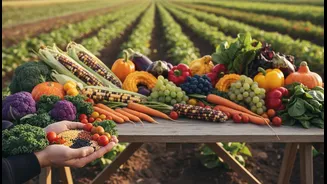
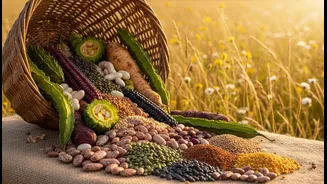
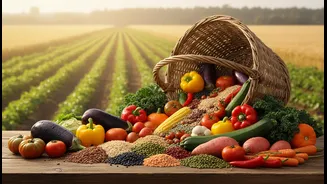
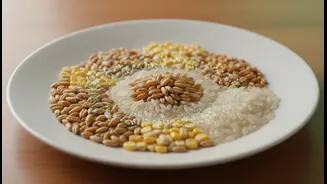
The most direct way to combat hidden hunger is through dietary diversity—and that starts with agricultural diversity. When farmers cultivate a wider variety of crops, it naturally leads to a more varied and nutrient-rich food supply for communities. Instead of just relying on staples, integrating traditional and local crops like millets, pulses, and indigenous vegetables can reintroduce essential micronutrients into the food system. For example, millets are climate-resilient and naturally rich in iron and calcium. Pulses are an excellent source of protein and other nutrients. Encouraging the cultivation of these so-called 'neglected' crops is a food-based approach that addresses the root cause of micronutrient deficiencies.
India's Agricultural Crossroads
India is now at a critical juncture, moving from a focus on food security to one of nutritional security. Recognizing this, the government has begun championing crops that were once sidelined. The International Year of Millets in 2023, heavily promoted by India, was a significant step in this direction, aiming to revive these 'nutri-cereals'. Initiatives are underway to integrate millets into public distribution systems and school meal programs, which can directly improve child nutrition. Another promising strategy is biofortification, which involves breeding essential micronutrients into staple crops. Scientists have developed iron-biofortified pearl millet and zinc-biofortified wheat and rice, providing a way to enhance the nutritional value of the foods people already eat. These efforts signal a shift in thinking: that agriculture isn't just about yield, but also about the health of the population.
Farming for a Healthier Future
Shifting towards crop diversity offers a win-win scenario. For farmers, diversifying crops can lead to more resilient agricultural systems that are better able to withstand climate change, pests, and disease. It improves soil health and can open up new income streams, reducing dependence on a single crop's market fluctuations. For consumers, it means greater access to a wider range of nutritious foods, which is the most sustainable way to tackle hidden hunger. By treating crop diversity as both a nutrition strategy and a farming goal, we can build a food system that is more resilient, sustainable, and capable of nourishing the entire population, not just feeding it. The answer to one of our biggest public health challenges may well be growing in our fields.