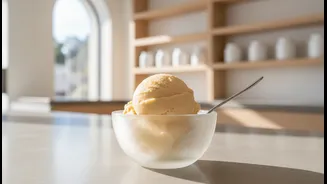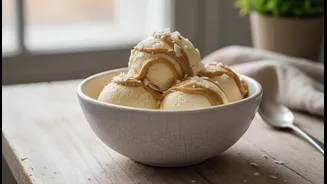

The Challenge of Dairy-Free Creaminess
For years, non-dairy frozen desserts were often a compromise. While people choose them for many reasons—from lactose intolerance to environmental concerns—the results could be icy, thin, or lack the satisfying richness of traditional gelato. The secret
to gelato's signature silky texture lies in a precise balance of fat, sugar, and water. Dairy fat, specifically milkfat, is uniquely brilliant at creating a smooth mouthfeel and trapping tiny air pockets, which results in a dense yet soft scoop. Removing it from the equation without a proper replacement often leads to the formation of large ice crystals, the enemy of any premium frozen dessert. Early alternatives often struggled to replicate this complex structure, leaving a noticeable gap in the market for a truly premium, plant-based experience.
Enter a Plant-Based Power Duo
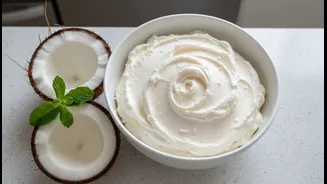
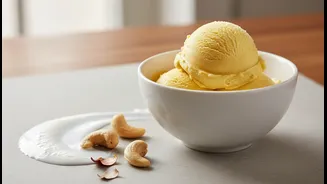
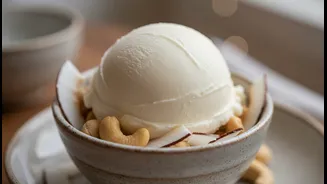
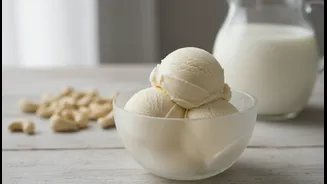
Enter cashews and coconuts. Separately, they have been staples in vegan cooking for years, but together, they form a powerful base for artisanal gelato. Artisans discovered that by combining these two ingredients, they could build a frozen dessert that wasn't just a substitute, but a culinary creation in its own right. Coconut cream provides a high percentage of saturated fat, which is essential for that luxurious, melt-in-your-mouth quality. Cashews, when soaked and blended, create an incredibly smooth, neutral-flavored cream that adds body and structure. The combination allows makers to achieve a high total fat content that mimics the role of dairy, creating a product that is decadent, flavorful, and naturally free from lactose.
The Science of Smoothness
The magic is in the fats and their molecular structure. The fat in coconut cream is rich in saturated fats that melt just below body temperature, delivering a clean, silky sensation on the palate. It provides the foundational richness. Cashews contribute not only their own fats but also proteins and starches. When blended into a fine cream, these elements act as natural emulsifiers and stabilizers, helping to bind the water and fat together and prevent those undesirable ice crystals from forming. This process creates a stable, homogenous mixture that churns beautifully. Some artisans whip the coconut cream to incorporate air for a lighter mouthfeel before folding it into the cashew base, further perfecting the final texture. The result is a gelato that is structurally sound, consistently smooth, and resistant to iciness.
More Than Just a Substitute
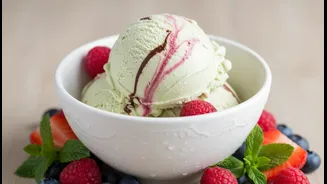
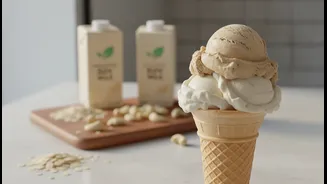
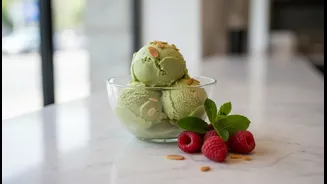
What makes this trend particularly compelling is that it moves beyond simply catering to dietary needs. It's about craft. Gelato makers are treating these plant-based ingredients with the same respect once reserved for dairy. By focusing on high-quality cashews and full-fat coconut milk, they are creating a premium product that appeals to all food lovers, not just those on a vegan diet. The relatively neutral flavor profile of the cashew-coconut base also makes it a perfect canvas for other ingredients. Whether it's classic Italian hazelnut, rich chocolate, or fresh fruit, the base supports and enhances these flavors without the sometimes-overpowering taste of other dairy alternatives like soy. This versatility allows for endless creativity, putting these plant-based options on par with the best traditional gelatos.