




The Science of a Simple Breath
When you feel stressed, your body enters 'fight-or-flight' mode, triggering your sympathetic nervous system. [8, 9] This leads to shallow breathing, a racing heart, and tight muscles. [8, 30] Deep, intentional breathing does the opposite. It activates
your parasympathetic nervous system, often called the 'rest-and-digest' system. [3, 8, 9] This simple act of slowing your breath tells your brain it's safe to relax, helping to lower your heart rate, reduce stress hormones like cortisol, and calm your mind. [1, 5, 8] Pranayama is the yogic practice of consciously regulating your breath to harness this power. [1, 23]
Technique 1: Anulom Vilom (Alternate Nostril Breathing)
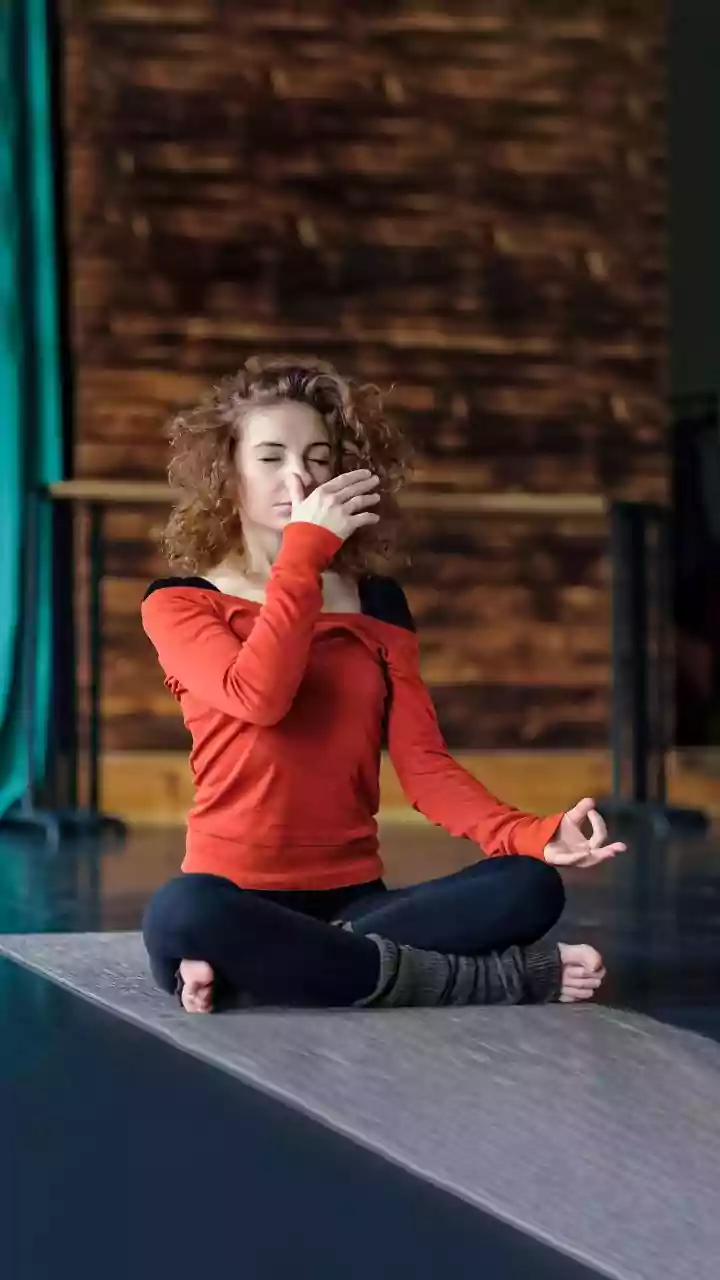
Known for its ability to bring balance to the mind and body, Anulom Vilom is an excellent pranayama for beginners. [2] It is said to purify energy channels, improve focus, and calm the nervous system. [2, 19] **How to do it:** 1. Sit comfortably with your spine straight. [10] 2. Using your right hand, fold your index and middle fingers. Use your thumb to close your right nostril and your ring finger for your left nostril. [10, 15] 3. Close your right nostril with your thumb and exhale completely through your left nostril. [19] 4. Inhale deeply and slowly through your left nostril. [13] 5. Close your left nostril with your ring finger, release your thumb from the right nostril, and exhale slowly through the right side. [13] 6. Inhale deeply through the right nostril. 7. Close the right nostril and exhale through the left. This completes one full round. [13] Continue this pattern for 2-3 minutes, keeping your breath smooth and even. [2]
Technique 2: Bhramari (Humming Bee Breath)
If your mind is buzzing with anxious thoughts, Bhramari is the perfect technique to find instant calm. [6, 12] The name comes from the black Indian bee, as the practice involves making a humming sound during exhalation. [4, 6] This vibration has a natural soothing effect on the nerves, helping to relieve tension, anger, and anxiety. [5, 6, 12] **How to do it:** 1. Sit up straight in a quiet corner. Close your eyes. [6] 2. Place your index fingers on the cartilage of your ears, located between your cheek and ear. [6, 7] 3. Take a deep breath in through your nose. [7] 4. As you exhale, gently press the cartilage while making a continuous, low-pitched humming sound from your throat, like a bee. [5, 6, 7] Keep your mouth closed. [6] 5. The humming should be smooth and last for the entire duration of the exhale. 6. Inhale again and repeat the process for 5-7 rounds. Notice the calming vibrations in your head. [5]
Technique 3: Dirga (Three-Part Breath)
This foundational pranayama is incredibly grounding and helps you use your full lung capacity. [3] It involves breathing sequentially into the abdomen, rib cage, and upper chest, which enhances oxygen flow and calms the nervous system. [1, 22] **How to do it:** 1. You can practice this lying down with your knees bent or sitting comfortably. [3, 11] 2. Place one hand on your belly and the other on your chest to feel the movement. [22] 3. Exhale completely. Then, inhale slowly through your nose, first allowing your belly to expand like a balloon. [1, 20] 4. Continue inhaling, allowing the breath to fill and expand your rib cage. [1, 14] 5. Finally, draw the breath all the way up into your upper chest, feeling the collarbones rise slightly. [1, 14] 6. Exhale slowly in reverse order: first from the upper chest, then the ribs, and finally, draw your navel toward your spine to empty the belly. [11, 20] Repeat for 10-12 cycles, feeling the gentle wave-like motion of your breath. [1]
Your 5-Minute Morning Stress Shield
Consistency is more important than duration. Integrating these techniques into a short morning ritual can set a positive tone for the entire day. Find a quiet space where you won't be disturbed, even if it's just for five minutes before anyone else wakes up. **A simple routine:** * **Minute 1-2:** Start with Dirga (Three-Part Breath) to centre yourself and deepen your breathing. * **Minute 2-4:** Practice Anulom Vilom (Alternate Nostril Breathing) to balance your energy and sharpen your focus. * **Minute 4-5:** Finish with Bhramari (Humming Bee Breath) to release any lingering mental chatter and cultivate a sense of inner peace. Taking this small window of time for yourself can make you feel more grounded and less reactive to the inevitable pressures of the workday. [25]