
Seeing the Sun's Ghostly Halo
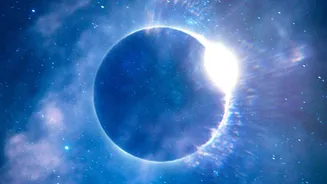
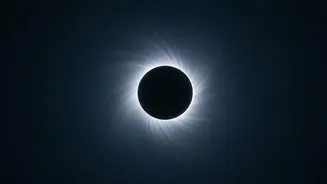
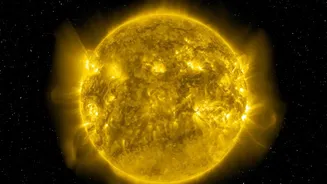
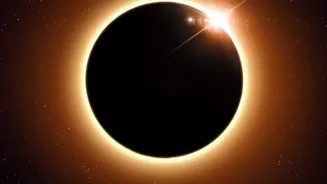
The sun's outer atmosphere, the corona, is a superheated plasma that stretches millions of kilometres into space. It is a million times dimmer than the sun's surface, making it completely invisible under normal circumstances. A total solar eclipse occurs
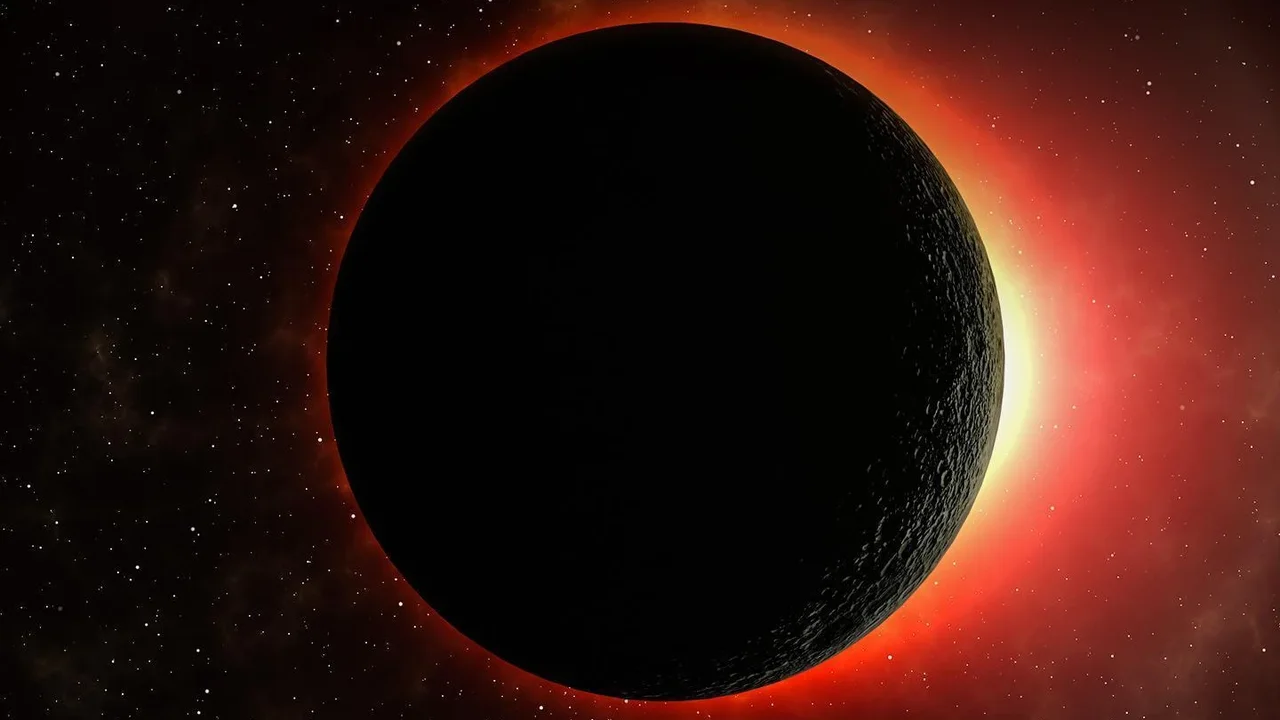
when the moon perfectly blocks the sun's blindingly bright face, revealing the faint, pearly-white corona in stunning detail. This brief moment of totality gives scientists an unparalleled, natural view of a region that is crucial for understanding the sun's behaviour.
The Problem with Artificial Eclipses
Scientists don't always wait for a natural eclipse. They use instruments called coronagraphs, both on the ground and in space, to create artificial eclipses by blocking the sun's disk. However, these instruments have a significant limitation. To get a clear picture, the occulting disk inside a coronagraph must block not only the sun itself but also the innermost region of the corona. This is the most critical area for understanding how the sun works. Because the moon is so far from Earth, it creates a much cleaner silhouette, allowing scientists to study this crucial lower corona in fine detail—a feat that remains beyond the reach of our current technology.
Solving the Coronal Heating Mystery
One of the longest-standing puzzles in astrophysics is the coronal heating problem. The sun's surface is about 5,500 degrees Celsius, but the corona sizzles at over a million degrees. It defies logic that an atmosphere should be hundreds of times hotter than the surface of the star that heats it. Scientists believe the answer lies in the complex magnetic fields originating in the lower corona. Total eclipses provide the best opportunity to observe the structures, waves, and explosive energy releases in this specific region, offering vital clues as to how this incredible heating occurs.
Understanding Space Weather
The corona is the source of the solar wind, a constant stream of charged particles flowing from the sun that can impact Earth. It's also where powerful eruptions like coronal mass ejections (CMEs) originate, which can disrupt satellites, communication systems, and power grids. By studying the base of the corona during an eclipse, researchers can better understand the mechanisms that accelerate the solar wind and trigger these massive explosions. This knowledge is key to improving our ability to predict space weather and protect our technology.
A Perfect Partner for Space Missions
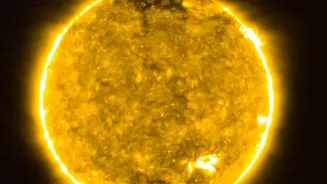
Modern solar research isn't a choice between ground-based eclipses and space missions; it's a partnership. Data gathered during eclipses, like the recent one in August 2026, provides essential context for missions like NASA's Parker Solar Probe and the European Space Agency's Solar Orbiter. These spacecraft fly close to the sun, but they can't see the big picture the way we can from Earth during an eclipse. Combining the detailed, wide-view images from an eclipse with the direct particle measurements from a probe allows for a more complete understanding of the entire system, from the sun's surface to its far-reaching influence.