

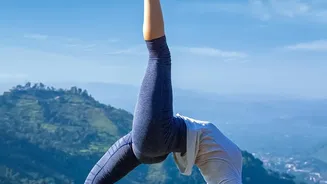
Why Daily Flexibility Matters
In our modern lives, many of us spend hours sitting—at desks, in cars, or on the couch. This can lead to tight muscles, stiffness, and postural issues like slouched shoulders and a sore back. Regular flexibility work helps counteract these effects. By
gently moving your joints through their full range of motion, you can reduce muscle stiffness, improve posture, and even make everyday activities like bending and reaching more comfortable. A consistent yoga practice is a fantastic way to do this. It combines both active and held stretches to improve muscle length and mobility over time. The benefits extend beyond the physical; studies show that a regular yoga routine can also reduce stress, improve your mood, and contribute to better sleep.
Pose 1: Cat-Cow Stretch (Marjariasana-Bitilasana)
This is the perfect movement to start with, as it gently warms up the spine and connects your breath to your body. Start on your hands and knees, with your wrists directly under your shoulders and your knees under your hips. As you inhale, drop your belly towards the floor, lift your chest and tailbone, and look slightly forward into Cow Pose. As you exhale, round your spine toward the ceiling, tucking your chin to your chest and drawing your navel in, like a cat stretching its back. Flow between these two poses for about one minute, letting your breath guide the pace. This simple sequence improves spinal flexibility and can help relieve tension in the back and neck.
Pose 2: Downward-Facing Dog (Adho Mukha Svanasana)
One of yoga's most iconic poses, Downward-Facing Dog is a full-body stretch that targets the hamstrings, calves, and spine. From your hands and knees, tuck your toes and lift your hips up and back, forming an inverted 'V' shape with your body. For beginners, it's important to keep your knees generously bent to focus on lengthening your spine. Press firmly into your hands, spread your fingers wide, and let your head hang naturally between your upper arms. You can 'pedal' your feet, bending one knee and then the other, to gently stretch each hamstring. Hold the pose for 30 to 60 seconds, breathing deeply.
Pose 3: Child's Pose (Balasana)
Child's Pose is a resting posture that offers a gentle stretch for the hips, thighs, and lower back. From your hands and knees, bring your big toes to touch and sit back on your heels, separating your knees about as wide as your mat. Fold forward, resting your torso between your thighs and letting your forehead rest on the floor. Your arms can be stretched out in front of you or resting alongside your body with the palms facing up. This pose is meant to be restorative, so focus on relaxing completely and breathing into your back. It's a great pose to come to any time you need a break during your practice.
Pose 4: Low Lunge (Anjaneyasana)
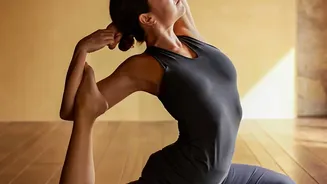
Tight hip flexors are a common issue, especially for those who sit a lot. The Low Lunge is an excellent counter-stretch. From Downward-Facing Dog, step your right foot forward between your hands. Lower your left knee to the floor, making sure your right knee is stacked directly over your right ankle. You can keep your hands on the floor or bring them to your right thigh for support. Sink your hips forward and down until you feel a stretch in the front of your left hip. Hold for about 30 seconds before switching to the other side. This pose is great for increasing flexibility in the hips and thighs.
Building a Sustainable Daily Habit
Mastery in flexibility doesn't come from one long session, but from short, consistent daily practice. Start small with just 10-15 minutes each day. Try 'habit stacking' by linking your new yoga routine to an existing daily habit, like right after you brush your teeth or before your morning coffee. Create a dedicated, calming space for your practice if you can, even if it's just a small corner of a room. Most importantly, listen to your body. A successful stretch should feel mildly uncomfortable, but never painful. The goal is progress, not perfection. Over time, these small daily efforts will compound, leading to significant gains in your overall flexibility and well-being.