






The Hidden Cost of Quiet
For decades, the go-to material for managing sound in professional and home studios has been polyurethane foam. It’s lightweight, effective, and relatively inexpensive. However, its environmental credentials are less than stellar. Polyurethane is derived
from petroleum, a non-renewable resource, and its manufacturing process contributes to CO2 emissions. Furthermore, it is not biodegradable, adding to landfill waste at the end of its life. Another concern is the off-gassing of volatile organic compounds (VOCs), which can impact indoor air quality over time. While the material is valued for its sound-dampening qualities, the growing demand for sustainable alternatives has pushed innovators to look for greener solutions that don't compromise on performance.
A Natural and Ingenious Solution
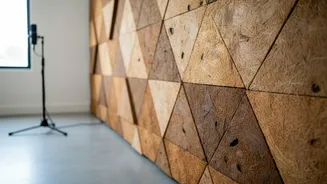
Enter agricultural waste. Materials once considered low-value byproducts, such as wheat straw and coconut husks, are now at the forefront of acoustic innovation. Companies are transforming these natural fibres into rigid, high-performance panels that absorb sound effectively. The process often involves collecting the raw material, cleaning it, shredding it, and then using heat and pressure to press it into dense boards. Binders, sometimes bio-based resins, are used to forge the organic fibres into a unified, durable structure. This approach turns a potential waste stream into a valuable resource, creating a circular economy model where agricultural leftovers are repurposed into sophisticated building materials.
How Do They Perform?
The critical question for any new acoustic material is whether it can compete with the established standard. Research and commercial applications show that these natural fibre panels are not just a green alternative, but a high-performing one. Materials like coconut coir (the fibre from coconut husks) and compressed straw have inherent acoustic properties. Their porous, fibrous structure is excellent at trapping and dissipating sound waves. Some studies show that panels made from a mix of natural fibres can achieve a high Noise Reduction Coefficient (NRC), a standard measure of sound absorption. Manufacturers can even fine-tune the acoustic performance by adjusting the panel's density, thickness, and surface design, sometimes using CNC milling to create intricate channels that further enhance sound management.
Beyond the Recording Studio
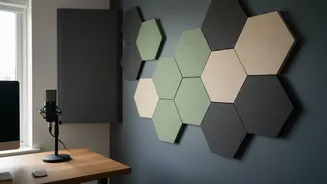
While the headline focuses on recording studios, the application for these eco-friendly panels extends much further. Their aesthetic appeal and sustainable credentials make them an attractive option for a wide range of spaces. Architects and interior designers are incorporating them into modern offices, restaurants, home theatres, and public buildings to control noise and add a natural design element. Each panel often has a unique grain and texture, offering a visual appeal that standard foam cannot match. As businesses and consumers place a greater emphasis on healthy, sustainable building materials, the market for products made from straw, coconut, and other biomass is expected to grow significantly, moving from a niche solution to a mainstream choice.