



A Junkyard in the Sky
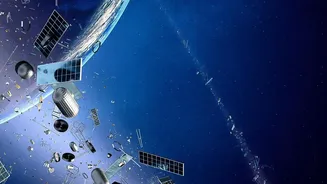
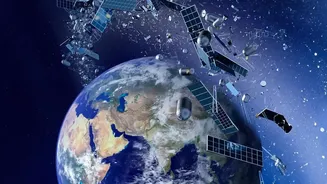
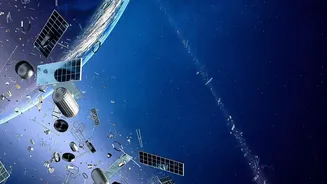
Since the dawn of the space age, humanity has left its mark on the cosmos, but not always in a good way. Low Earth Orbit (LEO), the crucial band of space that hosts everything from communications satellites to the International Space Station, is now cluttered
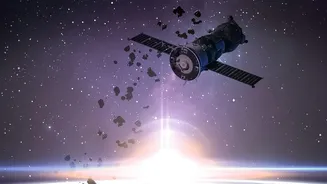
with junk. As of 2026, surveillance networks are tracking over 44,000 objects larger than 10 centimeters, but only a fraction are active satellites. The rest is debris: defunct satellites, spent rocket stages, and fragments from past collisions. These objects travel at speeds approaching 8 kilometers per second, fast enough for a softball-sized piece to shatter a multi-million dollar satellite on impact. The real danger, however, may lie in what we can't see. Experts estimate there are over a million pieces of debris between 1 and 10 centimeters in size—too small to be tracked but large enough to cause catastrophic failure.
The Challenge of a Cosmic Cleanup
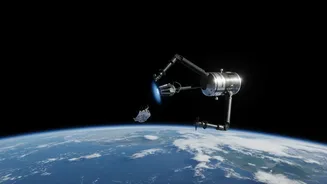
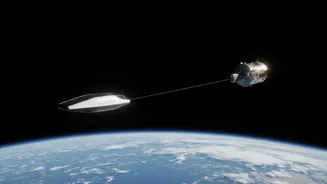
Cleaning up this orbital junkyard is one of the most complex engineering challenges of our time. Traditional ideas, like using nets or harpoons, come with significant risks. A high-speed impact could shatter the target, creating even more dangerous shrapnel. The target objects themselves are often tumbling uncontrollably, making a physical capture incredibly difficult and perilous. This escalating risk has a real economic cost, as active satellites must frequently burn precious fuel to dodge tracked debris, shortening their operational lifespans. The situation has spurred a race to develop safer, more reliable methods for what is known as Active Debris Removal (ADR), with the goal of making cleanup missions operational, not just experimental.
A Magnetic Solution
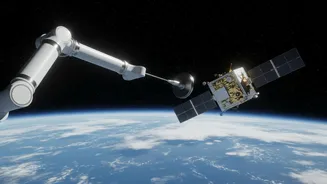
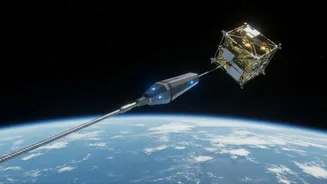
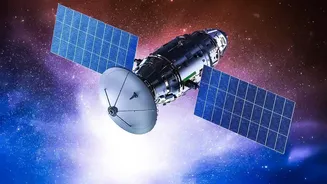
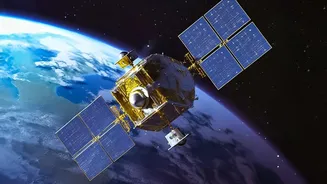
One of the most promising solutions is magnetic capture. Instead of a forceful, high-risk impact, this method uses magnets for a gentler approach. The concept is being pioneered by companies like the Japanese firm Astroscale. Their ELSA-d mission has already demonstrated the core technology: a "servicer" spacecraft approaches a piece of debris and uses a powerful magnet to latch onto it without direct physical contact in the initial phase. The primary benefit is safety. By avoiding a hard-impact capture, the risk of creating more debris is virtually eliminated. Once securely attached, the servicer spacecraft can then use its own thrusters to safely guide the junk into a lower orbit, where it will burn up harmlessly in Earth's atmosphere.
Cooperative vs. Non-Cooperative Targets
The current generation of magnetic capture technology has one major requirement: the debris needs to be "cooperative." This means the target satellite must have been equipped with a magnetic docking plate before it was launched. Astroscale is advocating for regulations that would require new satellites to carry these standardized plates, making future cleanup missions straightforward. However, this doesn't solve the problem of the thousands of older, "non-cooperative" objects already in orbit. For these, researchers are developing more advanced techniques. One method involves using powerful electromagnets on the chaser vehicle to induce electrical currents, known as eddy currents, within the metallic debris. This effectively turns the non-magnetic junk into a temporary electromagnet, allowing it to be manipulated and moved without any physical contact.
The Future of a Cleaner Orbit
Magnetic capture technology represents a significant step forward, but it is not a silver bullet. The sheer scale of the debris problem is immense, and the number of launches, particularly for large satellite constellations, continues to increase orbital congestion. However, the development of operational debris removal services marks a crucial shift from simply tracking the problem to actively fixing it. The European Space Agency (ESA) is also investing in similar technologies, viewing contactless magnetic grappling as a key method for safely deorbiting large, tumbling satellites from a distance. These advancements are vital for ensuring that Low Earth Orbit remains a viable and safe resource for the satellite infrastructure that underpins modern communications, navigation, and science.