


An Orbital Two-Parter
On August 25, NASA astronaut Anil Menon and ESA astronaut Sophie Adenot conducted a six-and-a-half-hour spacewalk to install a spare Space-to-Ground Antenna (SGANT). This mission was the second phase of a complex repair. During a prior spacewalk on August 18,
the duo successfully removed the faulty antenna but ran out of time to install its replacement. The initial removal proved more challenging than anticipated, with astronauts needing extra time and effort to disconnect stubborn cables and loosen bolts. After temporarily stowing the broken unit, the crew returned this week to finish the job. The successful installation restores crucial redundancy to the station's communication systems.
The Station's Data Lifeline
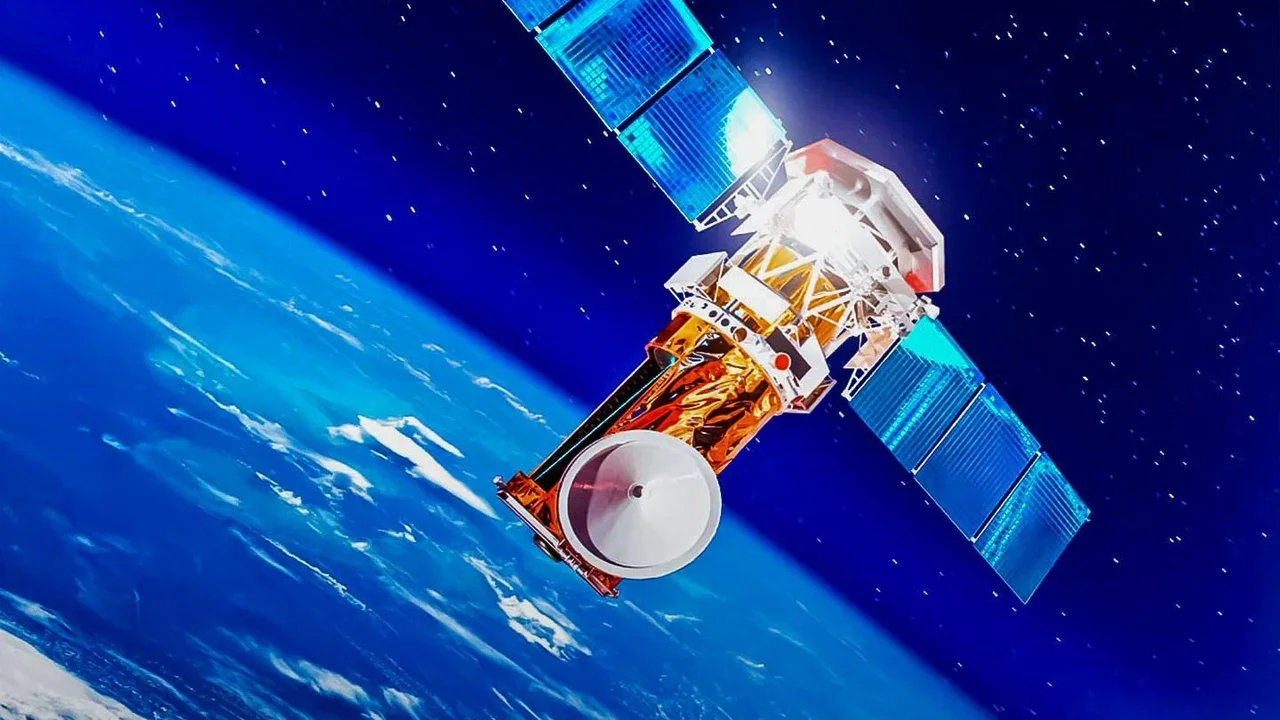
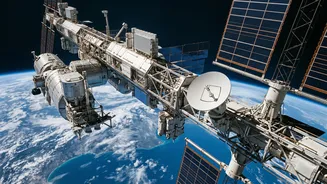
The Space-to-Ground antennas are the backbone of the ISS's high-speed communication network. These systems are the primary conduits for sending vast amounts of scientific data, high-definition video, and critical operational telemetry to Mission Control in Houston. The old unit had stopped tracking NASA's relay satellites properly, rendering it unusable since last November. While a second antenna kept communications flowing, operating without a backup posed a risk. Restoring this second antenna ensures the continuous flow of information, safeguarding the multi-billion dollar scientific research conducted on the orbiting laboratory. The system is essential for everything from controlling experiments on the ground to allowing crew members to connect with their families. After the installation, a member of Mission Control celebrated by singing a parody of a famous song: "You just saved the video dish."
A Choreography of Cranes and Crew
Replacing an antenna in space is a far cry from a simple fix on Earth. The operation required a delicate dance between the spacewalkers and the station's robotic hardware. Anil Menon was positioned at the end of the 17-metre-long Canadarm2 robotic arm, which maneuvered him and the large spare antenna into position. Meanwhile, Sophie Adenot, who on the first spacewalk became the first French woman to perform one, traversed the station's exterior using handrails. Together, they retrieved the spare from its external storage platform, carefully installed it on the station's Z1 truss structure, and connected its power and data cables. They then retrieved the faulty unit from its temporary spot and secured it to a long-term storage platform, clearing the worksite. The entire procedure was the 283rd spacewalk in support of station assembly and maintenance.
Cooperation in the Cosmos
This successful repair highlights the collaborative nature of the International Space Station program. The spacewalk involved an American astronaut from NASA and a French astronaut from the European Space Agency working in seamless unison. Their spacesuits, while appearing similar, are designated for identification; Menon wore the suit with red stripes as the lead spacewalker, while Adenot wore the unmarked suit. This mission was Menon's third career spacewalk and the second for Adenot. The success of complex maintenance tasks like this is a testament to the rigorous training and international partnership that keep the station habitable and scientifically productive as it approaches three decades of continuous human presence in orbit.