




A Changing of the Guard in Orbit
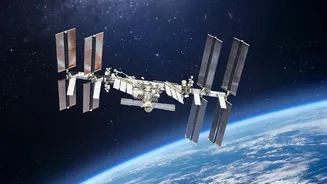
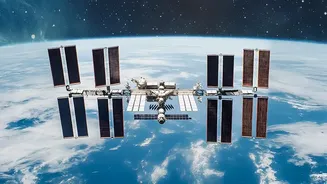
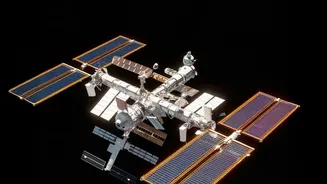
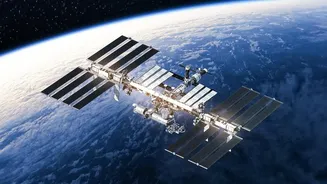
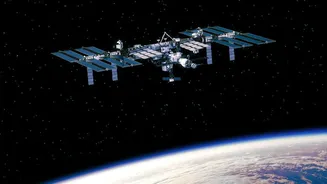
The International Space Station, a symbol of global cooperation and a testament to human ingenuity, is aging. After more than 25 years of continuous human presence, NASA and its partners are planning to deorbit the nearly 450,000 kg structure around 2030.
The station has hosted almost 300 astronauts and served as a crucial laboratory, but maintaining it costs NASA nearly $3 billion annually. Rather than build another government-owned station, NASA is turning to the private sector to ensure the United States maintains a presence in low-Earth orbit (LEO), a move designed to save taxpayer money and foster a new commercial frontier. This transition marks a fundamental shift from government-owned and operated infrastructure to a model where NASA becomes just one of many customers in a bustling orbital marketplace.
NASA's Pivot to Customer
To manage this transition, NASA initiated the Commercial Low-Earth Orbit Destinations (CLD) program. This public-private partnership provides funding and technical support to several companies developing their own space stations. The strategy is modeled after the success of the Commercial Crew and Cargo programs, which enabled companies like SpaceX to ferry astronauts and supplies to the ISS. By acting as an anchor tenant, NASA guarantees a certain level of business, giving companies the stability to attract other customers for activities like tourism, in-space manufacturing, and private research. After some debate in early 2026 about changing the program's structure, NASA ultimately reaffirmed its commitment to supporting free-flying commercial stations after significant industry pushback.
Meet the New Landlords of LEO
Several key players have emerged in the race to build the next generation of orbital habitats. Axiom Space is taking a unique approach by first building modules that will attach to the ISS. The first module is planned for a 2026 launch. Eventually, these modules will detach to form the independent Axiom Station. Meanwhile, a partnership between Blue Origin and Sierra Space is developing Orbital Reef, which they envision as a 'mixed-use business park' in space. A core component of Orbital Reef is Sierra Space's Large Integrated Flexible Environment (LIFE) habitat, an inflatable module that launches in a compact state and expands in orbit to the size of a three-story building. Other significant contenders include Starlab, a joint venture from Voyager Space and Airbus, and Vast, which aims to launch its Haven-1 station as early as 2027.
More Than Just a Laboratory
These new commercial outposts are designed for a much broader range of activities than the ISS. While scientific research for NASA and other national space agencies will remain a key function, the business case for these stations relies on a diverse customer base. The possibilities include in-space manufacturing of unique materials like high-purity fiber optics or bioprinted organs that can only be made in microgravity. Space tourism is another major market, with companies like Axiom Space already flying private astronauts to the ISS. Other potential uses include media and entertainment projects, data centers, and logistical hubs for future missions to the Moon and Mars. This diversification is essential for creating a self-sustaining economy in low-Earth orbit, independent of sole reliance on government funding.