




Our Sun, A Volatile Star
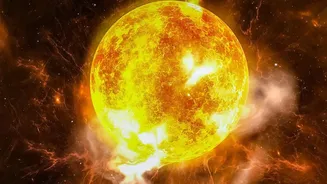
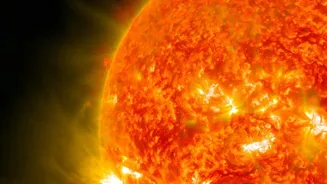
The Sun, the celestial body that makes life on Earth possible, has a tempestuous side. It periodically unleashes colossal explosions of energy, plasma, and magnetic fields known as Coronal Mass Ejections (CMEs). When these solar storms are aimed at Earth,
they can wreak havoc on our technologically dependent civilisation. These events can disrupt satellites, cripple communication and navigation systems, damage power grids, and pose risks to astronauts. As our reliance on this infrastructure grows, so does our vulnerability to this destructive space weather, making the ability to accurately forecast these storms more critical than ever.
India's Eye on the Sun
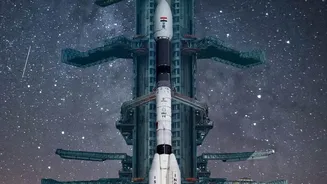
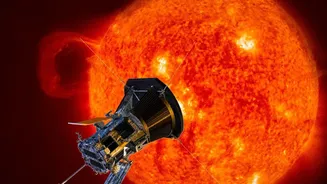
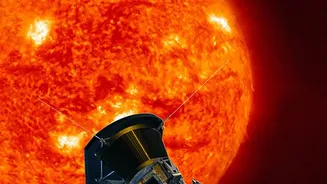
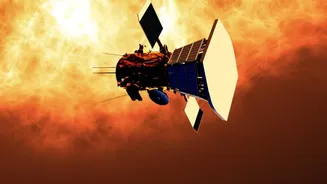
This is where ISRO's Aditya-L1 mission comes in. Launched in September 2023, it is India’s first space-based observatory dedicated to studying the Sun. The spacecraft is strategically positioned at Lagrange Point 1 (L1), about 1.5 million kilometres from Earth. This unique spot provides an uninterrupted, continuous view of the Sun, without being blocked by Earth's shadow. From this privileged position, Aditya-L1's suite of seven sophisticated instruments can observe the Sun's outer layers, the solar wind, and the interplanetary magnetic field in real-time, providing an invaluable early warning system.
Decoding the Storms
The term 'breakthrough' isn't just hype; Aditya-L1's observations have led to several significant findings published in prestigious scientific journals. One major study, analysing a powerful storm that hit Earth in October 2024, used Aditya-L1 data to identify a turbulent region within the storm that greatly amplified its impact. This turbulent area compressed Earth’s magnetic shield far more than expected, pushing it dangerously close to our planet and exposing some geostationary satellites to harsh conditions. Another study revealed how two separate CMEs can collide in space, causing their magnetic fields to snap and reconnect, making the resulting storm much stronger. Aditya-L1's instruments were crucial in mapping this 'magnetic reconnection' for the first time, an area nearly 100 times the size of Earth.
From Raw Data to Better Forecasts
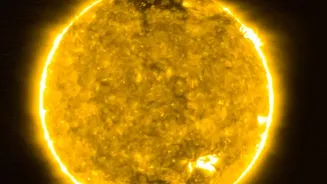
Understanding these complex dynamics is the key to better forecasting. By observing the structure and behaviour of CMEs as they leave the Sun, Aditya-L1 helps scientists refine their prediction models. For example, understanding how a CME's path can be deflected by the Sun's magnetic forces is crucial for knowing if it will hit Earth. The Solar Ultraviolet Imaging Telescope (SUIT) payload has captured unprecedented images of solar flare 'kernels' in the near-ultraviolet range, a critical data gap that previously hindered research. These observations provide a direct link between the energy released in a flare and the heating of the solar atmosphere, validating long-held theories and improving the foundational physics that underpins space weather prediction.
Why This Matters for India and the World
The implications of this mission are immense. Improved space weather forecasts allow authorities and operators of critical infrastructure to take protective measures, safeguarding our digital economy and daily life. For India, Aditya-L1 represents a major leap towards self-reliance in solar physics and space-weather forecasting. The nation is transitioning from being a user of global space data to a key producer. The mission's findings not only protect national assets but also position India as a vital player in the global effort to defend our planet against the Sun's cosmic fury. As solar activity continues to intensify, Aditya-L1's role in providing these crucial early warnings will only become more important.