





The End of an Era for the ISS
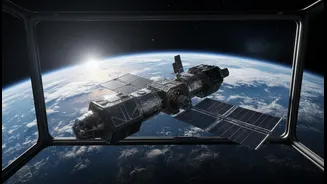
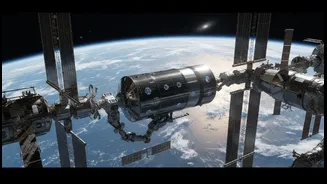
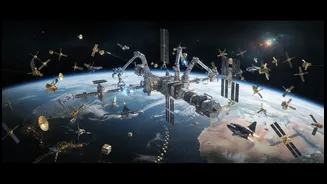
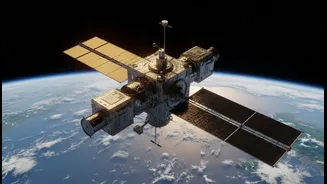
For over two decades, the International Space Station (ISS) has been a symbol of global cooperation and humanity's continuous presence in space. This orbiting laboratory has hosted thousands of experiments and astronauts from numerous countries. But the monumental
engineering marvel is aging. Originally designed for a 15-year lifespan, the station is now showing signs of wear, including air leaks and rising maintenance costs. NASA and its partners plan to deorbit the ISS around 2030, guiding it to a fiery end over a remote part of the Pacific Ocean. This impending retirement creates one of the most significant challenges for American space policy in decades: how to avoid a gap in U.S. presence in low-Earth orbit (LEO), especially as China operates its own Tiangong space station.
From Operator to Customer
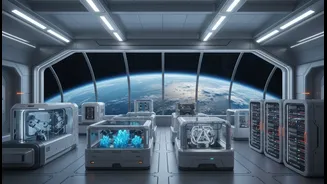
Instead of building a direct successor, NASA is fundamentally changing its role. The agency plans to transition from being an owner and operator of space real estate to becoming a customer. Under its Commercial LEO Destinations (CLD) program, NASA will purchase services from privately owned and operated space stations. The goal is for NASA to be one of many customers in a new commercial LEO marketplace, buying access for its astronauts to conduct research and technology demonstrations. This strategy is designed to be more cost-effective, saving the estimated $3 billion per year it currently costs to run the ISS and freeing up agency resources to focus on deep-space missions to the Moon and Mars under the Artemis program.
The Commercial Contenders
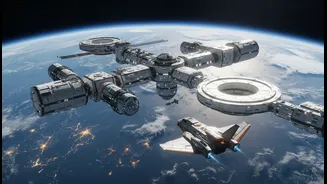
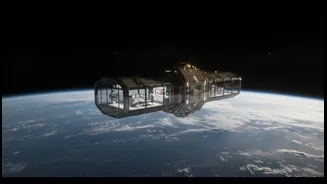
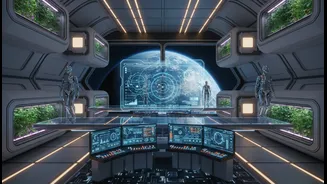
The 'feed' of NASA's new strategy is a collection of ambitious private companies, each vying to build the next generation of space stations. Through a series of contracts and agreements, NASA has been funding the design and development of several concepts. Key players include Axiom Space, which is taking a unique approach by first attaching its commercial modules to the ISS before detaching to become a free-flying station. Other major contenders include Blue Origin and Sierra Space with their 'mixed-use business park' concept called Orbital Reef, and Starlab, a joint venture from Voyager Space and Airbus. Each company is on a tight schedule, with initial modules and stations targeting launches in the late 2020s.
A High-Stakes Handover
The transition has not been without turbulence. In early 2026, NASA floated a significant change in plans, suggesting it might build a government-owned 'core module' for commercial companies to attach to, citing concerns that the business case for purely private stations was not yet closed. This caused an uproar from industry partners who had invested significant private capital based on the original strategy. After industry pushed back, NASA reversed course in June 2026, recommitting to the original plan of procuring services from free-flying commercial stations. However, the path forward remains fraught with risk. A major concern is a potential gap between the ISS's retirement and the commercial stations becoming operational, which could cede leadership in LEO. Funding has also been a persistent issue, with critics noting that NASA's investment in these new stations is a fraction of what it took to build the ISS.
Forging a New Economy in Orbit
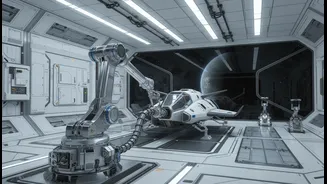
Ultimately, NASA's strategy is about more than just replacing an aging outpost. It's a calculated bet on the emergence of a robust commercial economy in low-Earth orbit. The vision is for a future where private stations host not only NASA astronauts but also sovereign astronauts from other nations, private space tourists, and in-space manufacturing and research for a variety of industries. While markets for tourism and manufacturing have been slower to materialize than once hoped, the private sector is moving forward. As recently as July 2026, NASA released a draft request for proposals for the next phase of contracts, signaling continued momentum. The success of this public-private model will determine whether the U.S. can maintain its continuous human presence in space and seed a thriving new sector of the global economy.