






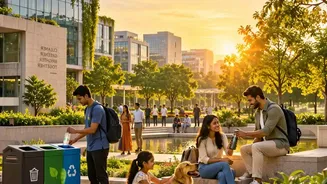
The Indian traffic junction: a familiar scene of organised chaos. But what if these noisy, congested spaces could become vibrant community hubs? Across the country, a quiet revolution is underway, turning asphalt into assets for public life.
From Chaotic Crossings to Community Spaces
For decades,
the primary goal of road design in India has been to move as many vehicles as possible. This car-centric approach has left a legacy of sprawling, dangerous intersections that are intimidating and often fatal for pedestrians, who account for a tragically high number of road fatalities. These junctions are typically noisy, polluted, and devoid of human-centric design, serving purely as a means to an end. However, a new philosophy is gaining traction among urban planners and municipal bodies: what if these 'lost' spaces could be reclaimed for the people? The idea is to transform them from stressful bottlenecks into public squares, pedestrian plazas, and neighbourhood gathering spots.
The Rise of Tactical Urbanism
This transformation is largely driven by a concept known as 'tactical urbanism'. This approach uses low-cost, temporary interventions to test out new designs and gather community feedback before committing to expensive, permanent changes. Think of it as a real-world trial run. Using materials like paint, traffic cones, barricades, and planters, cities can quickly reconfigure a junction to see how it works. These trials demonstrate the potential for change, showing how reclaiming small pockets of road space can drastically improve public life. This method allows municipalities to be agile, proving a concept's effectiveness in streamlining traffic and enhancing safety before investing significant public funds.
Prioritising People, Not Just Cars
The core motivations behind this trend are safety and liveability. By redesigning junction geometry, cities can reduce vehicle turning speeds, a key factor in accidents. The creation of pedestrian refuge islands—safe waiting spots in the middle of wide roads—and clearly marked, shorter crosswalks makes junctions significantly safer for everyone, especially children and the elderly. Projects in cities like Delhi and Mumbai have shown that these changes can reduce crossing distances and give pedestrians a sense of security. At Delhi Gate Junction, a trial reclaimed 4,500 square meters of pedestrian space and led to 96% of pedestrians reporting that they felt safer. Beyond safety, these reclaimed areas become valuable public assets, offering spaces for people to sit, interact, and build community connections in densely packed urban environments.
Success Stories from Across India
This isn't just a theoretical exercise. Several Indian cities are already implementing these changes with notable success. In Mumbai, junctions like HP Junction in Bandra and Bharatmata Junction in Parel have been redesigned to improve pedestrian flow and create refuge areas. Bengaluru recently launched a campaign to transform the space beneath the massive Silk Board Junction flyover into a public area with seating and recreational facilities like a throwball court. In Delhi, the Nehru Place junction project corrected road geometry and demarcated proper stands for auto-rickshaws, reducing congestion and increasing public space by 66%. Cities like Pune and Nashik are also launching city-wide Junction Improvement Plans, indicating a broader shift in policy towards people-first street design.
A Blueprint for the Future
Transforming traffic junctions is about more than just a coat of paint and some planters. It represents a fundamental shift in how we view our cities—from places to move through to places to live in. As India's urban population continues to grow, the need for accessible, inclusive public spaces becomes more critical. While challenges remain in scaling these projects from temporary pilots to permanent fixtures, the success of these initiatives provides a powerful blueprint. By reclaiming underutilised asphalt, Indian municipalities are not just solving traffic problems; they are actively building safer, healthier, and more connected communities, one junction at a time.