








The Great Himalayan Barrier
The primary reason for Ladakh's arid climate is its location on the leeward side of the Himalayas. Think of this colossal mountain range as a giant wall. The Indian summer monsoon, which originates from the Indian Ocean, travels northward, laden with
moisture. These winds are forced to rise when they encounter the southern slopes of the Himalayas, including the Pir Panjal and Zanskar ranges. This upward movement is the first critical step in a process that ultimately leaves Ladakh high and dry.
Understanding the Rain Shadow Effect
This phenomenon is known as the 'rain shadow effect.' As the moist air is pushed up the mountainside (the windward side), it cools down. Cooler air cannot hold as much moisture as warm air, so it releases its water content in the form of heavy rainfall. This is why the southern foothills of the Himalayas, places like Himachal Pradesh and Uttarakhand, experience intense monsoons. By the time this air mass crosses over the high peaks of the Himalayas to reach Ladakh (the leeward side), it has lost almost all of its moisture. The descending air is now dry, creating a 'shadow' of arid conditions behind the mountain barrier.
A Cold Desert Climate
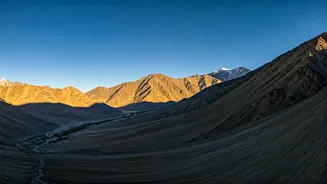
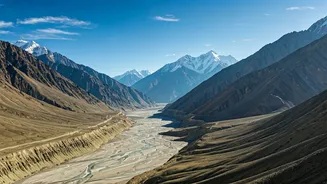
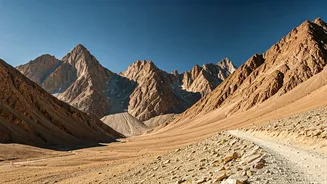
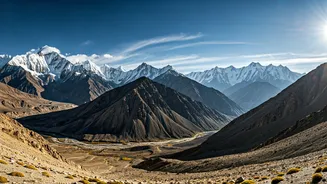
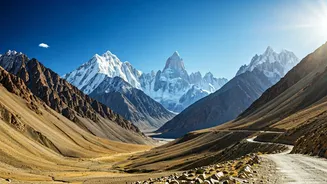
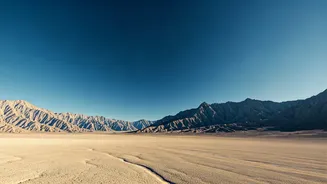
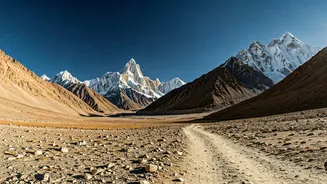
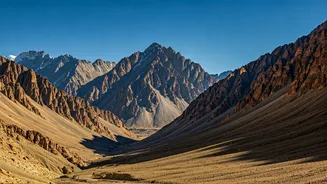
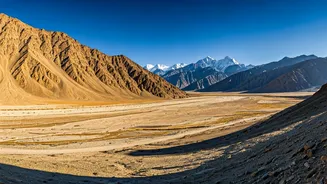
This rain shadow effect is so pronounced that it gives Ladakh its signature climate: a high-altitude cold desert. The region receives an average annual rainfall of just about 100 millimetres. To put that in perspective, Mumbai receives over 2,000 mm during the monsoon season alone. Ladakh’s precipitation often comes in the form of snow during its harsh winters, rather than rain during the summer. The landscape, characterized by barren mountains, stark valleys, and minimal vegetation, is a direct result of this extreme aridity. The high altitude further contributes to the cold, with temperatures plummeting well below freezing in winter.
The Monsoon's Journey Interrupted
The journey of the monsoon is a tale of two distinct branches: the Arabian Sea branch and the Bay of Bengal branch. Both are effectively blocked from reaching Ladakh. The Arabian Sea branch is obstructed by the Pir Panjal Range, which forces it to precipitate over Jammu and Kashmir and Himachal. The more powerful Bay of Bengal branch sweeps across the Indo-Gangetic plain but is stopped dead by the main Himalayan range. Ladakh, nestled deep behind these towering peaks that can exceed 6,000 meters, remains shielded from these moisture-laden systems. The air that does manage to get through is dry and provides clear, sunny skies throughout the summer months.
A Paradise for Monsoon Trekkers
This unique climatic condition has a significant silver lining, especially for tourism. While trekking and travel in many parts of India become difficult during the wet and humid monsoon months, Ladakh transforms into a prime destination. From June to September, when the rest of the country is drenched, Ladakh offers clear blue skies, pleasant daytime temperatures, and breathtaking views of its dramatic landscape. This makes it an ideal time for adventure activities like trekking, motorbiking, and river rafting on the Indus and Zanskar rivers. The dry weather ensures that mountain passes are open and trails are accessible, drawing travellers from around the world who are looking to escape the rains.