









Why Mental Exercise Is a Must
Before diving into the toys, it's crucial to understand why indoor enrichment is so important. A walk isn't just about potty breaks; it's a sensory adventure filled with new smells, sights, and sounds. When that's off the table, a dog's mind can become
as restless as its body. Boredom often leads to stress, which can manifest as unwanted behaviours like destructive chewing, excessive barking, or anxiety. Mental stimulation through play and puzzles can be just as tiring, if not more so, than physical exercise. Studies have shown that even 15 minutes of focused brain work can be equivalent to a much longer walk, helping to release calming endorphins and keep your dog content and well-behaved.
Puzzle Toys and Feeders
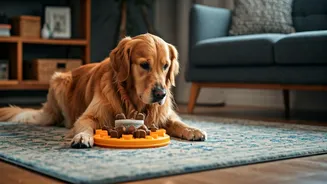
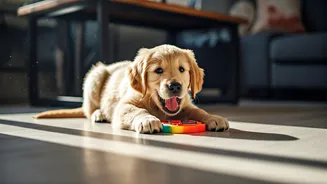
Puzzle toys are a fantastic starting point for indoor fun. These toys require your dog to slide, lift, or manipulate pieces to reveal a hidden treat. They come in various difficulty levels, allowing you to start simple and gradually increase the challenge as your dog gets smarter. Similarly, slow-feeder bowls and food-dispensing balls turn mealtime into a problem-solving activity. Instead of gulping down their food in seconds, your dog has to work for their meal, which not only provides mental stimulation but also aids in digestion and prevents bloating.
Snuffle Mats and Lick Mats
A dog’s nose is its most powerful tool. A snuffle mat, which is a mat with fleece strips, allows you to hide kibble or dry treats within its folds, encouraging your dog to use their natural foraging instincts. This sniffing and searching is incredibly engaging and a great way to satisfy their senses. Lick mats offer a different kind of calming activity. By spreading a soft treat like peanut butter, yoghurt, or wet food onto the textured surface, you encourage your dog to lick. This repetitive action is self-soothing and can help reduce anxiety, making it a perfect activity for a stressful, stormy day.
DIY Enrichment on a Budget
You don't need to spend a fortune to keep your dog entertained. Many effective puzzle toys can be made with items you already have at home. A simple 'busy box' can be created by filling a cardboard box with safe items like toilet paper rolls, packing paper, and old toys, then sprinkling treats inside for your dog to find. The 'muffin tin game' is another easy option: place treats in a muffin tin and cover them with tennis balls or other toys that your dog has to remove to get the reward. You can even make a simple treat dispenser from an empty plastic bottle with holes cut into it.
Indoor Games and Training
Interactive games are a brilliant way to burn energy and strengthen your bond. A simple game of 'find the treats' or hide-and-seek engages their nose and mind. Have your dog stay in one room while you hide treats (or yourself) in another, then release them to search. A controlled game of indoor fetch with a soft toy can also get their heart pumping. Don't forget the power of training. Spending 10-15 minutes working on new tricks or reinforcing old commands is a fantastic mental workout. Teaching your dog the names of their toys and asking them to retrieve a specific one adds an extra layer of challenge.