


The Universe’s Ultimate Time Machine
When you look at a star, you aren't seeing it as it is right now. You're seeing it as it was. This isn't a metaphor; it's a fundamental principle of our universe. The reason is simple: light, though incredibly fast, has a finite speed. It travels at approximately
300,000 kilometres per second. While that sounds instantaneous for things on Earth, the distances in space are so mind-bogglingly vast that it takes light a significant amount of time to travel from a star to your eye. Every star in the sky, apart from our own Sun, is so far away that its light has been journeying for years, decades, centuries, or even millennia. The night sky isn't a static snapshot of the present; it's a dynamic, layered collage of the past.
Decoding the Light-Year
Astronomers use a special unit to measure these immense distances: the light-year. It's a common point of confusion, but a light-year is a measure of distance, not time. It is the distance that light travels in one year, which works out to about 9.5 trillion kilometres. So, when we say a star is 100 light-years away, it means the light we see from it tonight began its journey 100 years ago. If that star were to suddenly vanish today, we wouldn't know about it for another century. We are, quite literally, looking at a ghost of its past self. This concept transforms stargazing from a simple act of observation into an act of cosmic archaeology.
A Tour of Our Cosmic Neighbours
Let’s put this into perspective with some famous celestial landmarks. The light from Sirius, the brightest star in our night sky, takes about 8.6 years to reach us. When you see it twinkle, you're seeing light that left when you were nearly a decade younger. Look towards the North Star, Polaris. It’s much farther, around 433 light-years away. The light we see from Polaris today started its journey around the time Shah Jahan was beginning construction of the Taj Mahal. What about Betelgeuse, the famous red supergiant in the constellation of Orion? It’s roughly 640 light-years distant. The photons hitting your retina from Betelgeuse tonight left their star around the 14th century, a time of massive change across the Indian subcontinent and the world.
Peeking into Deep History
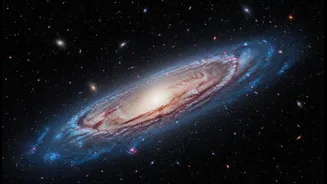
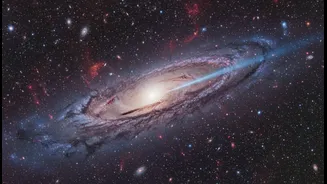
And that’s just our local neighbourhood. When we turn our gaze to objects outside our own galaxy, the time-lag becomes truly staggering. The Andromeda Galaxy is the closest major galaxy to our Milky Way and is visible to the naked eye as a faint, fuzzy patch on a dark night. That smudge of light is 2.5 million light-years away. The light you are seeing left Andromeda long before the first humans, *Homo sapiens*, ever walked the Earth. You are witnessing light that began its epic voyage when our distant ancestors were just beginning to evolve on the African savanna. Every photon from Andromeda is a direct, physical link to a world that existed millions of years before human history even began.
Modern Telescopes as History Books
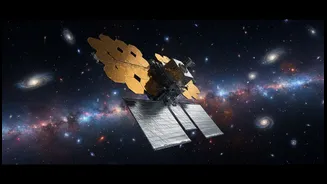
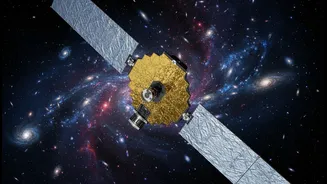
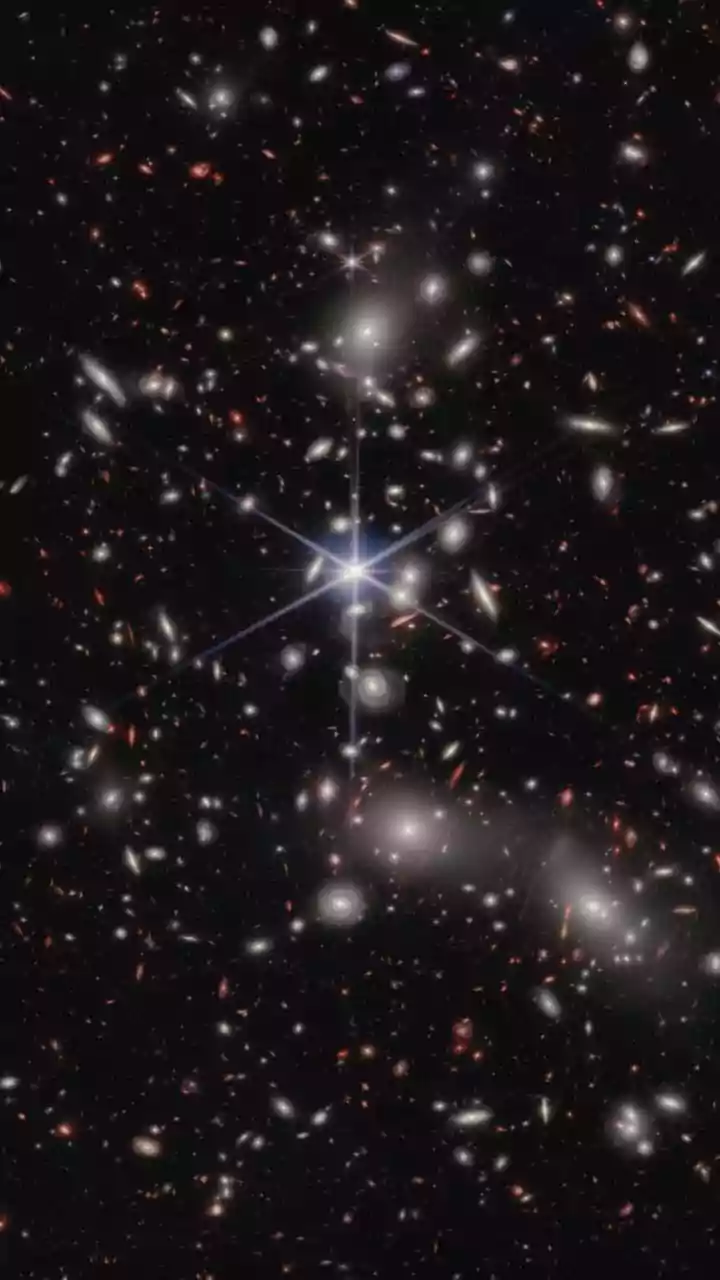
This principle is the cornerstone of modern cosmology. Powerful instruments like the Hubble Space Telescope and the James Webb Space Telescope are designed as powerful time machines. By looking at the most distant galaxies, they are able to see light that has travelled for over 13 billion years. This allows astronomers to peer back to the dawn of the universe itself, observing how the very first stars and galaxies formed. They aren't just taking pictures of space; they are reading the earliest pages of the cosmic history book, chapter by chapter, one ancient photon at a time. This cosmic time-delay isn't a bug; it's the most powerful feature astronomers have for understanding our origins.