





The Spark of Life
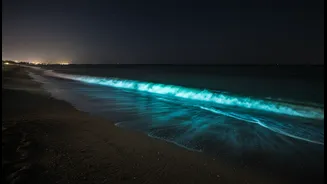
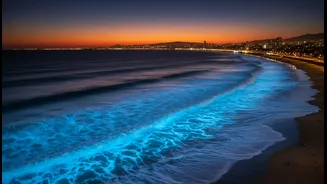
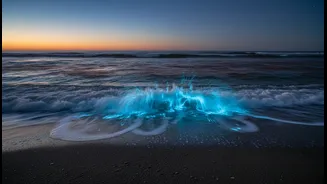
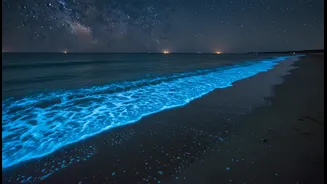
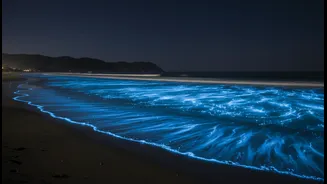
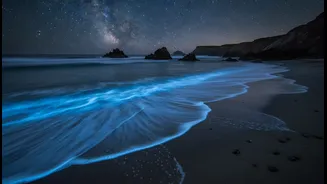
The ethereal glow that occasionally transforms Mumbai’s coastline is the work of living organisms. The phenomenon, called bioluminescence, is a chemical reaction that produces light within a living creature. On land, we see it in fireflies, but in the ocean,
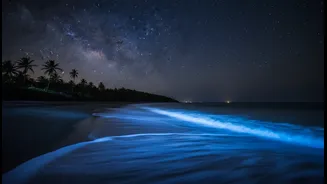
it's far more common. In the case of Mumbai’s blue tide, the culprits are microscopic, single-celled organisms called dinoflagellates. Specifically, a species known as Noctiluca scintillans, or 'sea sparkle', is responsible for these breathtaking displays. When the water is disturbed by waves, boats, or even a hand splashing in the sea, these tiny organisms flash a brilliant blue light.
A Microscopic Burglar Alarm
Why do these tiny plankton glow? Scientists believe it's primarily a defense mechanism. The sudden flash of light can startle or confuse a predator, giving the dinoflagellate a chance to escape. Some researchers refer to it as a 'burglar alarm' effect. The idea is that by lighting up, the dinoflagellate might attract a larger predator that would then prey on the creature trying to eat it. It's a high-stakes survival strategy played out millions of times in a single glowing wave. This chemical reaction involves a light-emitting molecule called luciferin and an enzyme, luciferase, which when combined with oxygen, release energy in the form of light.
Mumbai's Unique Coastal Conditions
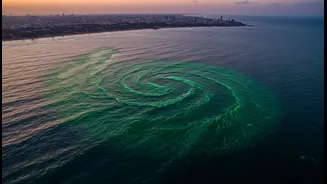
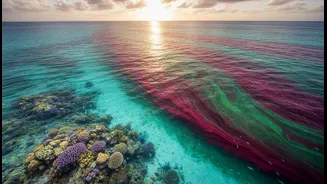
While sea sparkle exists in oceans globally, their appearance as a dense, glowing bloom along Juhu, Devgad, and other coastal areas depends on specific conditions. These blooms, or 'red tides' as they are sometimes known during the day, thrive when there are plenty of nutrients in the water. Historically, this was often linked to pollution, such as fertilizer runoff and sewage discharge, which create a nutrient-rich environment that encourages algal growth. When these nutrient levels are high and the ocean is calm, the dinoflagellates can multiply rapidly, creating the dense concentrations needed for the glow to be visible.
A Beautiful Warning Sign
Despite its beauty, the blue tide can be a complex ecological indicator. While smaller blooms are generally harmless, large, persistent ones can be problematic. The Noctiluca scintillans species seen in the Arabian Sea is not directly toxic, but it can have serious indirect effects. These blooms can lead to massive fish die-offs by depleting oxygen in the water and releasing ammonia as they consume their food source, diatoms—another type of plankton crucial to the marine food web. This disruption can have cascading effects, impacting everything from fish populations to the livelihoods of coastal fishing communities.
The Climate Change Connection
More recent research points to a broader, more alarming cause for the increased frequency of these blooms: climate change. Studies by Indian and U.S. scientists suggest that the warming of the Arabian Sea is playing a significant role. Warmer surface waters create greater temperature differences between ocean layers. This change in stratification hinders the upward movement of essential nutrients like silicates, which diatoms need to survive. As the diatoms struggle, the resilient and voracious Noctiluca thrives, outcompeting them and dominating the ecosystem. Therefore, the beautiful glow could be an indicator of a major shift in the marine food chain, driven by global climate trends.