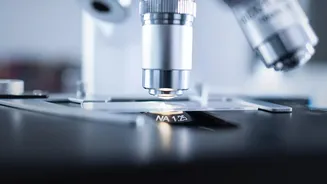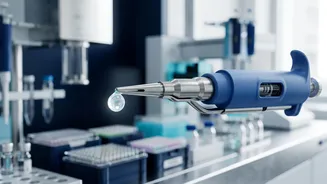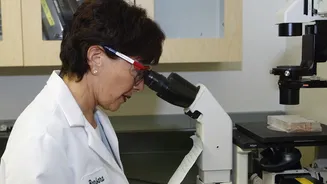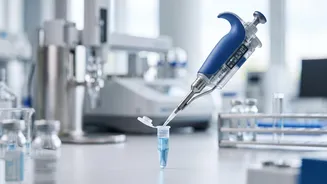








The mRNA technology that revolutionised COVID-19 vaccines is now at the heart of a new frontier in cancer treatment. A Hyderabad-based startup, PopVax, is leading the charge in India with a highly personalised approach that could change everything.
A New Chapter in Vaccine Science
Messenger
RNA, or mRNA, became a household name during the pandemic. It works by giving our cells temporary instructions to create specific proteins, training our immune system to fight off a virus. Now, scientists are applying that same principle to a more personal and complex enemy: cancer. Hyderabad-based biotechnology firm PopVax is at the forefront of this effort in India, developing personalised cancer vaccines that combine artificial intelligence (AI), genetic sequencing, and mRNA technology. The company recently launched its 'RNA Foundry', an advanced facility designed to research, develop, and manufacture these next-generation medicines entirely in-house. This move signals a significant ambition, aiming to transition India from being the world’s pharmacy for generic drugs to a hub of cutting-edge biopharmaceutical innovation.
What Makes This Technology 'Personalised'?
Unlike traditional vaccines that are one-size-fits-all, PopVax's approach is tailored to each individual patient. Every cancer tumour has a unique set of genetic mutations, which can produce abnormal proteins called neoantigens. These neoantigens are like flags that can mark a cell as cancerous. The process begins by sequencing the genetic material from a patient's tumour. PopVax then uses AI and machine learning to analyze this data and predict which neoantigens are most likely to trigger a powerful immune response. Once the best targets are identified, a custom mRNA vaccine is created. When administered, this vaccine instructs the patient's own cells to produce these specific neoantigens, effectively training their immune system to recognise and hunt down cancer cells anywhere in the body.
The Visionary Behind PopVax
The company was founded in late 2021 by Soham Sankaran, a computer scientist with degrees from Yale and Cornell who left a career in robotics to enter biotechnology. Motivated in part by a personal family history with pancreatic cancer, Sankaran taught himself immunology and biology before starting the company. He has assembled a team of over 100 scientists and engineers to create a 'full-stack' company that controls every step of the process. PopVax has attracted significant funding from notable international backers, including the Bill & Melinda Gates Foundation, Ethereum co-founder Vitalik Buterin, and the US government's Biomedical Advanced Research and Development Authority (BARDA).
More Than Just Cancer
While the personalised cancer vaccine program is drawing major attention, PopVax's ambitions are broader. The company has already developed a broad-spectrum, fridge-stable COVID-19 vaccine candidate which entered Phase I clinical trials in Australia in August 2026. This is a notable achievement, as its stability at normal refrigeration temperatures for over nine months solves a major logistical hurdle faced by first generation mRNA vaccines. The company's pipeline also includes potential vaccines for other challenging infectious diseases like Hepatitis C, influenza, and tuberculosis, all built upon its versatile AI driven mRNA platform.
The Road Ahead for Personalised Medicine
The development of personalised cancer vaccines is still in its early stages globally. While international trials by companies like Moderna and Merck have shown promising results for skin cancer, the technology is experimental. PopVax's personalised therapies are not yet approved for routine use. The company aims to make its treatments available to a small number of patients through 'compassionate use' pathways by the end of 2026, pending regulatory clearance. The data gathered from these initial cases will be crucial for designing larger clinical trials to formally establish the treatment's safety and effectiveness. The RNA Foundry's ambitious goal of turning a tumour sample into a ready to use vaccine in just eight to ten weeks could be a game changer if proven successful.