






The Invisible Infrastructure
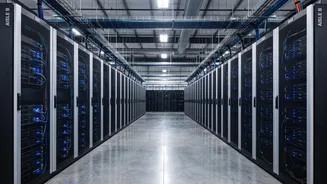
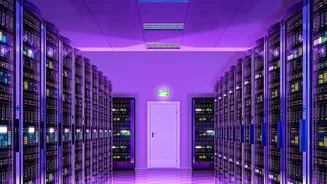
Every time you stream a movie, join a video call, or use a cloud application, you are relying on a data centre. These sprawling, anonymous buildings are the physical heart of the internet, housing the servers, storage systems, and networking equipment
that process and manage our digital lives. Currently, they consume a significant amount of power, estimated to be around 460 to 500 terawatt-hours (TWh) annually, which is approximately 1.5% to 2% of the world's total electricity. To put that into perspective, the upper estimates of their consumption are comparable to the annual electricity use of entire countries like Germany or Great Britain. This demand is not just for running the servers themselves but also for the massive cooling systems required to prevent them from overheating.
The AI and Crypto Accelerant
While data demand has been rising steadily for years, the recent explosion in Artificial Intelligence is creating a new and unprecedented surge in energy needs. Training and running large AI models, like those behind generative AI services, is far more computationally intensive than traditional internet searches or data processing. According to the IEA's latest reports, AI is the dominant driver of this projected growth, accounting for a huge portion of the expected increase in electricity demand. Some estimates suggest a single AI query can use three to ten times more electricity than a standard Google search. This voracious appetite for power means that facilities built specifically for AI are being designed to handle power loads that were once unimaginable for traditional data centres.
Crunching the IEA's Numbers
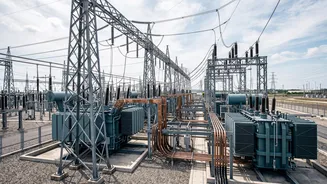
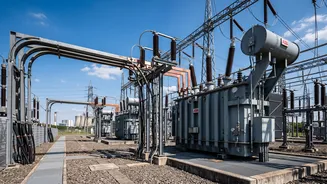
The IEA's 2026 World Energy Outlook projects that global electricity consumption by data centres will soar to about 1,000 TWh by 2030. This represents a doubling from today's levels in just a few years. This growth is particularly concentrated in the United States and China, which are expected to account for the majority of the increase. The IEA warns that this rapid expansion will place significant strain on electricity grids and supply chains for essential equipment like transformers. Furthermore, it could have serious implications for carbon emissions, as much of this new demand may be met by fossil fuels. Projections indicate that in the US, natural gas could supply about 60% of data centre electricity by 2030, while in China, coal could account for roughly half.
The Path to a Greener Cloud
The challenge is not insurmountable, and the tech industry is actively pursuing solutions. Major tech companies like Google, Microsoft, and Amazon have become the largest corporate buyers of renewable energy in the world. However, while renewables are expected to meet nearly half of the additional demand by 2030, fossil fuels will still play a major role in the short term. The focus is therefore twofold: increasing the supply of clean energy and radically improving efficiency. Innovations in cooling, such as liquid and immersion cooling, can reduce energy use by up to 40% compared to traditional air cooling. More efficient software algorithms, server virtualization, and smarter workload management can also significantly cut down on the energy required for computing tasks. Some are even exploring direct power sources, like Microsoft's deal to power a data centre with nuclear energy from the Three Mile Island facility, signaling a potential new direction for the industry.