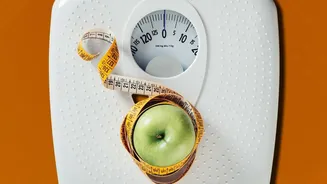







What Exactly Is Water Weight?
Our bodies are made of about 60% water, which is essential for nearly every bodily function, from regulating temperature to lubricating joints. 'Water weight' is the term for extra fluid that your body temporarily holds in its tissues. Unlike body fat,
this retention is transient and can cause your weight to swing up or down by as much as two to five pounds in a single day. This fluctuation is completely normal. Several everyday factors can cause your body to hold onto more water, including a high-sodium meal, an increase in carbohydrate intake, hormonal changes (especially during a menstrual cycle), and even dehydration, which can paradoxically cause your body to conserve fluid.
The Key Culprits: Salt and Carbs
Two of the biggest drivers of water retention are dietary sodium and carbohydrates. When you consume a salty meal, your body holds onto extra water to dilute the sodium and maintain a balanced internal environment. This is why you might feel puffy or notice your rings feel tighter after a high-sodium dinner. Similarly, carbohydrates are stored in your muscles and liver as glycogen. For every gram of glycogen your body stores, it also stores approximately three to four grams of water along with it. So, a pasta-heavy meal can easily lead to a temporary jump on the scale, but it's crucial to remember this is water, not fat.
Understanding True Fat Loss
In contrast to the rapid shifts of water weight, fat loss is a much slower and more gradual process. It occurs when you consistently consume fewer calories than your body burns, forcing it to use its stored fat for energy. A sustainable and healthy rate of fat loss is typically around 0.5 to 1% of your body weight per week. This means that an overnight gain or loss of several pounds is almost certainly not due to a change in body fat. True fat loss is a marathon, not a sprint, and it requires patience and consistency over weeks and months, not hours or days.
How to Tell the Difference
So, how can you distinguish between a temporary fluid shift and genuine progress? The speed of the change is your biggest clue. Weight that appears or disappears overnight or within a couple of days is almost always water. Fat loss is gradual and more permanent. Another sign is how your body feels; water retention often comes with a feeling of bloating or puffiness in areas like the fingers, ankles, and stomach. The most reliable indicators of fat loss are not found in daily weigh-ins but in long-term trends and non-scale victories. Are your clothes fitting looser? Do you have more energy? Are your body measurements, like your waist circumference, decreasing over time? These are the signs that reflect real changes in body composition.
Smarter Ways to Track Your Progress
Relying solely on a daily weigh-in can be a recipe for frustration. For a more accurate picture of your progress, try weighing yourself just two or three times a week, always at the same time of day, like first thing in the morning after using the restroom. This helps to create a more reliable trend line over time. Better yet, expand your definition of progress beyond the scale. Taking monthly progress photos in the same outfit and lighting can reveal visual changes the scale might miss. Using a soft tape measure to track changes in your waist, hips, and limbs provides concrete data on fat loss. Ultimately, focusing on how you feel, your energy levels, and how your clothes fit often tells a more motivating and accurate story than the number on the scale ever could.