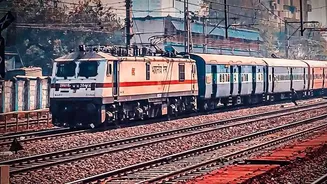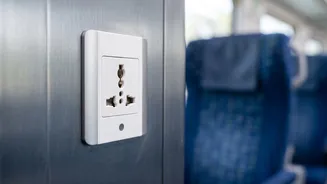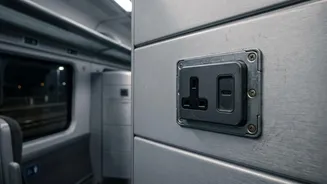







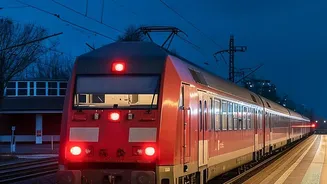
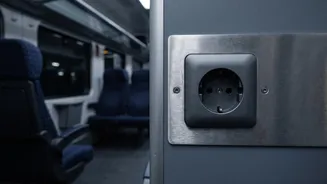
A Rule Rooted in Passenger Safety
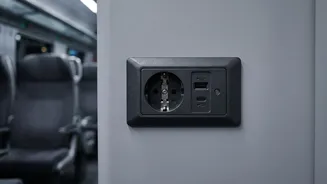
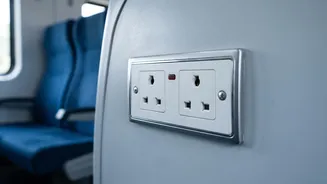
The primary reason Indian Railways switches off power to charging sockets between 11 p.m. and 5 a.m. is fire safety. This is not a new rule; it was first introduced by the Railway Board back in 2014 following recommendations from the Commissioner of Railway Safety.
The initial recommendation came after a serious fire incident in an air-conditioned coach of the Bengaluru-Hazur Sahib Nanded Express in 2013, which highlighted the potential dangers of overnight charging. The directive has been reiterated several times since, most recently in October 2026 after a passenger's power bank exploded while charging on a South Eastern Railway train.
The Danger of Overheating and Faulty Devices
When passengers are asleep, electronic devices like phones, laptops, and especially power banks are left unattended for hours. This creates a significant fire risk. Many devices can overheat when left charging for extended periods. The problem is made worse by the use of faulty or non-certified chargers and cables, which may not have proper safety mechanisms to prevent overcharging or short circuits. In a confined, moving space like a train coach, a small fire from an overheating device can quickly become a major disaster, spreading rapidly while passengers are asleep and unable to react quickly. The Railway Board's decision is a precautionary measure to eliminate this specific risk during the most vulnerable hours of the night.
Enforcing Compliance with Surprise Checks
Although the rule has been in place for over a decade, ensuring compliance has been a challenge. Following recent incidents where staff failed to switch off the power, the Railway Board has issued strict instructions to all zonal railways for its enforcement, stating there will be no exceptions. To ensure the rule is followed, the Board has mandated that onboard staff be properly trained and that senior officials and supervisors conduct surprise inspections during overnight journeys. This renewed focus aims to make the overnight power-down a standard, non-negotiable safety practice across the entire railway network.
Is It About Saving Electricity?
A common misconception is that the railways turn off the sockets to conserve electricity. However, this is not the primary motivation. According to railway officials, the amount of power consumed by charging phones and laptops is minimal compared to the energy needed for lighting, fans, and air conditioning systems in the coaches. The decision is driven almost entirely by safety concerns rather than energy-saving goals. While it might offer a negligible benefit in power conservation, the core objective remains the prevention of fire hazards.
What This Means for Overnight Travellers
For the millions of passengers who rely on Indian Railways for overnight travel, this rule means a little bit of planning is required. The most straightforward solution is to ensure your devices—phones, laptops, and power banks—are fully charged before the 11 p.m. cutoff. Travellers are advised to complete their charging during the day or evening. Using a fully charged power bank as a backup is a good idea, but it should not be charged on the train overnight. It's also a good reminder to always use original and certified chargers and cables to minimise risks even during permitted hours. While the six hour window may be an inconvenience, it is a critical safety trade off.