




A Cardiovascular Workout in Disguise
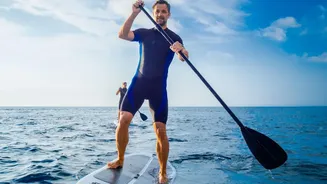
At its heart, paddleboarding is a fantastic cardiovascular exercise. The continuous motion of pulling the paddle through the water elevates your heart rate and keeps it there, similar to jogging or cycling. Whether you are gliding calmly across a lake
or powering through choppy water, your heart is working to pump blood to your muscles, improving circulation and overall endurance. This sustained effort strengthens the heart muscle over time, making it a low-impact and enjoyable way to boost your cardiovascular health without the joint stress associated with activities like running.
The Ultimate Core Stabiliser
The true secret to paddleboarding's effectiveness lies in balance. Standing on an unstable board floating on water forces your body to make constant, tiny adjustments to stay upright. This process heavily engages your core muscles, including your abs, obliques, and lower back. Every paddle stroke involves a twisting motion from your torso, which further activates and strengthens these key stabilising muscles. Unlike crunches or planks, this is functional core work; you are training your muscles to work together to maintain stability and power, which improves posture and can help prevent injuries in daily life.
The Power of Rhythmic Paddling
The repetitive, rhythmic nature of paddling does more than just propel you forward. This steady motion can have a meditative effect, helping to reduce stress and clear your mind. From a physical standpoint, a consistent rhythm helps you maintain a steady output of energy, building stamina and allowing you to exercise for longer periods without feeling exhausted. This synchronised movement of your brain, ears, and muscles strengthens neural pathways that control movement and stability. This blend of physical exertion and mental focus is what makes paddleboarding so engaging; it becomes a full-body experience that feels less like a chore and more like a mindful escape.
More Than Just Core and Cardio
While the core and heart get a great workout, paddleboarding is truly a full-body activity. Your back muscles, particularly the lats and rhomboids, provide the power for each stroke. Your shoulders and arms control the paddle, while your legs and glutes are constantly working to absorb movement from the water and keep you stable. Even the small muscles in your feet and ankles are engaged, gripping the board to maintain balance. This comprehensive muscle engagement means you are building strength from head to toe in a single, fluid activity.
Getting Started on the Water
The beauty of paddleboarding is its accessibility. Beginners of all ages and fitness levels can start on calm, flat water, often beginning by kneeling on the board to build confidence before standing up. Many waterfront locations offer board rentals and beginner lessons, which are a great way to learn proper technique. Correct form is key to maximising the workout and preventing strain; the power should come from your core rotation, not just your arms. As you progress, you can challenge yourself with longer distances, faster speeds, or even activities like SUP yoga to further test your balance and strength.