
Why Venus is the 'Evening Star'
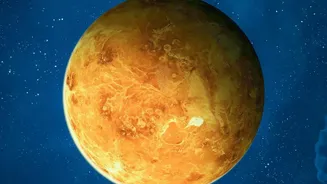
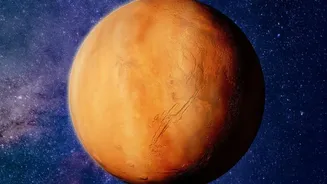
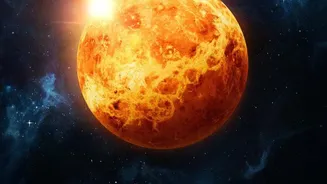
Venus is often called the 'Morning Star' or 'Evening Star' because its orbit keeps it close to the Sun from our perspective. This August, it's our brilliant Evening Star. The planet is reaching what astronomers call its greatest eastern elongation around
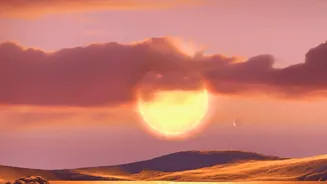
August 14-15. This simply means it will be at its farthest apparent distance from the Sun, making it linger longer and shine brighter in the twilight sky after the Sun has disappeared. Its brightness is so intense that it can be one of the first celestial objects to appear in the evening, easily piercing through the fading daylight.
Your Simple Viewing Guide: When and Where to Look
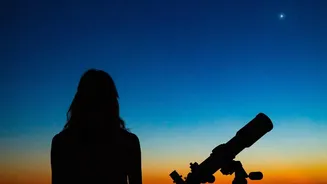
Finding Venus is incredibly easy and requires no special knowledge. Throughout August, simply face west to west-southwest about 30 to 45 minutes after sunset. You will see an unmistakably bright object hovering relatively low above the horizon. It will be the most prominent point of light in that part of the sky. While it is visible all month, the days around mid-August are particularly good. On the evening of August 15, you'll get a special treat as a slender crescent moon will appear near Venus, creating a beautiful celestial pairing.
Is It a Star? Is It a Plane? No, It’s Venus!
If you're new to stargazing, it's easy to get confused. Here’s how to be certain you're looking at Venus. Unlike stars, planets like Venus don't tend to twinkle. They shine with a steady, silvery-white light. Stars, being much farther away, have their light disturbed by Earth's atmosphere, causing them to scintillate or twinkle. Airplanes, on the other hand, have blinking lights and move noticeably across the sky in a matter of minutes. Venus will appear stationary in the short term, only moving across the sky over the course of an hour or more as the Earth rotates.
Gear Up: Telescope or Naked Eye?
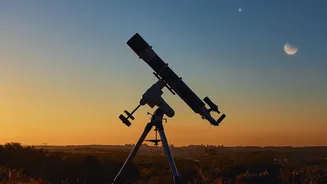
You do not need any special equipment to enjoy this sight. Venus is the brightest planet in our sky and is one of the most rewarding objects to view with just your eyes. However, if you have a pair of binoculars, you can enhance your experience. A steady hand or a tripod will help. Through binoculars, you might be able to see that Venus is not perfectly round. This month, it will appear as a tiny half-moon or thick crescent, a phenomenon known as its phase. This is because, just like our Moon, we see different amounts of its sunlit side depending on its position relative to Earth and the Sun.
Finding the Best Viewing Spots
While Venus is bright enough to be seen from light-polluted cities, finding a darker spot will always improve the experience. If you can, head to a location with a clear, unobstructed view of the western horizon. This could be a terrace, a rooftop, a local park, or the outskirts of your town or city. Less ambient light means the sky will be darker, making Venus pop even more brilliantly and allowing you to spot other, fainter stars that emerge as twilight deepens. For this particular event, a clear view to the west is more important than perfect darkness.
Bonus Sights in the August Sky
While you're admiring Venus, you can also look for the bright star Spica, which belongs to the constellation Virgo. Venus will be visibly moving closer to Spica throughout the month, heading for a close approach in early September. For those who stay up a bit later, another planetary giant makes an appearance. The ringed planet Saturn will rise in the east later in the evening and will be well-placed for viewing high in the sky before dawn.