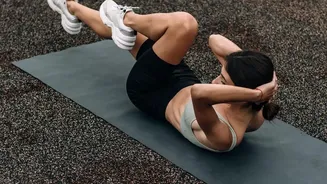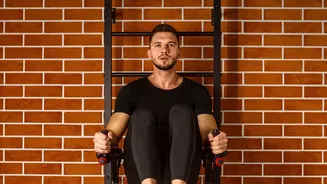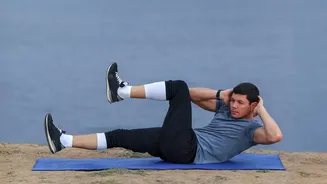







Beyond the Six-Pack: What is Functional Strength?
Functional core training is about building strength that translates directly to real-life activities. Your core is more than just the surface-level 'six-pack' muscles; it includes the deep muscles of your abdomen, lower back, and pelvis that stabilize
your entire body. Think of it as your body's central powerhouse. Every time you bend, lift, twist, or even just stand upright, your core is engaged to provide stability and power. Focusing on functional strength helps improve balance, enhance athletic performance, and, most importantly, prevent injuries by protecting your spine and ensuring your body moves efficiently.
The Foundation of Form: Quality Over Quantity
Before you jump into any exercise, remember this golden rule: proper form is everything. A single, perfectly executed repetition is far more valuable than 20 sloppy ones. Focus on moving with control and intentionally engaging your core muscles. You should feel the work in your midsection, not a strain in your neck or lower back. If an exercise causes sharp pain, stop immediately. It’s also crucial to breathe. A common mistake is to hold your breath, but steady breathing helps maintain stability and deliver oxygen to your working muscles.
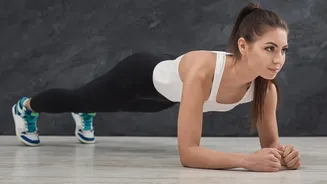
1. The Plank
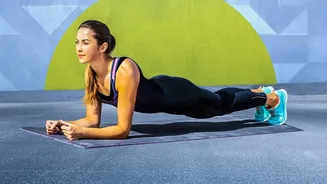
The plank is a classic for a reason: it’s an isometric exercise that builds incredible stability. To perform it, place your forearms on the floor with your elbows directly under your shoulders. Extend your legs back, keeping your feet together, and lift your hips so your body forms a straight line from your head to your heels. Avoid letting your hips sag or rise too high. Actively squeeze your abs and glutes to keep your core braced. Hold the position without letting your form break.
2. The Bird-Dog
This exercise is excellent for improving balance and stability while challenging your core to resist rotation. Start on all fours, with your hands directly below your shoulders and your knees below your hips. Engage your core to keep your back flat. Simultaneously extend your right arm straight forward and your left leg straight back. Hold for a moment, focusing on keeping your torso and hips perfectly still, then slowly return to the starting position. Repeat on the other side, extending your left arm and right leg.
3. The Dead Bug
The dead bug is a fantastic exercise for coordinating your limbs while maintaining a braced core. Lie on your back with your arms extended toward the ceiling and your knees bent at a 90-degree angle over your hips. Press your lower back gently into the floor. Slowly lower your right arm and left leg toward the floor simultaneously, going only as far as you can without your lower back arching. Return to the start with control and repeat with the opposite arm and leg. The key is to keep your torso completely stable throughout.
4. Leg Raises
Leg raises are a powerful way to target the lower part of your rectus abdominis. Lie on your back with your legs straight. You can place your hands under your lower back for extra support if needed. Keeping your legs as straight as possible, slowly raise them toward the ceiling until they are perpendicular to the floor. The most important part is the descent: slowly lower your legs back down, controlling the movement with your abs. Do not let your lower back lift off the floor; if it starts to arch, you've lowered your legs too far.
5. The Hollow Body Hold
This is an advanced move that builds immense core tension and stability. Lie on your back and press your lower back firmly into the floor—this is non-negotiable. Lift your head, shoulders, and legs off the ground, creating a slight 'C' or banana shape with your body. Your arms can be extended overhead to increase the challenge. The goal is to hold this position while keeping your lower back glued to the floor. If it arches, you've gone too far. You can modify by bending your knees or raising your legs higher.