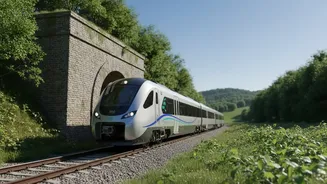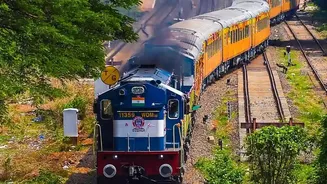




How a Hydrogen Train Actually Works
Imagine an electric train that carries its own power plant. That's essentially what a hydrogen fuel cell train is. Instead of drawing electricity from overhead wires or burning diesel, it creates power onboard. Specially designed cylinders store compressed
hydrogen. Inside a device called a Proton Exchange Membrane (PEM) fuel cell, this hydrogen reacts with oxygen taken from the surrounding air. This electrochemical reaction generates electricity to power the train's motors. The only direct by-products are heat and water vapour, making it a zero-emission solution at the point of use. Any excess electricity generated, for instance during braking, is stored in lithium-ion batteries to provide an extra boost during acceleration.
Why Heritage Routes Are the Perfect Testbed
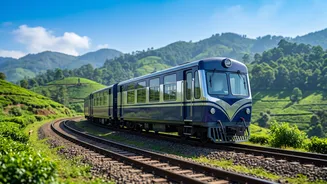
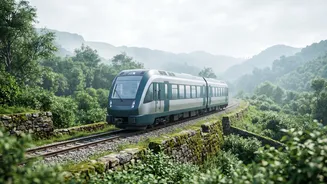
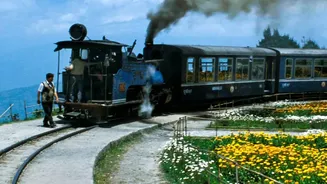
Indian Railways has an ambitious initiative called 'Hydrogen for Heritage'. The logic behind choosing these scenic, often mountainous, routes is multifaceted. Firstly, many heritage lines, like the Kalka-Shimla and Darjeeling Himalayan Railway, are narrow-gauge and wind through ecologically sensitive areas. Introducing zero-emission trains here helps preserve the pristine environment that makes them so special. Secondly, these routes present unique engineering challenges, with sharp curves and numerous tunnels that make conventional electrification difficult and potentially damaging to their heritage status. Finally, showcasing this futuristic technology on these beloved tourist lines creates a powerful symbol of progress, blending India's rich history with its sustainable ambitions.
From Pilot Project to Heritage Lines
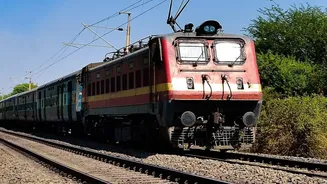
Before these trains chug up the mountains, the technology must be proven. The main pilot project has been conducted on the 89-kilometre Jind-Sonipat section in Haryana. This route was chosen to test the retrofitted train under real-world operating conditions. A Diesel Electric Multiple Unit (DEMU) was retrofitted with an indigenously developed hydrogen fuel cell system. Following successful trials, where the train reached speeds of up to 120 kmph, Indian Railways is leveraging the experience gained for a wider rollout. The plan includes deploying 35 hydrogen trains across eight heritage routes, including the Kalka-Shimla, Darjeeling, and Nilgiri Mountain Railways.
Building an Entire Hydrogen Ecosystem
Running a hydrogen train requires more than just the train itself; it demands a whole new support system. To facilitate the Jind-Sonipat pilot, Indian Railways established the country's largest railway hydrogen storage and refuelling facility at Jind. This integrated facility handles the entire process: producing hydrogen from water via electrolysis, then compressing and storing it safely before dispensing it to the train. Similar infrastructure will be needed for the heritage routes, with plans already in motion for fuelling stations at locations like Kalka, Shimla, and Barog for the Kalka-Shimla line. Safety is a top priority, with multi-layered systems including leak detectors, flame sensors, and automatic shut-off mechanisms built into both the trains and the ground facilities.
The Challenges on the Track Ahead
Despite the promise, the path to a hydrogen-powered railway network is not without obstacles. The primary challenge is cost. Currently, the technology is expensive, with each train estimated to cost around ₹80 crore and the supporting ground infrastructure adding another ₹70 crore per route. Furthermore, the cost of 'green' hydrogen—produced using renewable energy—is still significantly higher than conventional fuels like diesel. There are also logistical hurdles in building the necessary production and storage infrastructure across geographically dispersed and difficult terrains. While India is developing domestic technology, it still relies on some imported fuel cell components. However, as the technology matures and scales up, these costs are expected to decrease, making it a more viable long-term solution for achieving Indian Railways' goal of becoming a net-zero carbon emitter by 2030.