

The Foundation: Mastering Basic Tree Pose
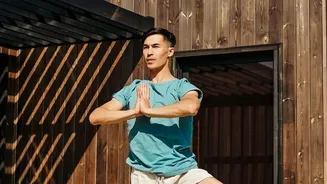
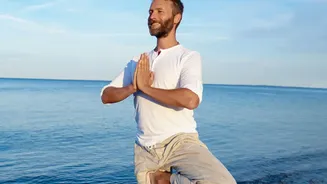
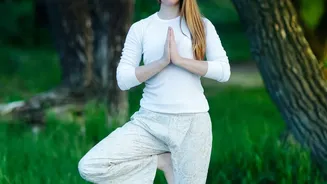
Before exploring variations, it's crucial to understand the classic Tree Pose. Begin in Mountain Pose (Tadasana), standing tall with your weight distributed evenly across both feet. Shift your weight onto one foot, engaging the muscles of the standing leg.
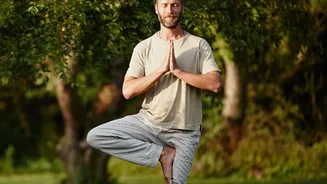
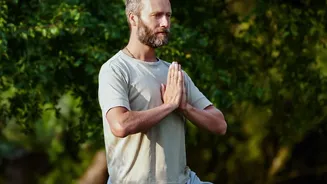
Bend your other knee and place the sole of your foot on the inner ankle, calf, or thigh of the standing leg. A common and important safety cue is to always avoid placing your foot directly on the knee joint, as this can cause strain. Bring your hands to a prayer position at your heart. To maintain balance, fix your gaze (drishti) on a non-moving point in front of you. Press the lifted foot into the standing leg and the standing leg back into the foot to create a stable connection. Keep your hips level and facing forward. This pose strengthens the legs, improves posture, and enhances concentration.
For Beginners: Finding Support and Stability
If you feel unsteady, using support is a fantastic way to build confidence without the fear of falling. Practice next to a wall, resting one hand on it for balance. This allows you to focus on proper alignment, like keeping your standing leg strong and your hips open, without the immediate pressure of balancing unsupported. Another option is to use a chair, lightly holding onto the back for security. You can also start with a 'kickstand' variation by placing the toes of your lifted foot on the floor and resting your heel against the inner ankle of your standing leg. These modifications make the pose accessible to everyone and provide a safe entry point for developing the strength and focus required for the full expression of the pose.
Intermediate Step: Exploring Arm Variations
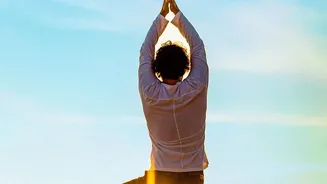
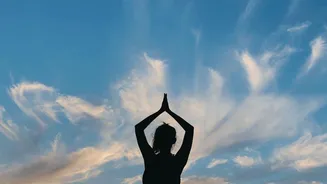
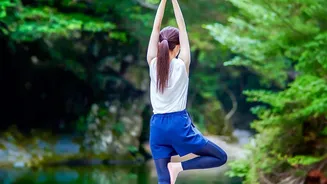
Once you feel stable in the basic pose, changing your arm position is a simple way to alter the challenge. Extending your arms overhead like branches is a classic variation that lengthens the spine and challenges your stability by raising your center of gravity. You can bring the palms together or keep them shoulder-width apart. For a different sensation, try 'cactus arms' by bending your elbows at 90 degrees, opening the chest and shoulders. Alternatively, 'windy tree' involves letting the arms sway gently, which tests your balance by introducing movement. Another powerful variation is the Twisted Tree, where you keep your hips square to the front and gently twist your upper body, which enhances the pose's energetic effects and challenges your core stability.
Advanced Challenge: Half-Lotus and Bending
For seasoned practitioners, Half-Lotus Tree Pose (Ardha Padma Vrksasana) offers a deeper hip opener. After finding your balance, carefully bring the top of your lifted foot to rest on the opposite hip crease, with the sole of the foot facing upward. This requires significant external rotation in the hip and should only be attempted if you can do so without any knee pain. Another advanced option is to add a side bend while in your standard Tree Pose. With arms extended overhead, gently bend your torso to the side, away from the lifted leg, creating a long stretch along the side of your body. This variation requires immense core strength and focus to maintain balance while in a non-symmetrical position. These advanced forms demand a high degree of stability, flexibility, and concentration.
Building Inner Confidence Through Balance
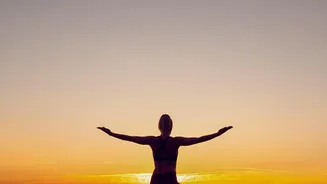
The journey through Tree Pose and its variations is more than a physical exercise; it's a practice in mental fortitude. Balancing poses are known to calm the mind, improve focus, and build self-awareness. Each time you wobble and find your center again, you are training your resilience. This practice of finding physical equilibrium can translate into greater emotional and mental balance in daily life. The confidence gained from holding a challenging pose, even for a few breaths, can be profound. It teaches patience and the acceptance that steadiness is not about being perfectly still, but about constantly making small adjustments to remain grounded amidst life’s movements.