




An Ideal Season for Stargazing
Autumn offers a perfect storm of advantages for anyone curious about the night sky. The most obvious benefit is that darkness arrives earlier, meaning you don't have to stay up late to enjoy a truly dark sky. The often crisp, cool air of the season holds
less humidity, which results in clearer, more transparent skies and sharper-looking stars. This atmospheric stability reduces the twinkling effect, allowing for better views of faint and distant objects. Comfortable temperatures also make it more pleasant to spend time outside compared to the freezing nights of winter or the buggy evenings of summer. This combination of accessible darkness and improved viewing conditions makes autumn a fantastic entry point for budding astronomers.
Why Binoculars Are Your Best First Tool
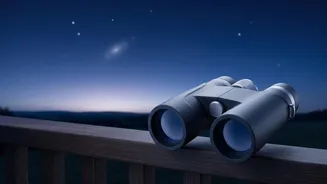
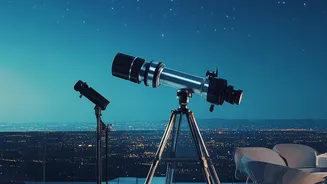
While powerful telescopes have their place, many aspiring stargazers are surprised to learn that binoculars are often the superior tool for beginners. Unlike telescopes, which have a narrow field of view, binoculars allow you to see a wide swath of the sky at once. This makes it much easier to navigate from familiar stars to your desired target, a technique known as star-hopping. Binoculars are also portable, affordable, and intuitive to use. Many of the autumn sky's most beautiful sights are large star clusters and galaxies that are actually framed better within the wide view of binoculars, which can provide a more satisfying and contextual experience than a high-magnification telescope view.
Target 1: The Andromeda Galaxy (M31)
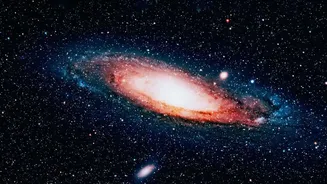
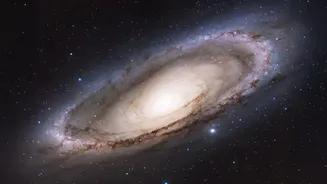
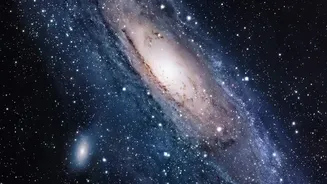
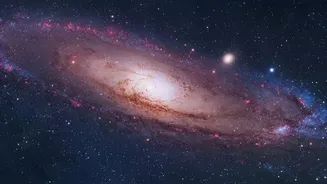
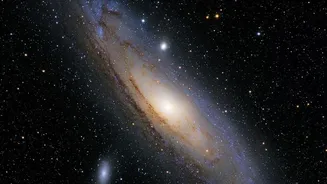
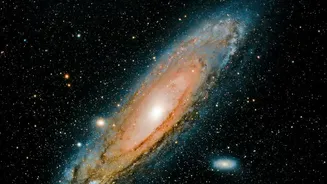
The crown jewel of the autumn sky is the Andromeda Galaxy, our closest major galactic neighbour. Lying approximately 2.5 million light-years away, it's the most distant object you can see with the naked eye under dark skies, where it appears as a faint, fuzzy smudge. Through a pair of 10x50 binoculars, this smudge transforms into a distinct, glowing oval of light. To find it, first locate the W-shaped constellation of Cassiopeia or the Great Square of Pegasus. The galaxy is located roughly halfway between them. With patience, you'll spot its bright, concentrated core—the collective light of hundreds of billions of stars, a breathtaking sight to behold through a simple optical aid.
Target 2: The Pleiades Star Cluster (M45)
Rising in the east later in the evening is the Pleiades, also known as the Seven Sisters. While visible to the naked eye as a tiny, shimmering dipper-like group of six or seven stars, binoculars reveal its true glory. This young open star cluster, about 440 light-years away, truly comes alive through an optical aid, showing dozens of brilliant, blue-white stars that sparkle like 'diamonds on black velvet'. Because the cluster is so large in our sky, binoculars are the ideal instrument for viewing it, perfectly framing the stellar gathering in a way most telescopes cannot.
More Autumn Binocular Treasures
Beyond Andromeda and the Pleiades, the autumn sky is rich with other targets perfect for binoculars. Look for the Double Cluster in the constellation Perseus, a stunning pair of open star clusters located halfway between Perseus and Cassiopeia. From a dark site, they appear as a faint smudge, but binoculars resolve them into two glittering concentrations of stars. Another beautiful target is the Alpha Persei Moving Cluster, a large group of young, bright stars. You can also try to spot the Great Square of Pegasus, a prominent asterism that serves as a useful signpost for navigating the autumn sky.
Tips for a Successful Night Out
To make the most of your stargazing session, find a location away from city lights. Even a short drive to a darker park can make a huge difference. Give your eyes at least 20 minutes to fully adapt to the darkness, and avoid looking at your phone screen (or use a red-light filter). When observing, try to steady your binoculars by bracing your arms, leaning against a car, or using a tripod to prevent shaky views. Lastly, be patient. Finding these faint, distant objects for the first time is a rewarding challenge that connects you directly to the vastness of the universe.