






The Double-Edged Sword of Rainfall
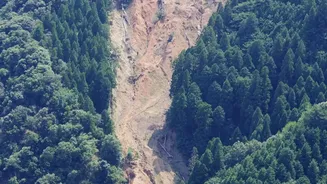
The most immediate trigger for any landslide is, unsurprisingly, intense rainfall. But it's not just a simple case of 'too much rain'. The danger lies in both the intensity and duration of the downpour. Prolonged showers allow water to seep deep into
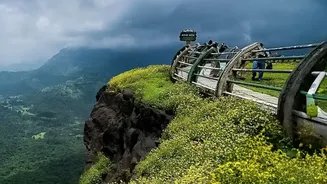
the ground, saturating the soil and weathered rock that make up Mumbai's hillsides. This process, known as saturation, dramatically increases the weight of the slope while simultaneously reducing the friction that holds the soil particles together. When a saturated slope is hit with another sudden, intense burst of rain, it can reach a tipping point, causing a sudden and catastrophic failure. Climate change is also believed to be exacerbating this, leading to more erratic and extreme rainfall events that our urban infrastructure struggles to handle.
Mumbai's Hilly and Unstable Terrain
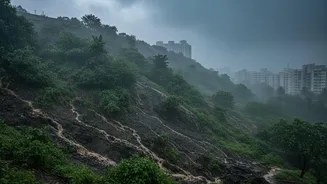
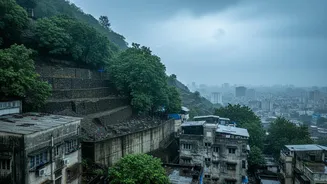
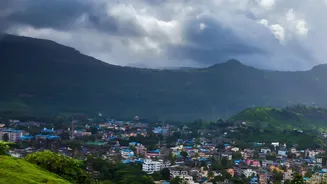
Mumbai is not a flat city. It is dotted with numerous hillocks and steep slopes, particularly in suburban areas like Ghatkopar, Kurla, Vikhroli, and Malad, but also in parts of the island city like Malabar Hill. Much of this terrain consists of weak, fractured rock and laterite soil, which is naturally prone to erosion and instability when wet. The Geological Survey of India (GSI) has identified hundreds of such landslide-prone zones across the city, classifying them based on their level of risk. These natural vulnerabilities mean that many residential areas are built on or below land that is inherently unstable, setting the stage for disaster long before the first monsoon clouds gather.
The Human Factor: Unchecked Construction
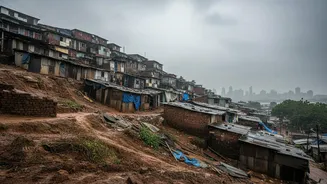
Natural geography is only one part of the equation. Decades of rapid urbanisation and the immense pressure for housing have led to extensive construction on and around these vulnerable hillsides. A significant risk factor is the practice of 'slope cutting', where parts of a hill are carved out to create flat ground for building houses. This removes the natural support at the base of the slope, severely compromising its stability. Furthermore, the growth of dense, informal settlements in these high-risk zones means that even a relatively small landslide can have devastating consequences, trapping residents in tightly packed homes with little chance of escape. The lack of affordable housing options elsewhere in the city often leaves people with no choice but to live in these dangerous areas.
Blocked Waterways and Poor Drainage
Another critical man-made issue is the disruption of natural drainage patterns. In a healthy ecosystem, rainwater flows downhill through defined channels. However, in many of Mumbai's hillside settlements, these natural pathways are blocked by construction and waste. When drainage systems are choked or non-existent, rainwater has nowhere to go but into the soil. This blockage accelerates the saturation of the slope, essentially waterlogging it from within and compounding the effects of heavy rainfall. Experts have repeatedly pointed to poor drainage as a key contributor that turns heavy rain into a deadly hazard, a problem that could be mitigated with better urban planning and infrastructure maintenance.
Missing Defences: Retaining Walls and Vegetation
There are ways to make slopes safer, but they are often missing where they're needed most. Protective structures like retaining walls can help hold back soil, but they need to be engineered correctly with 'weep holes' to allow water to drain through, preventing pressure build-up. In many vulnerable areas, these walls are either absent, poorly constructed, or not maintained. Similarly, natural vegetation plays a crucial role. The roots of trees and shrubs bind the soil together, offering a powerful defence against erosion. Deforestation on hill slopes for development removes this natural protection, leaving the soil exposed and loose. While authorities like the BMC issue warnings and attempt to relocate people from the most dangerous spots, the combination of these risk factors creates a recurring tragedy each monsoon.