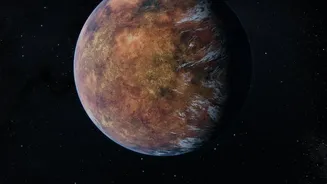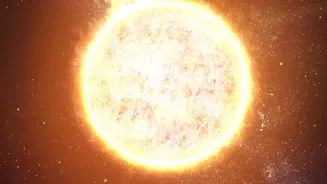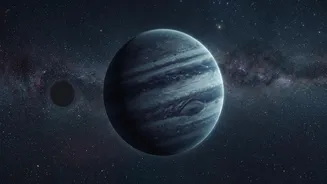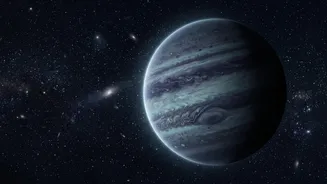





In the vast theater of the cosmos, planets can seem like permanent fixtures. But what happens when one simply vanishes? Astronomers recently witnessed this with TOI-2535 b, a distant world that has disappeared from view.
The Ghost of a Planet
TOI-2535 b is what astronomers
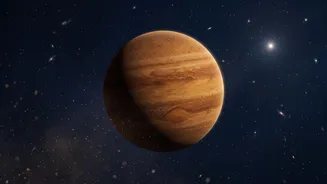
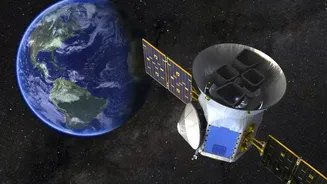
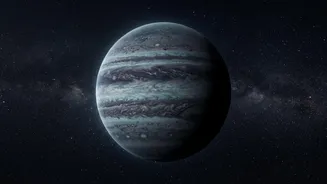
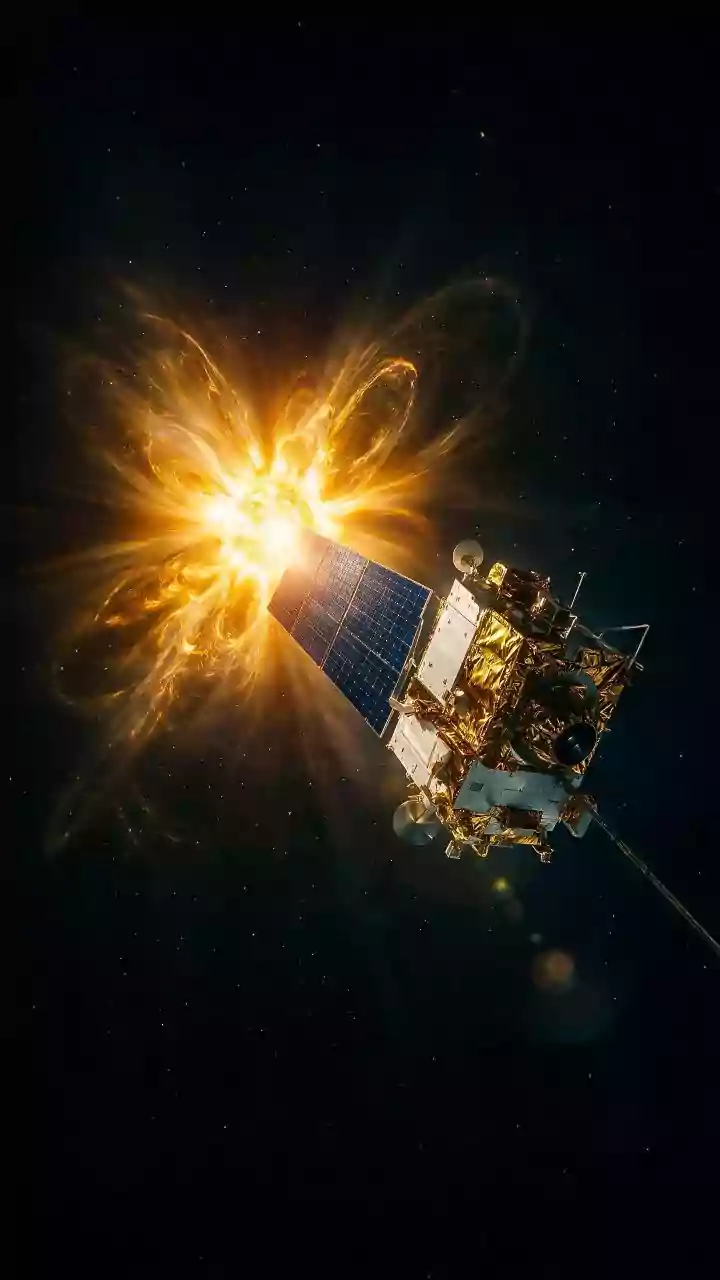
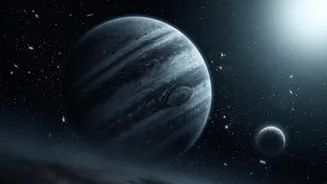
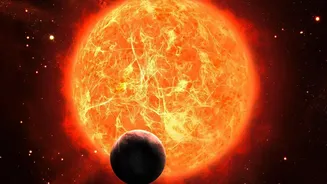
call a 'hot Jupiter'—a massive gas giant orbiting perilously close to its star, about 1,000 light-years from Earth. It completes a full orbit, or its 'year', in just over eight Earth days. Scientists first detected it in 2019 using NASA's Transiting Exoplanet Survey Satellite (TESS). TESS hunts for exoplanets using the transit method: it stares at stars and looks for tiny, periodic dips in their brightness. That dimming often indicates that a planet is passing in front of its star from our point of view, blocking a little bit of light. For seven years, TOI-2535 b reliably performed this cosmic dance.
A Cosmic Disappearing Act
The clockwork of the cosmos is rarely as simple as it seems. Astronomers noticed that the transits of TOI-2535 b were becoming irregular. Sometimes the planet would appear up to six hours earlier or later than predicted. Then, the dimming events became shorter and shallower. Finally, in March 2026, when TESS looked for the planet, there was nothing. The signal was gone; the planet had seemingly vanished. This immediately raised a dramatic question: could a planet be destroyed? While cosmic collisions and stars consuming their young do happen, the truth in this case is less cataclysmic and far more fascinating.
The Wobble of a Hidden Neighbor
The solution to the mystery wasn't a destroyed planet, but a hidden one. A UCLA-led team of researchers concluded that TOI-2535 b is not alone. It has an unseen planetary companion, likely another giant planet, locked in a complex gravitational relationship. This neighbor's pull is so strong that it is causing TOI-2535 b's orbit to wobble, like a spinning top losing momentum. Samuel Yee, a researcher on the project, noted this is the most extreme example of such an interaction they have seen, with the orbit tilting so fast that the planet 'disappeared while we were watching'.
Why We Can No Longer See It
The transit method only works when a planet's orbit is perfectly aligned with our line of sight to its star. The gravitational tug from its neighbor has tilted TOI-2535 b's orbit to a point where it no longer passes between its star and Earth. From our vantage point, it no longer creates a transit, so its signal is gone. It's the same reason we don't have a solar eclipse every month; the Moon's orbit is slightly tilted relative to Earth's orbit around the Sun, so perfect alignments are rare. The planet is still there, faithfully orbiting its star, but it is now hidden from our primary method of detection.
A Triumph for the Scientific Method
Far from being a failure, the case of the vanishing planet is a powerful example of science in action. Initial detections, like those from TESS, generate candidates called TESS Objects of Interest (TOIs). Many of these turn out to be 'false positives'—signals caused by other phenomena like background eclipsing binary stars. Rigorous follow-up is always needed to confirm a planet. In this case, the changing signal provided a different kind of clue, leading scientists to uncover a more complex and dynamic planetary system. The 'disappearance' revealed the presence of a second, hidden world through its gravitational influence. The team predicts TOI-2535 b won't be seen transiting again for another 30 to 50 years, though its hidden partner might just reveal itself sooner.