




The Lord of the Rings Returns
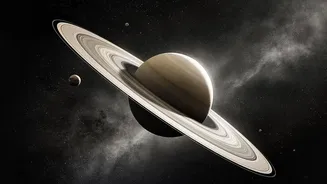
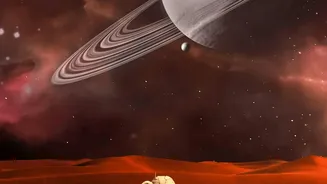
While Saturn will reach its absolute brightest and closest point to Earth—an event called opposition—on October 4th, August is the month the planet truly comes into its own for evening observers. Throughout the month, Saturn will rise progressively earlier,
making it a prominent and captivating feature in the night sky for more and more hours after sunset. This period is the perfect overture to its main event. Opposition occurs when Earth passes directly between the Sun and an outer planet. For observers, this means the planet is visible for the entire night, rising in the east as the sun sets in the west. In the weeks leading up to it, like throughout August, the planet is already large, bright, and beautifully positioned for viewing.
How to Find Saturn This Month
Finding Saturn is easier than you might think. You don't need to be an expert to locate it. Look for a bright, steady, yellowish-white point of light in the eastern sky during the mid-to-late evening. Unlike stars, planets generally do not twinkle, which is a key way to distinguish them. By late August, Saturn will be visible for most of the night. To be certain, you can use a number of free stargazing apps for your smartphone. Simply point your phone at the sky, and the app will identify the celestial bodies you're looking at, guiding you directly to Saturn’s location in the constellation Cetus.
What You Can See: From Naked Eye to Telescope
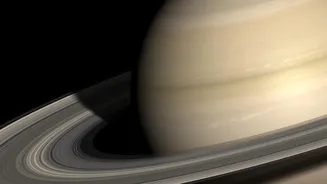
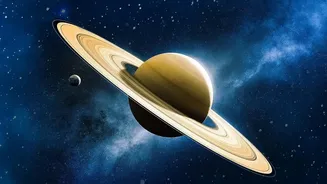
Your experience of viewing Saturn will depend entirely on your equipment. With just your eyes, Saturn appears as one of the brightest star-like objects in the sky. A good pair of binoculars might reveal that the planet is not perfectly round—a hint of its famous rings—and you might even spot its largest moon, Titan, as a tiny pinprick of light nearby. But the real magic happens with a telescope. Even a small, beginner-friendly telescope with at least 50mm aperture will transform that point of light into a distinct ball surrounded by its magnificent rings. It’s a sight that has inspired astronomers for centuries. With a slightly larger telescope (100mm or more), on a clear night you may be able to spot the Cassini Division, a prominent dark gap between the main rings.
Bonus Spectacle: The Perseid Meteor Shower
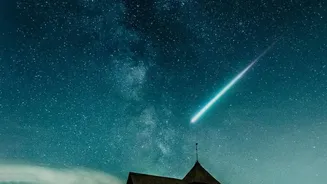
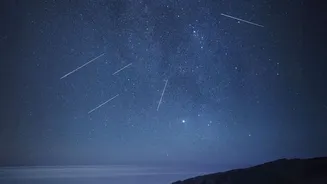
As if a brilliant Saturn wasn't enough, August also hosts the peak of the annual Perseid meteor shower. This is consistently one of the best meteor showers of the year, known for producing bright, fast meteors. In 2026, the peak occurs on the nights of August 12th and 13th. Conditions for this year's shower are perfect, as the peak coincides with a new moon, meaning the sky will be dark and free of moonlight, making it easier to spot the meteors. For the best view, find a location away from city lights, let your eyes adjust to the darkness for about 20 minutes, and look towards the northeast. You could see up to 90 meteors per hour under ideal conditions.
Tips for Viewing From India
To make the most of these celestial events in India, a few tips can go a long way. The biggest challenge in August can be the monsoon season, so it's crucial to check your local weather forecast for a clear night. Light pollution from cities can wash out all but the brightest objects, so try to get to a darker spot on the outskirts of your town or city. Even a local park can be better than a brightly lit street. Allow your eyes at least 15-20 minutes to adapt to the darkness; this will help you see much fainter objects. Finally, be patient. Stargazing is a waiting game, whether you're hoping for a gap in the clouds or waiting for the next shooting star.