






The Challenge with Old Bones
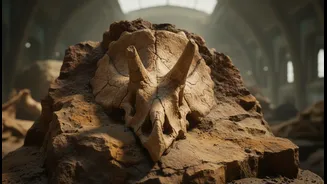
Palaeontology, the study of ancient life, often struggles to capture the public's imagination in India. Despite the country's rich fossil heritage—including being the site of Asia's first dinosaur fossil discovery—the field faces significant hurdles.
For the average person, the science can seem dense and inaccessible, while for students, it can appear as a difficult career path with limited opportunities. Experts have noted a decline in interest, with fewer students pursuing the subject and a shortage of faculty at universities. This creates a gap between the country's incredible geological history and the public's engagement with it, leaving a wealth of stories about our planet's past untold.
A Cinematic Solution in Lucknow
To bridge this gap, the Birbal Sahni Institute of Palaeosciences (BSIP) in Lucknow has launched a pioneering event: PRITHVI 2026, India's first film festival dedicated entirely to palaeoscience and earth sciences. Scheduled for July 23-25, 2026, this festival is a landmark initiative not just for India, but for Asia. Organized under the institute's science communication initiative, its motto is "Bringing Earth's Stories to Life, Inspiring a Sustainable Future." The festival was announced by Uttar Pradesh Governor Anandiben Patel, signalling a high-level commitment to popularizing this field of science.
What Makes a 'Palaeo-Film'?
The festival aims to showcase how visual storytelling can translate complex scientific research into engaging narratives. It has invited entries from professional filmmakers, scientists, and students across several categories, including documentaries, animations, and even science fiction. The themes are broad, covering not just palaeontology but also climate change, biodiversity, and geo-heritage. By using the familiar and powerful medium of film, the festival can explain abstract concepts, visualize prehistoric landscapes, and humanize the scientific process. This approach helps make science more relatable, sparking curiosity in audiences who might otherwise be intimidated by technical jargon.
More Than Just Movies
PRITHVI 2026 is designed to be more than just a series of screenings. The three-day event will also host workshops, masterclasses, and panel discussions featuring scientists, filmmakers, and policymakers. This interactive component, called the National Dialogue on Earth Science Communication for Public Engagement, aims to foster a community around the subject. By bringing experts and the public together, the festival encourages direct conversation, allows people to ask questions, and provides a platform for deeper learning. Organizers hope this will not only demystify the science but also inspire a new generation of researchers and science communicators.
A Model for Science Communication
Ultimately, the festival is a creative answer to a constitutional call. Article 51A(h) of the Indian Constitution calls on citizens to develop a scientific temper and a spirit of inquiry. Initiatives like PRITHVI 2026 are a practical step towards achieving that goal. In a country where palaeontology has been described as a dying science due to a lack of funding, public interest, and institutional support, using an engaging format like film can be transformative. It creates a space where science is not just presented but celebrated, making the ancient story of life on Earth relevant to our present and our future.