





A Government-Powered Liftoff
The catalyst for this transformation was a series of sweeping policy reforms initiated in 2020 and solidified by the Indian Space Policy 2023. These changes effectively ended the state's monopoly, inviting private companies to participate in every facet
of the space value chain, from building rockets and satellites to providing downstream data services. To manage this new ecosystem, the government established two key bodies. The Indian National Space Promotion and Authorisation Centre (IN-SPACe) acts as a single-window facilitator, helping private firms get authorizations and access the Indian Space Research Organisation’s (ISRO) world-class facilities. Meanwhile, NewSpace India Limited (NSIL), ISRO's commercial arm, focuses on transferring mature technologies to industry and marketing space services globally. This framework allows ISRO to concentrate on advanced research and exploration while private players drive commercialisation.
The New Generation of Rocket Builders
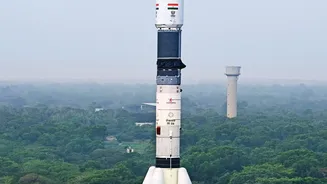
At the heart of the private space race are the launch vehicle startups aiming to make space access cheaper and more frequent. Leading the charge is Skyroot Aerospace, which became the nation's first space-tech unicorn. The Hyderabad-based company, founded by former ISRO scientists, developed the Vikram series of rockets. Its Vikram-1 is an orbital vehicle built with a lightweight all-carbon-fibre body and 3D-printed liquid engines, designed specifically for the booming small satellite market. Another major contender is Agnikul Cosmos, a startup incubated at IIT Madras. Agnikul made headlines by launching a rocket powered by the world's first single-piece 3D-printed engine, the Agnilet. Its Agnibaan rocket is designed for highly customizable, on-demand launches from India’s first-ever private launchpad.
India’s Eyes in the Sky
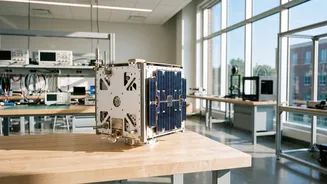
Beyond just building rockets, Indian startups are excelling in developing and deploying advanced satellites. Pixxel is making a global mark by building a constellation of hyperspectral imaging satellites. Unlike conventional cameras that see in three or four bands of light, Pixxel’s satellites capture data across hundreds of spectral bands, creating a detailed ‘spectral fingerprint’ of the Earth’s surface. This allows them to detect phenomena invisible to other satellites, such as early signs of crop disease, methane leaks, or illegal mining activity. On the other hand, Hyderabad's Dhruva Space operates as a full-stack space engineering company. Founded in 2012, it offers everything from modular satellite platforms and ground station services to launch solutions, serving clients in defence, communications, and climate monitoring.
The Downstream Data Gold Rush
The ultimate business of space isn’t just about launching hardware; it’s about the invaluable data that hardware sends back to Earth. This is the 'downstream' market, where the real economic boom is expected. The hyperspectral data provided by companies like Pixxel is being transformed into actionable intelligence for various sectors. In agriculture, it can help farmers improve crop yields and manage water usage with incredible precision. For climate-conscious governments and companies, it offers a way to monitor deforestation, pollution, and the impact of climate change in near real-time. Energy and mining firms can use this data for more efficient and environmentally responsible resource exploration. This data-driven approach is creating a new layer of the digital economy, powered by insights from orbit.