




An Accidental Experiment
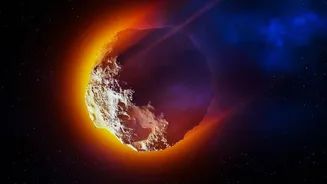
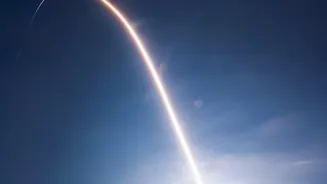
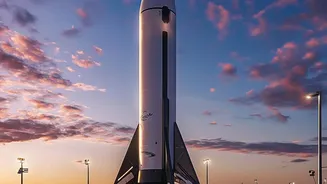
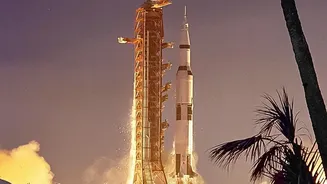
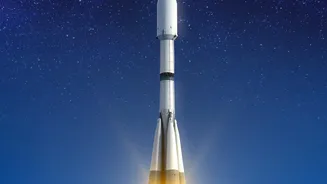
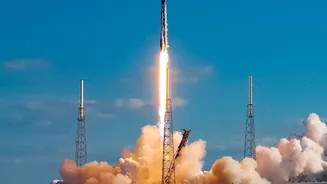
The object in question was the upper stage of a Falcon 9 rocket that launched in January 2025. Its mission was to deliver two lunar landers into a high orbit. Usually, these spent stages are directed to burn up in Earth's atmosphere, but this one used
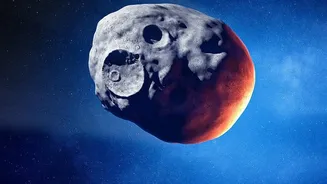
too much fuel to make it back. Adrift in a chaotic orbit, it was gradually pushed by solar activity and gravity onto a collision course with the Moon. First identified by independent astronomers and later confirmed by NASA, the impact became a certainty. At around 5,400 mph, the school-bus-sized object crashed into the lunar surface on August 5, 2026, creating a crater estimated to be up to 89 feet wide.
A 'Hard Way' to Do Science
Observing this impact is what scientists call 'the hard way'. Unlike NASA's intentional LCROSS impact in 2009, which was designed to search for water, this was an uncontrolled event. Scientists couldn't prepare the ideal observation conditions. The impact happened on the sunlit side of the Moon, making the faint flash of the collision nearly impossible to see against the bright surface. Researchers had to rely on coordinating existing assets—both ground-based telescopes and orbiting spacecraft—to be in the right place at the right time for a fleeting event. It's a prime example of opportunistic science: seizing a rare, unexpected chance to learn something new.
Excavating Lunar Secrets
So, what's the scientific prize? The impact acts as a massive excavator, blasting a new crater and throwing tons of lunar soil and rock, known as ejecta, high above the surface. This material comes from beneath the top layer of regolith, giving scientists a precious look at the Moon's subsurface composition without having to fund and launch a dedicated drilling mission. By analyzing the plume of debris, they can learn about the geology and composition of that specific lunar region. One of the biggest hopes is to detect signs of water ice, a critical resource for future lunar bases. Initial observations from telescopes in Chile and Arizona successfully detected a plume of sodium and lithium gas lasting for several minutes after the crash, confirming the impact and the potential for new discoveries.
The Tools of Observation
Catching this data required a global effort. On the ground, powerful instruments like the Very Large Telescope in Chile and the Lowell Discovery Telescope in Arizona were trained on the impact zone. They used spectroscopy to analyze the chemical fingerprints of the ejecta plume. In orbit, the focus is on getting before-and-after pictures. NASA's Lunar Reconnaissance Orbiter and South Korea's Danuri orbiter are being tasked with imaging the impact site to study the new crater. These images, which may take days or weeks to capture and receive, will provide concrete evidence of the impact's scale and help refine models of how craters are formed on the Moon.
Trash or Treasure?
This event highlights a growing trend in the new era of space exploration. As more commercial missions head to the Moon, the amount of space junk in the lunar vicinity is increasing. While this raises valid concerns about debris management and potential contamination, it also presents unique scientific opportunities. Each accidental impact is a chance to study the lunar surface in a new location. Scientists can use these events to better understand the risks that debris poses to future astronauts and habitats. By studying this Falcon 9 impact, researchers are not just learning about the Moon, but also about how to turn a potential problem into a valuable scientific experiment.