
For investors in precious metals, the gold-silver ratio is a classic yardstick. But what happens to this long-standing metric when global commodity markets enter a period of high volatility? The usual rules may no longer apply.
First, What Is the Gold-Silver Ratio?
The gold-silver ratio is
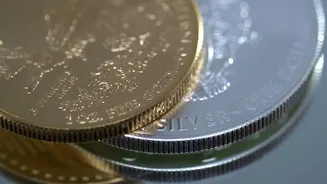
a simple yet powerful metric: it tells you how many ounces of silver it takes to buy one ounce of gold. For example, if the ratio is 80:1, it means you need 80 ounces of silver to equal the value of a single ounce of gold. This isn't just a random number; it's one of the oldest continuously tracked exchange rates in history, used for centuries to gauge the relative value of the two metals. Investors watch this ratio to see which metal is performing better relative to the other. A rising ratio suggests gold is getting more expensive compared to silver, while a falling ratio means silver's value is catching up to or outpacing gold's.
Gold the Haven, Silver the Hybrid
To understand why the ratio moves, it's crucial to know that gold and silver play different roles in the market. Gold is primarily seen as a 'safe-haven' asset and a store of value. During times of economic or geopolitical uncertainty, investors often flock to gold, seeking stability. Its market is large and dominated by investment and central bank demand, which tends to make its price movements more measured. Silver, on the other hand, is a hybrid. It’s both an investment asset and a critical industrial commodity. It is essential for manufacturing solar panels, electric vehicles, and electronics. This industrial demand makes silver's price more sensitive to the health of the global economy. Because of its smaller market size and dual role, silver is typically more volatile than gold; its price tends to rise and fall more sharply.
Enter Commodity Market Volatility
Commodity market volatility refers to a period when the prices of raw materials—like oil, copper, gold, and silver—are swinging up and down more dramatically than usual. Such turbulence can be caused by many factors, including global trade frictions, unpredictable interest rate changes, or sudden geopolitical events. In these uncertain environments, investor behaviour often changes. The instinct is to seek safety, which has traditionally benefited precious metals. However, the type of volatility often determines how gold and silver react, and that's where the ratio's behaviour can become unpredictable.
How Volatility Can Change the Ratio's Trend
In a typical flight to safety, investors often prioritise gold over silver due to its reputation for stability, causing the gold-silver ratio to rise (meaning it takes more silver to buy gold). However, the nature of the economic shock matters. If market volatility is driven by fears of an industrial slowdown or recession, demand for silver can plummet, causing it to underperform gold and pushing the ratio even higher. Conversely, if volatility is accompanied by supply chain disruptions for industrial metals or a surge in demand for green technologies, silver might outperform gold. Silver's price can also be amplified by speculative trading in the futures market, leading to sharper moves than gold during volatile periods. This means that during market turmoil, silver doesn't always follow gold's lead in a predictable way.
What This Means for Indian Investors
In India, gold and silver are more than just commodities; they are pillars of household savings and cultural heritage. Indian investors are increasingly moving from simply wearing gold to strategically owning it as a core financial asset. Understanding the gold-silver ratio can provide valuable context for these decisions. A high ratio might suggest silver is relatively cheap compared to gold, potentially indicating a buying opportunity for those with a higher risk appetite. However, during volatile times, a high ratio could also signal underlying weakness in industrial demand, a risk that needs to be considered. Rather than being a simple buy-or-sell signal, the ratio becomes a gauge of market sentiment—revealing whether fear or economic optimism is driving the precious metals market.