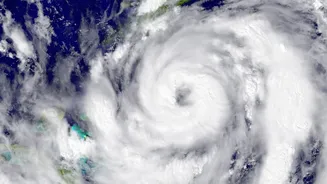








Very Severe Cyclonic Storm Arnab made landfall on the Andhra Pradesh coast early on October 28, bringing intense winds and heavy rain. As authorities execute a massive response, here’s what you need to know about the storm and the measures in place.
Arnab's Path and Intensity
Cyclone
Arnab crossed the coast between Bapatla and Visakhapatnam early Wednesday morning as a 'very severe cyclonic storm'. The India Meteorological Department (IMD) reported maximum sustained wind speeds of 125-135 kmph, with gusts reaching up to 150 kmph at landfall. The landfall process, which began around 2 a.m., was completed by 8 a.m. After moving inland, the system has started to weaken but is expected to continue bringing heavy rainfall as it moves northwestwards. The storm's impact is forecast to extend to other states, including Odisha, Chhattisgarh, and eventually parts of eastern Uttar Pradesh and Bihar over the next 48 hours.
States on High Alert
Andhra Pradesh is bearing the brunt of the storm's impact, with extremely heavy rainfall and destructive winds lashing coastal districts. Authorities have evacuated over 137,000 people from low-lying areas in Andhra Pradesh and neighbouring Odisha. Odisha has also deployed extensive disaster response teams, particularly in southern districts like Malkangiri, which are expected to receive heavy rainfall as the cyclone moves inland. Schools and colleges in several districts across both states have been closed as a precautionary measure. Beyond the immediate coast, states including Telangana, Chhattisgarh, Jharkhand, and West Bengal are on alert for heavy rains and strong winds in the coming days.
Massive Response Mobilised
A significant disaster response operation is underway. In total, 39 National Disaster Response Force (NDRF) teams and 80 State Disaster Response Force (SDRF) teams have been deployed across the affected regions. These highly trained teams are equipped for search and rescue, evacuation support, and immediate relief. Their tasks include clearing fallen trees and debris from roads, assisting in restoring power, and moving people from vulnerable structures to over 2,000 cyclone shelters that have been set up. In Andhra Pradesh, special measures were taken to shift over 1,350 pregnant women to hospitals to ensure their safety.
How to Stay Safe
Officials have issued clear advisories for public safety. The primary advice is to stay indoors and avoid vulnerable structures. If you are in an area under an evacuation order, move to a designated shelter or higher ground immediately. During the storm, switch off main electrical and gas supplies to prevent accidents. It's crucial to stay informed through official sources like the IMD and local authorities, and to ignore rumours. Keep an emergency kit ready with essentials like a torch, batteries, nonperishable food, drinking water, and any necessary medications. After the storm passes, be cautious of fallen power lines, damaged buildings, and flooded roads.
Travel and Power Disrupted
The cyclone has caused widespread disruption to infrastructure. Numerous flights have been cancelled, and the Railways has cancelled 26 trains and diverted several others on routes through the affected states. Uprooted trees and electric poles have been reported in many areas, leading to power outages. In Andhra Pradesh's Konaseema district alone, nearly 6,000 electricity poles were reported to be uprooted. Authorities have deployed thousands of personnel to begin restoration work as soon as conditions permit, but residents should prepare for potential long-lasting power outages.