




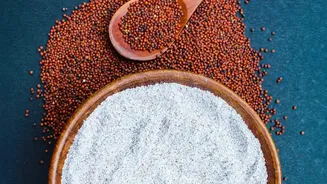


What Is Finger Millet Ambali?
Ambali is a traditional porridge-like beverage originating from Southern India, especially popular in states like Karnataka. It is made from ragi, also known as finger millet, one of the most nutritious ancient grains. What sets ambali apart from a simple
ragi porridge is the crucial step of fermentation. After the ragi flour is cooked into a slurry, it's traditionally left to ferment overnight. This natural process not only gives the drink its characteristic mild tangy flavour but also supercharges its health benefits. Considered a natural coolant, it's a staple in many households to combat summer heat and provide sustained energy.
A Nutritional Powerhouse Explained
Finger millet is a nutritional giant. It boasts the highest calcium content among all cereals, making it exceptional for bone health. A 100-gram serving of ragi contains approximately 344mg of calcium. It's also a rich source of dietary fibre, which aids digestion, promotes a feeling of fullness for weight management, and helps in regulating blood sugar levels, making it beneficial for diabetics. The fermentation process elevates these benefits significantly. It breaks down anti-nutrients like phytic acid, which in turn makes minerals like iron, calcium, and zinc more bioavailable for your body to absorb. Furthermore, fermentation introduces probiotics—beneficial gut bacteria—that support digestion, reduce bloating, and enhance overall immunity.
A Simple Recipe for Modern Kitchens
Making ambali at home is straightforward. You’ll need ragi flour, water, and for the traditional savoury version, curd (yoghurt), salt, and optional flavourings like chopped onions, green chillies, and curry leaves. 1. Create the Slurry: Whisk a cup of ragi flour with a cup of water until you have a smooth, lump-free paste. 2. Cook the Porridge: Bring about three to four cups of water to a rolling boil in a pot. Slowly pour in the ragi slurry while stirring continuously to prevent lumps. Cook on a medium flame for 6-7 minutes until the mixture thickens and turns glossy, indicating that the raw taste is gone. 3. Ferment: Turn off the heat and let the porridge cool down completely. Once cool, transfer it to a clay pot or glass bowl, add more water to achieve a thinner consistency, cover it, and let it sit in a warm place for 8-12 hours, or overnight. You’ll know it’s fermented when you see small bubbles on the surface and it has a slightly sour smell. 4. Serve: To serve, whisk the fermented porridge well. Mix in curd or buttermilk, salt to taste, and finely chopped onions, coriander, or a tempering of mustard seeds and curry leaves for extra flavour.
Creative Ways to Enjoy Ambali
While the traditional way to drink ambali is as a savoury, spiced buttermilk beverage, modern routines call for versatility. Think of ambali as a nutritious, gluten-free base that can be adapted to your taste and schedule. Morning Smoothie Boost: Use the plain fermented ragi base as a liquid for your morning smoothie. Blend it with a banana, a spoon of nut butter, and a dash of cinnamon for a probiotic-packed, high-fibre breakfast. Modern Porridge Bowl: Instead of drinking it, keep the fermented base thick. Reheat it gently and top with fresh fruits, seeds, and nuts, much like a contemporary oatmeal bowl. Savory Soup Base: Thin out the fermented ambali with vegetable broth and season with spices like cumin and black pepper. It can serve as a light, nutritious soup base that's easy on the digestive system. Post-Workout Refuel: Its combination of carbohydrates for energy and nutrients for recovery makes a chilled glass of ambali an excellent post-workout drink.