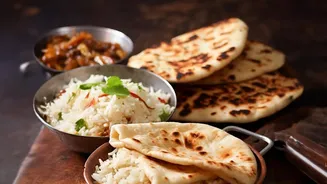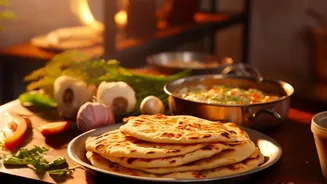



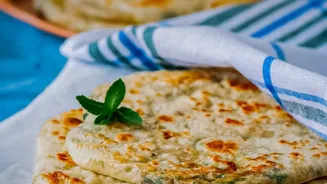
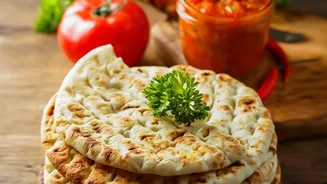
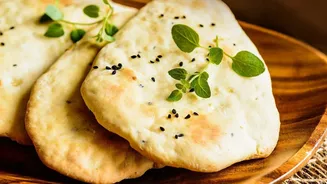
The aroma of freshly baked garlic naan is irresistible, but many home cooks believe it's impossible without a tandoor. This guide proves otherwise, showing you how to achieve that soft, chewy texture with a simple tawa on your stovetop.
The Magic of the Tawa
A traditional naan
is slapped onto the scorching hot inner walls of a clay tandoor oven, which can reach extreme temperatures. This intense heat cooks the bread quickly, creating its signature bubbly surface and smoky flavour. At home, we can replicate this effect using a common piece of equipment: a heavy iron tawa or a cast-iron skillet. The method involves heating the tawa until it's very hot, sticking the naan to its surface with a bit of water, and then inverting the entire pan over a direct gas flame to char the top. This direct exposure to the flame creates the blistered, golden-brown spots that make naan so delicious. It's a surprisingly simple technique that brings the tandoor experience right into your kitchen.
Gather Your Ingredients
The beauty of this recipe lies in its simplicity and reliance on pantry staples. There are variations with yeast for a more traditional leavening and quicker no-yeast versions that use baking powder and soda. For a soft, fail-safe naan, a dough enriched with yogurt is key. Here's what you'll typically need: all-purpose flour (maida), plain yogurt, a leavening agent (like baking powder, baking soda, or instant yeast), a little sugar, salt, and warm water or milk. For the garlic topping, you'll want finely chopped garlic, fresh coriander leaves, and butter for brushing at the end. While some recipes use just flour, a combination of flour and yogurt creates a tender, slightly tangy dough that results in a wonderfully soft texture.
Crafting the Perfect Dough
The foundation of a great naan is a soft, pliable dough. Begin by combining your dry ingredients: flour, salt, sugar, and your chosen leavening agent (baking powder/soda or yeast). In a separate bowl, mix the wet ingredients like yogurt and oil. Gradually combine the wet and dry mixtures, adding warm water or milk as needed until a soft, slightly sticky dough forms. Knead the dough for about 5-10 minutes on a lightly floured surface until it becomes smooth and elastic. This step is crucial for developing gluten, which gives the naan its characteristic chewiness. Once kneaded, place the dough in a greased bowl, cover it, and let it rest in a warm place. Resting time can vary from 30 minutes for a quick recipe to about two hours, allowing the dough to ferment and develop flavour.
Rolling and Cooking Technique
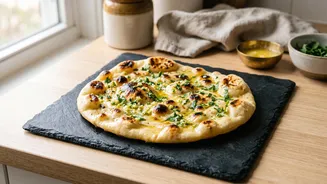
After the dough has rested, punch it down and divide it into equal-sized balls. On a floured surface, roll each ball into a thin oval or teardrop shape. Now for the topping: sprinkle a generous amount of chopped garlic and coriander onto the surface and gently press it in with the rolling pin. The most critical step comes next. Flip the naan over and brush the plain side with water. This moisture is what will make the naan stick to the hot tawa. Place the naan, wet-side down, onto a preheated iron tawa over medium-high heat. You'll see bubbles start to form on the surface within a minute or two. Once bubbles appear, grab the handle of the tawa, flip it upside down, and hold it directly over the gas flame. Move the tawa around to cook the top of the naan evenly until you see beautiful brown and charred spots.
Finishing Touches and Pro Tips
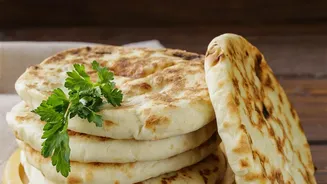
Once the naan is cooked, use a spatula to gently scrape it off the tawa. Immediately brush the hot naan with melted butter for that signature sheen and rich flavour. Stacking the cooked naan and keeping them covered with a clean kitchen towel will help trap steam, ensuring they stay soft and warm until you're ready to serve. For the best results, always use a cast-iron or heavy iron tawa; a non-stick pan will not work because the naan needs to adhere to the surface. Make sure your tawa is sufficiently hot before placing the dough on it, as a lukewarm pan will result in a flat, pale naan. Don't be afraid if the dough feels a bit sticky—a softer dough yields a softer naan.