





What is RAD@home?
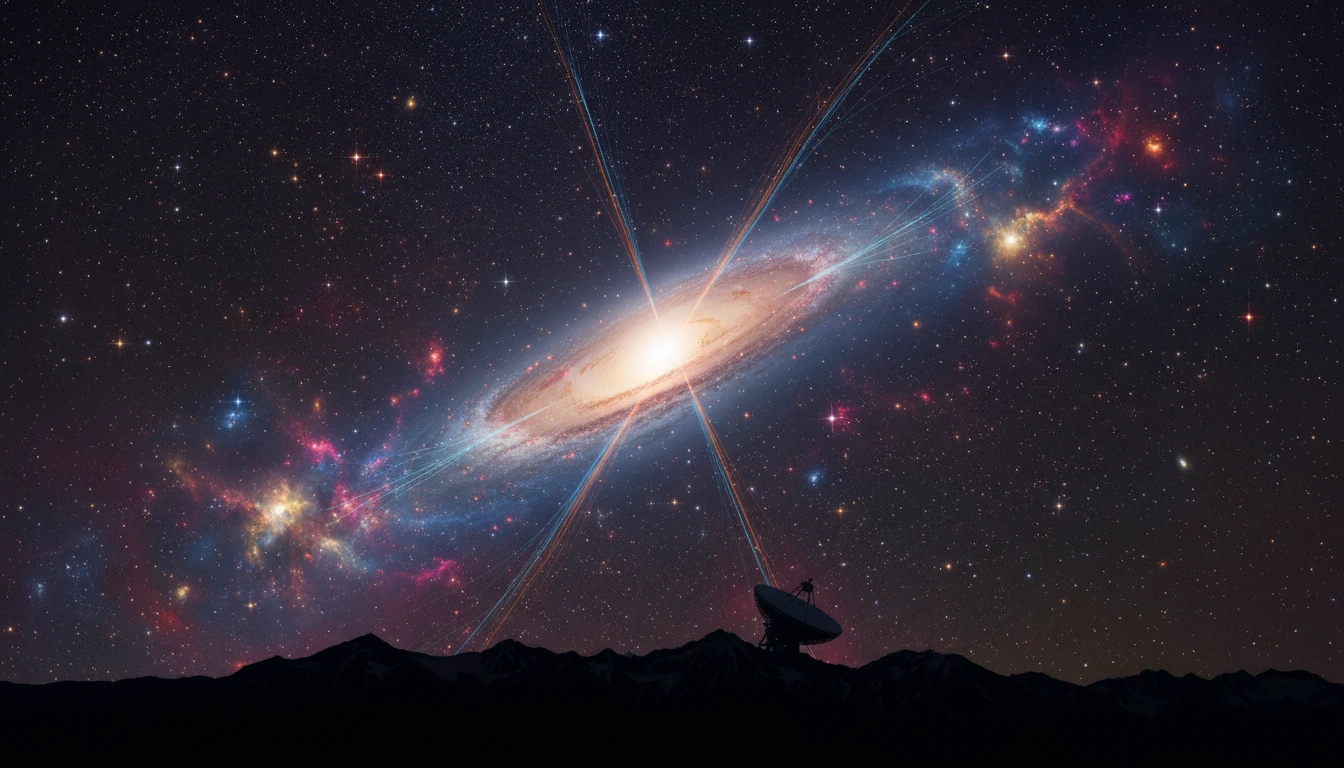
RAD@home, which stands for Real Astronomy Discovery at Home, is India's first citizen science research platform in astronomy. Launched in 2013, its mission is to prove that anyone with a basic science or engineering degree can contribute to complex astronomical
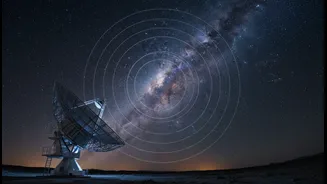
research. The project, founded by Dr. Ananda Hota, operates with a novel zero-fund, zero-infrastructure model, primarily using the internet and social media to connect and train participants. It leverages the power of a nationwide network of students and science enthusiasts to tackle the enormous amounts of data generated by modern telescopes like the Giant Metrewave Radio Telescope (GMRT), one of the world's largest. This approach, dubbed #ABCDresearch (Any BSc/BE Can Do research), democratises a field once seen as inaccessible.
From the Himalayas to the Cosmos
The project's success is vividly illustrated by the involvement of citizen scientists from remote areas, including Sikkim. In a recent and notable example, a young participant from Sikkim played a key role in a significant astronomical finding. This highlights the core strength of RAD@home: providing equal opportunity for research to citizens even in underdeveloped regions. Participants, known as 'e-astronomers', are trained through online workshops and discovery camps. They learn to analyse complex radio astronomy images, looking for unusual shapes and patterns that could signify new discoveries. The project uses a tiered system, with workshops and online activities to bring enthusiasts into the fold and then provide advanced training for those who show promise.
The Power of the Human Eye
In an era of increasing automation, RAD@home champions the irreplaceable value of human intuition. While computer algorithms are excellent at finding what they are programmed to look for, they can often miss faint, fuzzy, or unusually shaped objects. It’s here that trained citizen scientists excel. A recent discovery facilitated by RAD@home involved a galaxy shaped like a bow and arrow, a structure never clearly seen before. This object, named BAARG, was initially classified as a standard radio galaxy by automated systems. Its unique and scientifically valuable shape was only identified when a human volunteer, attending a weekend training session, noticed something the algorithm had missed. This mirrors the history of major astronomical discoveries, such as the first pulsars identified by Jocelyn Bell Burnell in 1967, where a human eye noticing an anomaly in the data changed our understanding of the universe.
A Galaxy Shaped Like a Bow and Arrow
The discovery of BAARG (Bow-and-Arrow-shaped Radio Galaxy) is a prime example of the project's success. This exotic object features a supermassive black hole at its centre, which is ejecting powerful jets of energy. On one side, this jet flares out into a massive arc, while on the other it forms an S-shaped tail, creating the unique bow-and-arrow likeness. Scientists believe this shape was formed as the galaxy moved at immense speeds through the hot gas of a dense galaxy cluster. The discovery, published in the Monthly Notices of the Royal Astronomical Society, not only revealed a new type of celestial object but also demonstrated the power of citizen-led analysis in finding rare phenomena.
Democratising Discovery
RAD@home is more than just a data analysis project; it's a movement that is changing who gets to participate in science. By providing free training and access to real data from world-class instruments like the GMRT, it breaks down economic and geographical barriers. Participants who make significant contributions are often included as co-authors on scientific papers, giving them legitimate credit for their work. This model doesn't just create a larger workforce for astronomy; it fosters scientific temperament across the country and inspires the next generation of researchers. As India prepares for mega-science projects like the Square Kilometre Array (SKA), building a scientifically engaged public is more important than ever, and RAD@home is leading the charge.