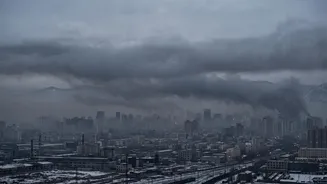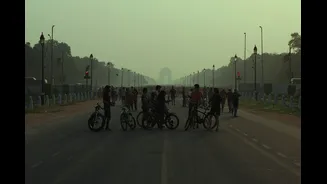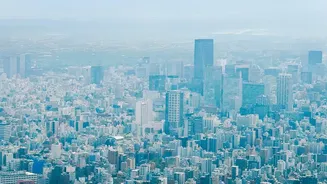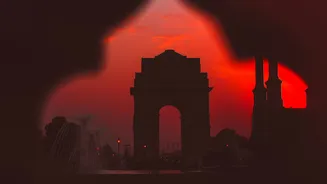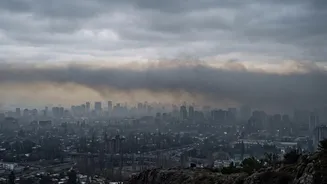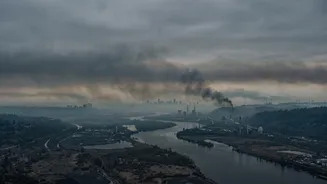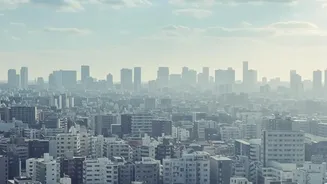




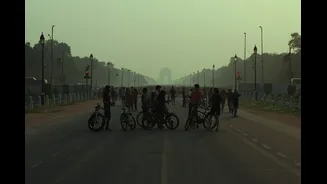
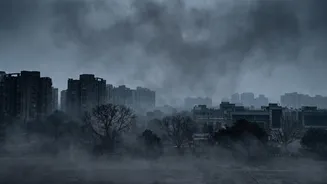
Ever notice how winter smog in the city can hang in the air for days, refusing to clear? It’s not your imagination. The culprit is often an invisible atmospheric lid, a phenomenon known as low-level thermal trapping, which locks pollution in place.
The Atmosphere Turned Upside Down
Normally,
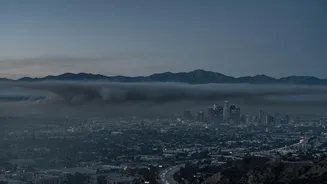
the air closest to the ground is warm. As it rises, it cools, and this constant circulation helps disperse pollutants upwards and away from where we breathe. But during a low-level thermal trapping event—scientifically known as a temperature inversion—this process gets flipped on its head. A layer of cooler, denser air gets stuck at the surface, trapped by a layer of warmer, lighter air above it. This warm layer acts like an atmospheric 'cap' or lid, preventing the cooler air below from rising. With no vertical movement, the air becomes stagnant, and so does everything in it.
A Recipe for a Pollution Trap
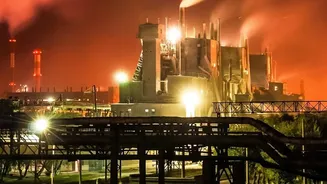
This atmospheric lid is the perfect setup for a severe pollution event. All the pollutants emitted at ground level—from vehicle exhaust, industrial smokestacks, construction dust, and open waste burning—are released into this trapped layer of cool air. Because the air cannot rise and mix, these pollutants have nowhere to go. They accumulate, becoming more and more concentrated over time. The longer the inversion lasts, the more pollutants build up, leading to the thick, persistent smog that can plague cities for days on end. Visibility drops, and the air quality index can quickly spike to hazardous levels.
Why Winter Is the Prime Season
Temperature inversions are particularly common during winter. The season's characteristic long, cold nights and clear skies allow the ground to radiate heat away and cool down rapidly. This, in turn, cools the air nearest to the surface. Meanwhile, the air higher up remains relatively warm, creating the inversion. Calm or weak winds, also common in winter, prevent the layers from mixing, locking the inversion in place. In places like the Indo-Gangetic plains, this effect is magnified. The Himalayas to the north act as a barrier, further preventing the dispersal of the trapped, polluted air mass that settles over major cities like Delhi.
The Metro Magnifying Effect
While thermal inversions are a natural meteorological phenomenon, they become a major public health issue in metropolitan areas. Cities are massive sources of pollutants. During an inversion, the sheer volume of emissions from traffic, industry, and residential heating gets confined to a very shallow layer of the atmosphere. This explains why even on days with reduced polluting activities, a strong inversion can still lead to dangerously poor air quality. The city essentially stews in its own emissions, with the trapped pollutants undergoing chemical reactions in the stagnant air to form even more hazardous secondary pollutants like ground-level ozone.
Breaking the Stale_Air Cycle
An inversion doesn't last forever. It typically breaks when the sun becomes strong enough to warm the ground, which in turn heats the cold air layer from below until it can finally rise and mix. The arrival of a strong weather system with brisk winds can also forcefully mix the air layers and clear the pollution away. The famous 'Great Smog of 1952' in London, which was caused by a similar multi_day inversion, was eventually cleared by a change in weather. While we can’t control the weather that causes inversions, these events are a stark reminder of what happens when high emissions meet stagnant atmospheric conditions.