






A Mountain of a Problem
For generations, agriculture in Ladakh has depended on a delicate rhythm timed to the seasons. Farmers in this cold desert, where annual rainfall is less than 100mm, rely almost entirely on meltwater from snow and glaciers to irrigate their crops. However,
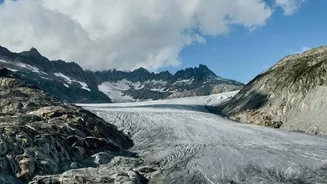
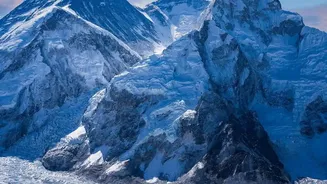
climate change has thrown this vital cycle out of sync. Rising temperatures are causing glaciers to retreat to higher altitudes and shrink. This has created a critical timing issue: winter snow now melts too early, while the distant glaciers begin releasing their water too late in the summer, well after the crucial spring sowing season for crops like barley, potatoes, and peas has passed. This leaves farmers with dry, unworkable soil during the most important months, threatening food security and the livelihoods of entire communities.
The Birth of the Ice Stupa
The solution came not from a massive government project, but from the mind of a local engineer, Sonam Wangchuk. Inspired by the sight of ice that remained frozen under a bridge well into the spring, shielded from direct sun, Wangchuk had a revelation. He understood that the shape of an ice mass was key to its longevity. While building large shades wasn't practical, he theorized that water frozen into a vertical, conical shape would expose the minimum possible surface area to the sun, causing it to melt much more slowly than a flat sheet of ice. In 2013, he and his team at the Students' Educational and Cultural Movement of Ladakh (SECMOL) built a prototype. Named 'ice stupas' for their resemblance to traditional Buddhist monuments, these artificial glaciers were born.
How Simple Physics Saves the Day
The genius of the ice stupa lies in its simplicity. The technology requires no pumps or electricity, relying instead on gravity and basic physics. During the harsh winter months, when stream water is abundant but otherwise flows away unused, a pipe channels it from a higher altitude down to a village. Due to the height difference, the water shoots up vertically from the end of the pipe like a fountain. As this water is sprayed into the sub-zero winter air, it freezes upon falling, gradually forming a massive cone of ice. These structures can tower up to 30-50 meters high and store millions of litres of water. Because of the cone's low surface-area-to-volume ratio, the ice remains frozen long after the surrounding snow has disappeared.
From Meltwater to Fertile Soil
As temperatures rise in April and May—the critical planting season—the ice stupa begins to melt. This provides a steady, reliable source of water precisely when farmers need it most. This targeted irrigation is the key to maintaining soil fertility. Without this water, the arid land would become parched, cracked, and unable to support crops. The meltwater allows farmers to sow their fields, turning barren desert green. The very first prototype stupa enabled the planting of 5,000 saplings in a previously arid area. The availability of water prevents the soil from degrading and losing its essential nutrients, ensuring that the land remains productive. It allows crops like wheat, barley, and vegetables to be cultivated at the correct time, ensuring they mature within the short summer season.
A Symbol of Hope and Adaptation
The ice stupa project has grown far beyond a single prototype. Dozens of these artificial glaciers have been built across Ladakh, with competitions encouraging villages to participate and manage their own water resources. The success in Ladakh has turned the ice stupa into a global symbol of climate adaptation. The technology is now being replicated in other mountain regions facing similar challenges, including the Swiss Alps and other parts of the Himalayas. It represents a powerful, community-led response to the climate crisis, demonstrating how local ingenuity can create sustainable solutions to global problems. These structures have even helped revive villages that were previously abandoned due to water shortages.