


In the world of Indian textiles, few crafts command the quiet reverence of Chikankari. This delicate hand-embroidery from Lucknow is more than just a pattern; it’s a whisper of history, a testament to artistry passed down through generations.
A Royal Thread Through History
The story
of Chikankari is woven into the cultural fabric of India, with its most popular origin story tracing back to the Mughal era. Legend credits Empress Nur Jahan, wife of Emperor Jahangir, with introducing the Persian-inspired craft to India in the 17th century. While references to flowered muslins exist from as early as the 3rd century BC, it was under Mughal and later the Nawabi patronage in Awadh that Chikankari flourished. Lucknow became the undisputed heart of this art form, a city whose own identity of 'nazakat' (delicateness) and 'tehzeeb' (cultural refinement) is mirrored in each stitch. Traditionally, it was a subtle white-on-white embroidery on fine muslin, an expression of understated elegance fit for royalty.
The Anatomy of a Masterpiece
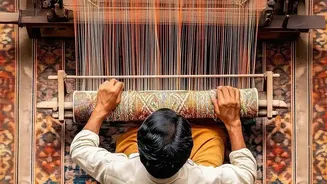
Creating a Chikankari garment is a painstaking process that honours patience and precision. It begins not with a needle, but with a wooden block. Artisans, known as 'chhapaiwalas', first transfer intricate floral and paisley motifs onto the fabric using temporary dyes. This printed outline serves as a map for the 'karigars' or embroiderers, who are overwhelmingly women. With the fabric stretched on a frame, these skilled hands bring the design to life, one stitch at a time. After the embroidery is complete, the piece is carefully washed to remove any trace of the printed pattern, revealing the pristine threadwork. The final steps of starching and ironing give the fabric its characteristic crispness, making the delicate patterns stand out.
A Language of Stitches
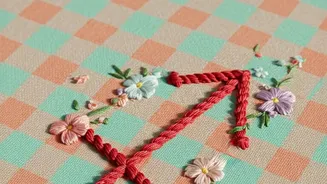
What truly sets Chikankari apart is its extensive vocabulary of over 32 distinct stitches. Learning them can take an artisan years. These are broadly classified into flat, raised, and open trellis or net-like stitches. Among the most famous is 'Bakhiya', or shadow work, where the embroidery is done on the reverse side of the fabric to create a delicate, shadowed effect on the front. 'Tepchi' is a simple, long running stitch used for outlines, often forming the foundation of a design. For texture, artisans use knotted stitches like 'Phanda' (resembling millet seeds) and 'Murri' (like rice grains), which add tiny, raised dots to the pattern. The most complex and prized stitch is 'Jaali', where threads are meticulously pulled apart and rebound to create an intricate net effect without ever cutting the fabric.
A Protected Heritage
In an age of fast fashion and machine-made replicas, authentic Lucknow Chikankari is fiercely protected. In December 2008, it was granted a Geographical Indication (GI) tag, legally recognizing 'Lucknow Chikan Craft' as a product exclusive to Lucknow and its surrounding districts. This status serves to protect the livelihood of thousands of artisan families and helps consumers identify genuine, hand-worked pieces. An authentic Chikankari garment has a subtle imperfection and a messy reverse side with visible knots, signatures of the human hand that a machine cannot replicate.
From Tradition to Trend
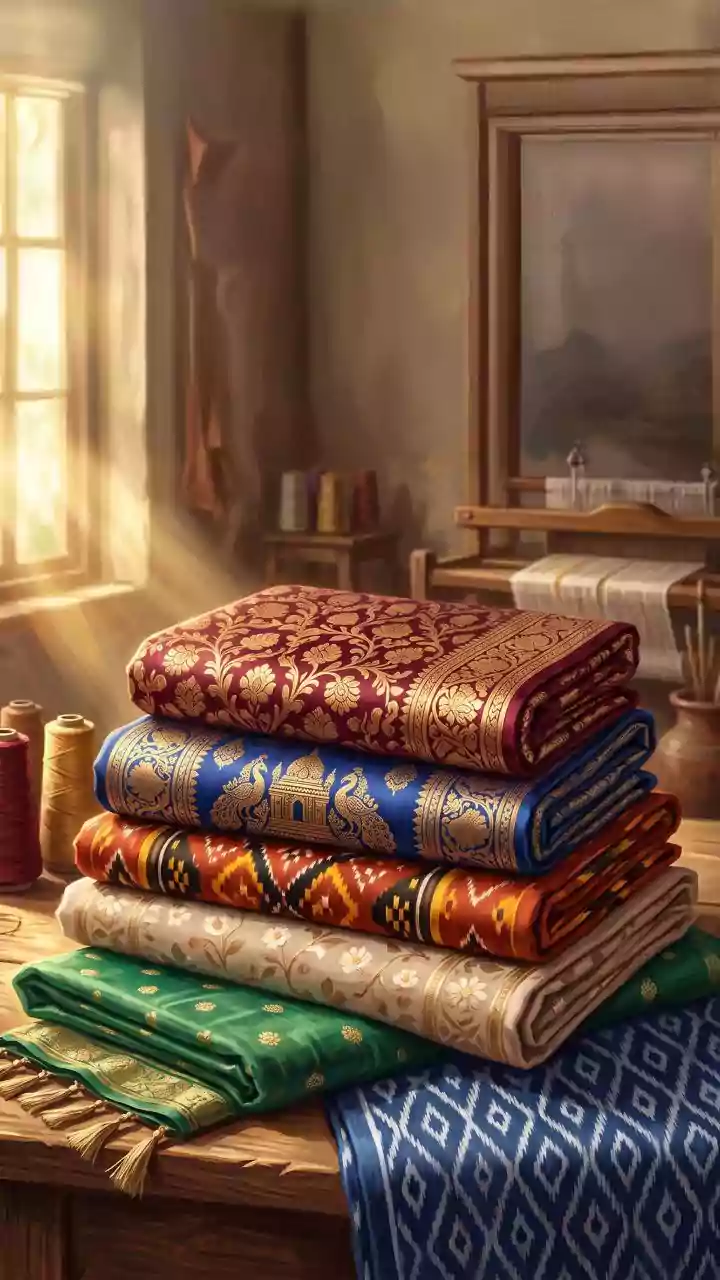
Chikankari has gracefully evolved from its traditional white-on-white origins. Today, designers experiment with a vibrant spectrum of coloured threads on diverse fabrics like silk, georgette, and organza, moving beyond just cotton and muslin. This timeless craft is no longer confined to kurtas and sarees. It now adorns contemporary silhouettes like crop tops, dresses, jackets, and even athleisure wear. This fusion of traditional craftsmanship with modern style ensures that Chikankari remains relevant and cherished, effortlessly bridging the gap between heirloom luxury and everyday elegance.