





A Dual-Purpose Journey
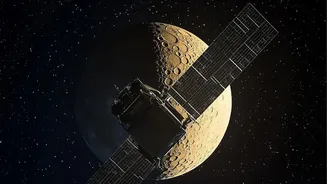
When a spacecraft travels to the Moon, its primary focus is naturally the lunar surface. However, the long journey and the eventual orbit offer a unique vantage point of Earth. The Indian Space Research Organisation (ISRO) cleverly utilized this perspective,
turning its lunar missions into dual-purpose scientific platforms. During the cruise phase to the Moon and from lunar orbit, instruments can be calibrated by pointing them at a familiar object: Earth. This process not only ensures the equipment is working correctly before it begins its main mission but also gathers valuable data about our home planet as seen from a great distance.
Chandrayaan's Earth-Gazing Instruments
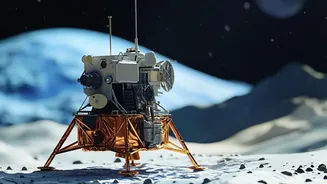
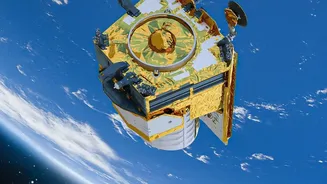
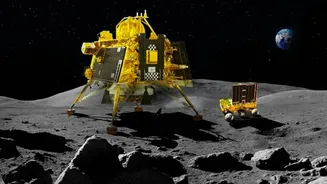
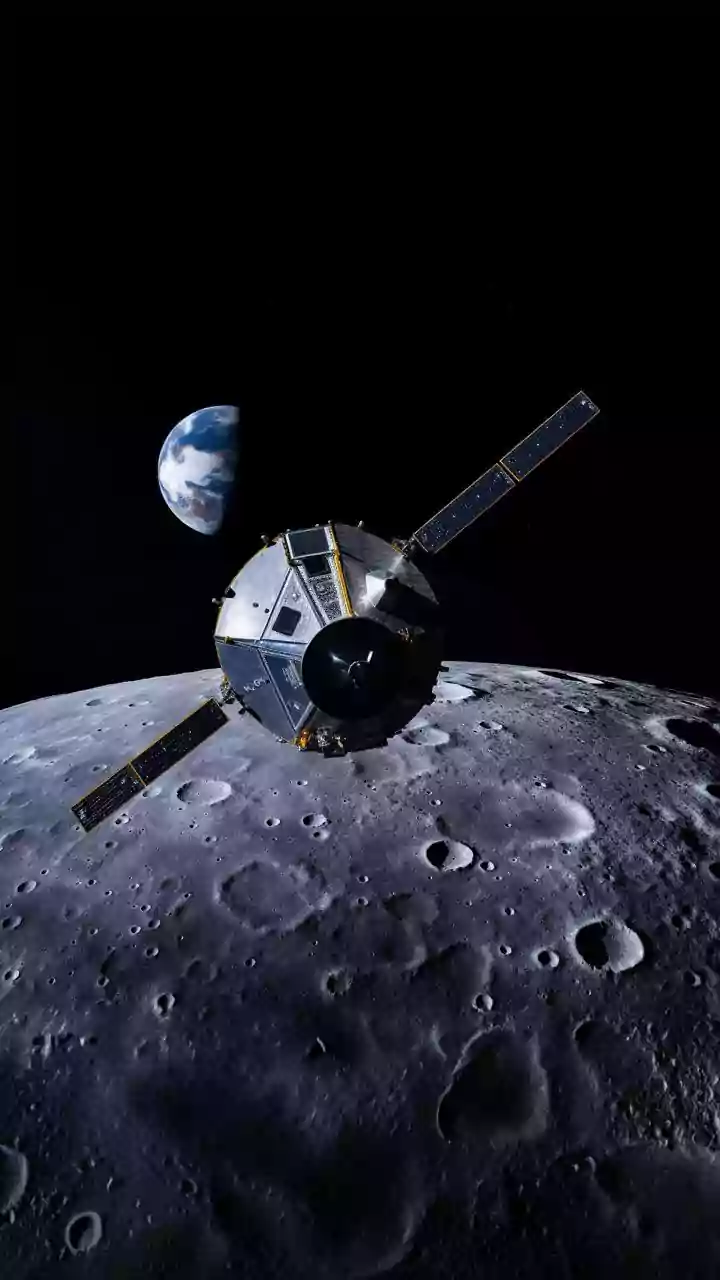
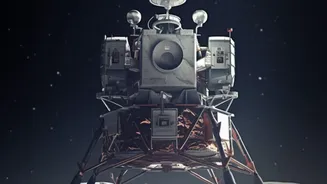
Several instruments across the Chandrayaan series have played a role in Earth observation. The Terrain Mapping Camera (TMC) on Chandrayaan-1, designed to create a high-resolution 3D map of the Moon, was first tested by capturing images of Earth. These early snapshots confirmed the camera's capabilities. More recently, the Chandrayaan-3 mission carried a dedicated payload for this very purpose. The Propulsion Module, which carried the lander and rover to a 100 km lunar orbit, hosts the Spectro-polarimetry of HAbitable Planet Earth (SHAPE) payload. SHAPE's express goal is to study spectral and polarimetric measurements of Earth from its vantage point in lunar orbit, effectively treating Earth as a proxy for a distant, potentially habitable exoplanet.
Mimicking an Exoplanet
The data from SHAPE is particularly groundbreaking. By analysing the light reflected from Earth, scientists can identify key signatures associated with a habitable world, such as the presence of clouds, atmospheric composition, and surface features like oceans and continents. This disc-integrated signature, a view of the planet as a single point of light, is exactly what we see when we observe exoplanets orbiting distant stars. By studying Earth's unique light signature from the Moon, ISRO is creating a vital baseline. This reference data will help astronomers better interpret the faint light coming from actual exoplanets, making it easier to identify which of them might harbour conditions suitable for life. It’s a clever way of using our own planet to learn how to search for others.
A Legacy of Frugal Innovation
This practice of using lunar-bound instruments for Earth observation is a hallmark of ISRO's culture of frugal and efficient engineering. It maximises the scientific return on every mission, squeezing out extra value from hardware designed for another world. The Hyperspectral Imager (HySI) on Chandrayaan-1, intended for lunar mineralogical mapping, also contributed to this dual-use approach. By turning these powerful sensors back towards Earth, even for short periods, ISRO has demonstrated a forward-thinking strategy. It enriches our understanding of our own planet while simultaneously refining the techniques we will use to explore worlds far beyond our solar system. This approach not only enhances the value of each mission but also solidifies India's reputation as a resourceful and innovative leader in space exploration.